
In This Article
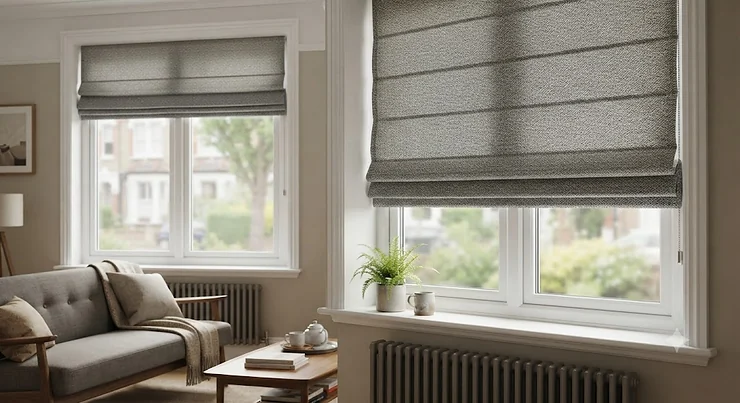
There’s a particular flavour of Sunday-afternoon dread that comes with a drill in one hand and a spirit level balanced precariously on a windowsill. You measure twice, drill once, and somehow still end up with a bracket half a centimetre out of true. Easy fit roman blinds exist precisely to make that scene disappear. They’re roman blinds engineered to go up without screws, rawl plugs, or a trip to the DIY aisle — using tension rods, clip-in brackets, twist mechanisms, or straightforward self-adhesive strips instead.
What is easy fit roman blinds, in plain terms? It’s a category of roman-style fabric window coverings — the classic folding, stacking blind style — that mount using tool-free or minimal-tool systems, so the fabric goes up in minutes rather than the better part of an afternoon. The window covering industry generally refers to this folding, stacking style as “Roman blinds” in the UK, and the format has genuinely ancient roots — the underlying pull-cord-and-fold mechanism is widely traced back to shading structures used in Roman amphitheatres, adapted over centuries into the pleated fabric blinds we recognise today (you can read more on Wikipedia’s overview of Roman shades).
This guide walks through seven genuinely available options on Amazon UK, spanning stick-on budget shades through to fully lined premium fabric blinds, with honest analysis of what the spec sheets actually mean for your windows. We’ll cover fitting mechanics, renter-specific considerations, safety regulations, and long-term value — not just a list of features copied from a product page. Whether you’re chasing a quick self fit roman blinds amazon solution for a rental kitchen or a proper made-to-measure look that still avoids the toolbox, there’s a route through this that suits your window, your walls, and your patience for DIY.
Quick Comparison Table: Easy Fit Roman Blinds at a Glance
Before diving into full reviews, here’s a snapshot of how the seven picks stack up on fitting method, best use case, and rough spend.
| Blind | Fitting Method | Best For | Price Range |
|---|---|---|---|
| Maritown No Drill Temporary Pleated Shade | Self-adhesive stick-on | Budget renters, bathroom doors | Under £20 |
| ESLIR Roman Blind No Drilling Required | U-hook / eyelet, no drilling | Kitchens, light diffusion | £10-£25 range |
| LazBlinds No Drill Cordless Roman Shade | Tool-free tension bracket | Households with children/pets | £25-£45 range |
| SolRoyal Roman Shade RA3 | Clip-on, no drilling | Large windows, patio doors | £30-£55 range |
| A.Unique Home Textured Weave Dimout Blind | Clip bracket, minimal tools | Bedrooms wanting texture | £20-£40 range |
| Barnes Blinds Patterned Roman Blind | Durable easy-fit fittings | Design-led living rooms | £35-£65 range |
| Riva Paoletti Atlantic Deluxe Blackout Blind | Standard bracket (light fixing) | Full blackout, premium finish | £30-£55 range |
Looking at the spread above, the honest takeaway is that “easy fit” sits on a spectrum rather than being one single mechanism. At one end you’ve got the Maritown shade, which needs nothing more than a clean surface and some patience with a tape measure; at the other, the Riva Paoletti blind still expects a bracket, just a simpler one than a full recess-fit installation. Budget alone doesn’t predict how tool-free a blind will be, which is exactly why the fitting method column matters more than the price column when you’re comparing opti
💬 Found a blind you like the look of already? Have a browse through the full range and check current pricing before you commit to a size.
Top 7 Easy Fit Roman Blinds: Expert Analysis
We’ve grouped these across budget, mid-range and premium tiers, covering stick-on, tension-fit, and clip-fit mechanisms so there’s a genuine option for most window types and most patience levels.
1. Maritown No Drill Temporary Pleated Shade — best for ultra-fast stick-on installs
The standout here is speed: no brackets, no clips, just a peel-and-press adhesive strip that goes up in the time it takes to boil a kettle. The shade is a non-woven pleated fabric available in four size options (roughly 60x150cm through to 90x180cm), designed to be trimmed to width with household scissors and adhered directly to the window or door frame using the supplied tape. It’s marketed as waterproof and light-filtering rather than full blackout.
Based on the spec comparison with other stick-on window coverings, the appeal isn’t refinement — it’s that there are effectively zero fixings involved, which matters enormously if you’re not permitted to alter a rental property at all. Reviewers consistently note strong satisfaction for short-term or awkward-window use (the aggregated Amazon rating sits around 4.2 out of 5 from over a thousand ratings, with several hundred purchases in a typical month), though as with any adhesive product, performance depends heavily on how clean and non-porous the surface is before application. This is a strong self adhesive roman shade pick if your priority is avoiding any wall contact whatsoever.
Pros:
- ✅ Genuinely zero drilling or bracket fitting required
- ✅ Cut-to-size flexibility across four base dimensions
- ✅ Strong aggregate review volume and rating on Amazon
Cons:
- ❌ Adhesive grip varies by window frame material
- ❌ Light filtering only, not a true blackout option
At under £20 depending on size, the Maritown shade represents strong value for a genuinely temporary or ultra-low-commitment fix, particularly for smaller panes.
2. ESLIR Roman Blind No Drilling Required — best lightweight kitchen option
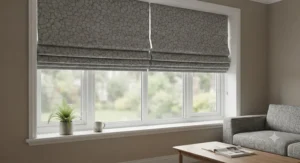
The standout feature is the U-hook and eyelet hanging system, which clips directly onto an existing pole or rod rather than needing any wall fixings of its own — genuinely no drilling required, hence the name. It’s made from 100% polyester voile in a semi-transparent finish, available across a wide run of widths from roughly 45cm up to 140cm, in colourways including white, grey, sand and several brights.
What most buyers overlook about this model is that it isn’t a standalone fitting system — you still need a curtain pole or rod already in place, which makes it closer to a stylish alternative to a roller blind than a fully self-contained roman blind. That’s not a flaw so much as a different use case: it’s ideal where a pole already exists and you simply want to swap the dressing without touching a screwdriver. The airy voile construction means it filters daylight rather than blocking it, and the brand notes hand-cut sizing may vary by two to three centimetres, which is worth accounting for on tight recess windows.
Pros:
- ✅ No wall drilling if a pole is already mounted
- ✅ Wide colour and width range for kitchens
- ✅ Genuinely lightweight, easy to hand-wash
Cons:
- ❌ Requires an existing pole or rod to hang from
- ❌ Sheer voile offers privacy, not blackout
Priced in the £10-£25 range depending on width, this is a sensible value pick for anyone wanting a quick refresh on a window that already has hardware installed.
3. LazBlinds No Drill Cordless Roman Shade — best for child and pet safety
The headline advantage is the patented tool-free tension bracket, which the brand states can be fitted in around thirty seconds without drilling, screws, or adhesive — designed exclusively for inside-mount recess windows with a minimum frame depth of around 1.5 inches. The cordless mechanism is the other major selling point, removing the looped-cord strangulation risk that comes with traditional roman blind mechanisms entirely.
Here’s what the spec sheet won’t tell you outright: because the bracket relies on spring tension against the recess sides rather than a fixed screw point, fit quality depends heavily on having parallel, undamaged window reveals. Aggregated review sentiment is genuinely mixed on this point — most buyers report a smooth, quick installation and appreciate the child-safe cordless operation, but a minority of reviewers have reported the fabric panel not retracting cleanly after the first few uses, suggesting the tension mechanism can be sensitive to uneven or slightly out-of-square recesses. If your window frame is true and the depth requirement is met, this is one of the more genuinely tool-free easy install roman blinds on the market; if your reveals are uneven, it’s worth measuring carefully before ordering.
Pros:
- ✅ Genuinely tool-free tension bracket, no drilling
- ✅ Cordless design removes looped-cord safety risk
- ✅ Around 30-second stated installation time
Cons:
- ❌ Some reviewers report fit issues on uneven recesses
- ❌ Inside recess mount only, minimum depth required
Expect to pay in the £25-£45 range, which is reasonable given the cordless safety mechanism most rivals in this tier don’t offer.
4. SolRoyal Roman Shade RA3 — best for large windows and patio doors
The standout advantage is scale: the RA3 is available up to 100cm wide by 240cm drop, making it one of the few no-drill fabric blind options genuinely suited to tall patio doors and oversized windows rather than just standard-sized panes. Fitting uses a clip-on headrail system that grips the top of the frame without drilling, and the fabric is a daylight-filtering weave designed by the German manufacturer specifically for tool-free window dressing.
On paper this means you get roman-blind proportions on doors and picture windows that most stick-on or tension-rod competitors simply can’t reach, since those tend to top out around 90-100cm in width and considerably less in drop. Reviewers researching this category consistently flag that fitting success on larger spans depends on the clip mechanism gripping evenly along the full width, so a level, undamaged top rail or frame edge matters more here than on a small kitchen window. It’s a genuinely useful no drill fabric blind for anyone renting a flat with floor-to-ceiling glazing who still wants proper roman-style folds rather than a plain roller.
Pros:
- ✅ Available up to 240cm drop for tall doors and windows
- ✅ Clip-on headrail needs no drilling
- ✅ Daylight fabric suits living spaces well
Cons:
- ❌ Clip grip needs a level, undamaged frame edge
- ❌ Premium sizing pushes it toward the top of the price range
At roughly £30-£55 depending on the exact dimensions chosen, this sits mid-range but earns its place through sheer size versatility that budget stick-on shades can’t match.
5. A.Unique Home Textured Weave Dimout Roman Window Blind — best for texture-led bedrooms
The standout feature is the textured weave fabric itself — a dimout (semi-blackout) finish available across a genuinely broad colour range, with sizing options running up to around 180cm wide. It uses a lightweight clip bracket system rather than full wall drilling, positioning it as a middle ground between the fully tool-free options above and a traditional made-to-measure blind.
Based on the spec comparison, dimout fabric is the detail that matters most here: it isn’t full blackout like a lined blind, but it noticeably reduces glare and early-morning light compared with a sheer voile option like the ESLIR pick above, which makes it a sensible bedroom compromise if total darkness isn’t the priority. What most buyers overlook about textured weaves specifically is that the raised thread pattern can trap more dust than a smooth polyester finish, so it suits households happy to vacuum the blind gently every few weeks over ones wanting a wipe-clean surface. The wide colour range is a genuine strength for matching existing décor without resorting to plain white or grey.
Pros:
- ✅ Dimout fabric strikes a light-blocking middle ground
- ✅ Wide colour range for décor matching
- ✅ Clip bracket avoids full drilling
Cons:
- ❌ Textured weave needs slightly more regular dusting
- ❌ Not a true blackout fabric
Typically priced in the £20-£40 range, it’s a solid mid-tier pick for bedrooms where some morning light is acceptable.
6. Barnes Blinds Patterned Roman Blind — best for a made-to-measure look without the wait
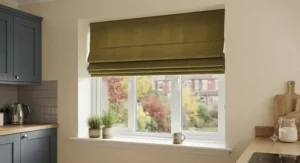
The standout advantage is custom sizing paired with durable easy-fit fittings, giving a bespoke appearance more commonly associated with professionally fitted blinds, while still avoiding a full drilled installation. Patterns range from classic diamond weaves through to more contemporary prints, fully lined for a tidier finish from the street-facing side.
Here’s what the spec sheet won’t spell out clearly: “custom sizing available” on a self fit roman blinds amazon listing usually means selecting from a dropdown of pre-set width and drop combinations rather than true bespoke measuring, so it’s worth double-checking the exact size options against your window before assuming perfect accuracy. That said, the fully lined construction is a genuine step up from the unlined voile and dimout options above, giving better insulation and a more substantial drape. Buyers researching this brand consistently mention the pattern quality and print sharpness as a highlight, which tracks with the fully lined fabric holding colour and shape better than lighter unlined alternatives.
Pros:
- ✅ Fully lined for better insulation and drape
- ✅ Genuine pattern variety versus plain competitors
- ✅ Easy-fit fittings rather than full drilling
Cons:
- ❌ “Custom” sizing is preset options, not true bespoke
- ❌ Sits toward the premium end of easy-fit pricing
Expect a price range of around £35-£65, positioning this as the premium easy-fit pick for anyone prioritising pattern and finish over pure speed of installation.
7. Riva Paoletti Atlantic Deluxe Blackout Roman Blind — best for genuine full blackout
The standout feature is straightforward: full blackout polyester fabric from an established UK homeware brand, in fixed sizing (122cm wide by 137cm drop being a common option) designed for bedrooms where total darkness is non-negotiable. In the interest of honesty, this one sits slightly apart from the rest of this list — it typically mounts with a conventional bracket rather than a fully tool-free system, so treat it as the “worth the extra ten minutes” premium pick rather than a strict no drill roman blinds option.
What most buyers overlook when chasing “easy fit” as the only criterion is that genuine blackout performance almost always requires a bonded lining and a bracket that sits flush and square against the frame — the very things that pure tension or adhesive systems can struggle to guarantee at scale. Reviewers researching Riva Paoletti’s roman blind range consistently cite the fabric quality and true blackout performance as strengths, reflecting the brand’s broader reputation in UK homeware for well-finished, mid-to-premium soft furnishings. If total light blockage matters more to you than avoiding every last screw, this is the most honest recommendation on the list.
Pros:
- ✅ Genuine full blackout fabric performance
- ✅ Established, reputable UK homeware brand
- ✅ Neat, fully finished bracket-mounted look
Cons:
- ❌ Standard bracket fitting, not fully tool-free
- ❌ Fixed sizing offers less flexibility than made-to-order
In the £30-£55 price range, this is the pick for buyers who’ll happily trade a few minutes of light fixing for genuinely reliable bla
✨ Ready to compare these side by side on your own windows? Check current pricing and available sizes before you measure up.
Practical Usage Guide: Fitting Your Easy Install Roman Blind in Under 10 Minutes
Even the most genuinely tool-free easy install roman blinds benefit from a bit of prep. First, clean the frame or recess thoroughly — dust and grease are the enemy of both adhesive strips and tension brackets, since both rely on friction or grip rather than a mechanical fixing. For stick-on options like the Maritown shade, wipe the surface with isopropyl alcohol if you have it; a plain damp cloth followed by thorough drying works almost as well.
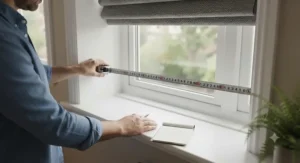
Second, measure the recess or frame width at three points — top, middle, and bottom — because window openings are rarely perfectly square, particularly in older UK housing stock. Order to the narrowest measurement if you’re recess-fitting, and the widest if you’re face-fitting outside the frame, to avoid gaps or a blind that won’t seat properly. Third, for tension and clip systems like the LazBlinds or SolRoyal picks, install one side fully before tensioning the other — trying to force both ends into place simultaneously is the single most common reason these mechanisms slip during fitting.
A common mistake in the first thirty days is over-tightening a tension rod “to be safe,” which actually increases the risk of bowing the frame or causing the mechanism to pop loose under the fabric’s own weight over time. Once fitted, run the blind up and down its full range two or three times before leaving it — this settles the fabric folds and reveals any snagging early, while you can still easily adjust the bracket position rather than discovering a problem weeks later.
Real-World Scenarios: Matching the Right Blind to Your Window
The graduate renting a studio flat: budget is tight, the tenancy agreement explicitly forbids wall fixings, and the window is a standard 90x150cm pane. The Maritown stick-on shade or the ESLIR pole-mounted option (if a rail already exists) both avoid any deposit risk entirely, and either fits comfortably under £25.
The family with toddlers in a rented terrace: safety and no drilling are both priorities, and the living room window is a deep recess around 76cm wide. The LazBlinds cordless tension shade directly addresses the strangulation risk that comes with corded roman blinds, while its tool-free bracket avoids any landlord permission issues — a genuinely strong match assuming the recess is reasonably square.
The homeowner refreshing a bedroom before selling: presentation matters, full blackout is wanted for resale appeal, and there’s no restriction on light fixing. The Riva Paoletti blackout blind or the fully lined Barnes Blinds patterned option both deliver a more finished, professionally styled look, worth the extra few minutes of bracket fitting for the visual payoff during viewings.
Problem → Solution: Fixing Common No-Drill Blind Issues
Problem: the adhesive won’t grip a textured or painted surface. Solution: clean thoroughly with isopropyl alcohol and allow the frame to dry fully before applying the strip — most adhesive failures with products like the Maritown shade trace back to residual dust or moisture rather than a faulty product.
Problem: a tension bracket keeps slipping loose. Solution: check the recess is genuinely parallel with a spirit level first, since tension systems like the one used on the LazBlinds shade rely on even pressure across both sides — an out-of-square recess is the most frequent cause of repeated slippage.
Problem: the blind fabric looks creased straight out of the box. Solution: hang the fabric and leave it lowered for 24-48 hours before first use, or lightly steam (never iron directly) synthetic fabrics like the polyester used across most of these picks — this resolves the majority of packaging creases without damaging the material.
Problem: light still leaks around the edges despite a blackout fabric. Solution: this is largely unavoidable with any inside-recess-mounted roman blind, including the Riva Paoletti option, since fabric can’t seal fully against the frame the way a fitted shutter can; face-fitting outside the recess with a slightly wider blind reduces, though doesn’t eliminate, the gap.
How to Choose Easy Fit Roman Blinds: A 7-Step Framework
- Check your tenancy agreement first. If any wall fixing is prohibited, self-adhesive or genuinely tool-free tension systems are your only realistic route.
- Measure your recess depth, not just width and drop. Tension-bracket systems typically need a minimum recess depth of around 3-4cm to seat securely.
- Decide light control priority. Sheer voile, dimout, and full blackout are three distinct categories, and no single fabric does all three well.
- Confirm the fitting mechanism matches your frame material. Adhesive struggles on textured or very cold surfaces; clips and tension rods need a reasonably square, undamaged edge.
- Factor in household safety needs. Homes with young children benefit significantly from cordless mechanisms over traditional looped-cord roman blinds.
- Check the review volume, not just the star rating. A 4.7-star product with eighteen reviews carries far less statistical confidence than a 4.2-star product with over a thousand.
- Budget for trial and error on adhesive products. Keep the packaging until you’ve confirmed a successful fit, since some retailers allow returns if the adhesive genuinely won’t grip your specific surface.
No Drill Roman Blinds vs Traditional Screw-Fit Roman Blinds
The core trade-off between no drill roman blinds and their traditionally fitted counterparts comes down to permanence versus precision. A traditionally screwed bracket, once fitted, essentially never moves — it’s mechanically fixed to the structure of the building. A no-drill system, whether adhesive, clip, or tension-based, relies on friction, grip, or spring pressure, which is inherently more sensitive to surface condition, frame squareness, and even temperature fluctuations affecting adhesive performance.
| Factor | No-Drill / Easy Fit | Traditional Screw-Fit |
|---|---|---|
| Installation time | Minutes, no tools | 20-40 minutes, tools required |
| Wall/frame damage | None to minimal | Small screw holes |
| Weight capacity | Lighter fabrics, smaller drops best | Handles heavier, larger blinds |
| Rental suitability | Best For renters and short tenancies | Best for long-term ownership |
| Fit precision | Depends on frame condition | Highly precise, permanent |
Reading across the table, the honest conclusion is that no-drill systems trade a small amount of long-term robustness for a large amount of flexibility and zero property risk, which is exactly the right trade for most renters and short-term occupants. Homeowners planning to stay put for years, particularly with large or heavy fabric blinds like the fully lined Barnes Blinds option, may still find the marginal extra effort of proper screw-fitting worthwhile for the added stability. Where you land on this spectrum should be driven far more by your tenancy status and window size than by price alone.
Common Mistakes When Buying Easy Fit Roman Blinds
The single most common mistake is measuring the window opening rather than the actual mounting surface — recess depth, frame flatness, and the presence of window handles or vents can all sabotage an otherwise perfect tension or clip fit. A close second is assuming “no drilling” automatically means “no tools at all”; several products in this category, including some clip-bracket systems, still benefit from a screwdriver for fine adjustment even though no permanent holes are made.
Buyers also frequently underestimate how much aggregate review volume matters versus the headline star rating — a handful of five-star reviews can inflate a rating dramatically before enough genuine purchase data accumulates. Finally, it’s easy to overlook opacity entirely until the blind is fitted; sheer voile options like the ESLIR pick are frequently purchased by buyers expecting blackout performance, leading to avoidable disappointment that a five-minute product description read would have prevented.
What to Expect: Real-World Performance
On paper, most easy fit roman blinds promise installation in under ten minutes — and for straightforward, square windows, that’s a genuinely accurate expectation across most of the picks above. In practice, older UK properties with slightly warped frames, uneven Victorian recesses, or textured render can add real friction to that promise, particularly for adhesive and pure tension systems.
Day-to-day, expect the fabric-based mechanisms (roman-style folding) to feel noticeably softer and quieter in operation than a rigid vertical or venetian blind, since there’s no plastic-on-plastic clatter when raising or lowering. Reviewers consistently note that lighter, unlined fabrics like the ESLIR voile can flutter slightly with a draughty window, which is a minor but real difference from the more substantial drape of fully lined options like Riva Paoletti or Barnes Blinds. Over several months, expect adhesive products to be the most likely to need occasional reapplication or a top-up strip, while clip and tension systems tend to remain stable once correctly seated.
Easy Fit Roman Blinds for Renters and Shared Houses
A renter roman blind needs to satisfy two masters simultaneously: it has to look decent enough to live with day-to-day, and it absolutely cannot risk a deposit deduction. This is worth taking seriously — under UK tenancy rules, landlords can make deposit deductions for damage a tenant causes, including accidental damage, though they cannot always charge the full replacement cost, and a drilled bracket hole that wasn’t there at check-in is a straightforward example of exactly that kind of damage. For the full picture on what does and doesn’t count, Shelter England’s guide to deposit deductions is worth a read before you fit anything.
Practically, this pushes renters firmly toward the Maritown stick-on shade or the LazBlinds tension bracket as the safest bets, since neither requires any permanent alteration to the property. If you’re in a shared house where fittings need to come down cleanly when you move on, keep the original packaging and any spare adhesive strips — most stick-on products can be reapplied once, though grip strength typically weakens on a second application. It’s also worth photographing the bare window before installation and again after removal, giving you clear evidence should any dispute arise over the property’s condition at check-out.
Long-Term Cost & Maintenance: Is Self-Fit Worth It?
Assessing total cost of ownership rather than sticker price alone changes the picture meaningfully. A £10 ESLIR voile blind might need replacing within a year or two if it’s mounted on a draughty window and flutters against the frame regularly, while a £45 Riva Paoletti blackout blind, properly bracket-mounted, could realistically last five years or more with occasional dusting and gentle sponge cleaning.
| Tier | Typical Price Range | Expected Lifespan | Maintenance |
|---|---|---|---|
| Budget stick-on | Under £20 | 1-2 years | Reapply adhesive as needed |
| Mid-range clip/tension | £25-£45 | 2-4 years | Occasional vacuum, gentle wash |
| Premium bracket-mounted | £30-£65 | 4-6+ years | Light dusting, sponge clean |
Interpreting the table, the cost-per-year for the premium tier is often genuinely comparable to the budget tier once lifespan is factored in, particularly for a blind that’s staying in a long-term home rather than moving with a tenancy. Maintenance itself is refreshingly simple across the board: a gentle vacuum brush attachment monthly, spot-cleaning with a mild detergent for marks, and avoiding machine washing fully lined blackout fabrics, which can distort the bonded lining and ruin the drape permane
💬 Just one click — help others make better buying decisions too! 😊
Safety and Regulations: What UK Buyers Need to Know
This is genuinely non-negotiable territory, not just marketing box-ticking. Since regulations introduced in February 2014, UK blinds must have no accessible cords, or those cords must be fitted with appropriate child-safety devices, with a minimum 150cm gap required between the bottom of any pull cord and the floor under the BS EN 13120 standard. This applies regardless of whether children currently live in the property, which matters for anyone furnishing a rental that might later house a family. You can read a clear local-authority summary of the requirements via South Tyneside Council’s internal blind cords safety information.
For easy fit roman blinds specifically, this pushes cordless mechanisms — like the one on the LazBlinds pick — genuinely ahead on safety grounds for any household with young children or grandchildren visiting regularly. If you do opt for a corded option like the ESLIR or SolRoyal blinds, fit the supplied cord cleat or tensioner immediately at installation rather than leaving it “for later,” since that’s precisely the gap where accidents most commonly occur. Beyond cords, check any adhesive products for a stated fire-retardant rating if fitting near a kitchen hob or open fireplace, and always keep the manufacturer’s safety leaflet, which typically outlines correct disposal of any small parts that pose a choking hazard for very young children.
Features That Actually Matter (And Those That Don’t)
What actually matters: recess depth compatibility, cord safety mechanism, and genuine fabric opacity rating. These three factors determine whether a blind will physically fit, whether it’s safe for your household, and whether it does the light-control job you actually bought it for — everything else is secondary.
What matters far less than marketing suggests: an enormous colour range is nice to have, but most buyers ultimately choose from three or four practical shades regardless of how many are offered. “Custom sizing available,” as seen on the Barnes Blinds listing, sounds impressive but frequently means a slightly wider dropdown of preset options rather than true bespoke measuring — check the actual size list before assuming full customisation. Similarly, “waterproof” claims on stick-on products like Maritown are genuinely useful for steamy bathrooms, but shouldn’t be confused with genuine mould-resistance over years of humidity exposure; ventilation still matters more than the fabric coating.
Frequently Asked Questions
❓ Are easy fit roman blinds actually easy to fit?
❓ Can I get no drill roman blinds for a bay window?
❓ Do self fit roman blinds amazon options damage window frames?
❓ Are roman blinds without fitting brackets as durable as traditional ones?
❓ What's the best no drill fabric blind for a rental kitchen?
Conclusion
Easy fit roman blinds have genuinely closed the gap between “quick fix” and “properly finished window,” and the seven options covered here prove that no-drill doesn’t have to mean compromise. For pure speed and zero commitment, the Maritown stick-on shade is hard to beat; for households prioritising child safety, the cordless LazBlinds tension system earns its higher price point; and if full blackout genuinely matters more than avoiding every screw, the Riva Paoletti blind remains the most honest recommendation on this list.
The real decision framework comes down to three questions: what does your tenancy agreement actually allow, how square and sound is your window frame, and how much light control do you genuinely need day to day? Answer those honestly, measure carefully, and any of the seven picks above should serve you well. For further reading on child-safety devices for blind cords specifically, the BBSA’s guidance leaflet, hosted via an NHS trust resource, is a genuinely useful reference to keep on hand.
🔍 Ready to transform your windows without touching a drill? Compare current prices and sizes on the picks above before your next free afternoon disappears into DIY.
Recommended for You
- Best Roman Blinds 2026: 7 Top Picks That Actually Deliver
- PVC Vertical Blinds for Conservatory: 7 Best Waterproof Picks (2026)
- Blackout Vertical Blinds UK: 7 Best Picks for Total Darkness (2026)
Disclaimer: This article contains affiliate links. As an Amazon Associate, I earn from qualifying purchases. If you purchase products through these links, we may earn a small commission at no additional cost to you.
✨ Found this helpful? Share it with your friends! 💬🤗
