

In This Article
Window shutters vs blinds is the choice between rigid, hinged louvred panels set in a frame and flexible coverings that roll, lift or tilt. Shutters are permanent, well insulated and expensive. Blinds are cheaper, lighter and, in blackout fabric, far darker. Which one wins depends on your room, your budget and how badly you need a pitch-black bedroom.
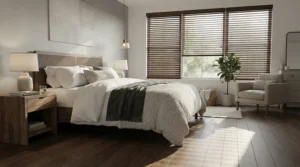
Here’s the awkward truth most glossy shutter brochures skip: shutters look gorgeous, but they are rarely the darkest option in the house. A well-fitted blackout roller can beat a louvred shutter on pure light-blocking, and costs a fraction of the price. Meanwhile, shutters give you something blinds can’t quite match, which is a solid, hard-wearing, adjustable barrier that makes a window feel finished.
The consumer champions at Which? point out that blinds generally beat curtains if total darkness is your goal. That sets the scene for everything below.
A quick note on how this guide works. Made-to-measure shutters are mostly sold by specialist fitters rather than as off-the-shelf products, so the seven picks below focus on blackout blinds, no-drill options and smart upgrades you can realistically order online. The shutter side is covered through honest analysis, so you know what you’d be paying for before a salesperson arrives. Product availability changes, so check each listing on amazon.co.uk before you commit.
Window Shutters vs Blinds at a Glance
Before the deep dive, here’s the cheat sheet. It compares the main window treatment types on the factors UK buyers ask about most.
| Type | Light control | Blackout potential | Insulation | Upkeep | Best For |
|---|---|---|---|---|---|
| Plantation shutters | Excellent, louvres tilt | Good, not total (gaps at louvres and frame) | Strong | Wipe-clean, long-lived | Street-facing rooms, long-term homeowners |
| Venetian blinds | Excellent, slats tilt | Moderate, light leaks between slats | Moderate | Dust-prone slats | Kitchens, home offices, adjustable privacy |
| Roller blinds (blackout) | On or off | Highest, if fitted well | Good with thermal backing | Very low | Bedrooms, nurseries, shift workers |
| Roman or pleated blackout | Soft and flexible | High | Good | Moderate | Bedrooms where style matters |
Notice the pattern. Shutters and Venetians win on adjustability, while blackout rollers win on darkness. That is the entire debate in one sentence, and most of this article is about what falls between the two.
In practical terms, if sleep is your top priority, the table points firmly towards blackout fabric. If you want to fine-tune light through the day while keeping neighbours out of your business, louvres and slats earn their keep. Shutters give you the most polished version of that adjustability, but at a price that makes blinds look like pocket change.
💬 Just one click — help others make better buying decisions too!😊
Top 7 Window Shutters vs Blinds Picks: Expert Analysis
These seven are chosen to cover budget, mid-range and premium needs, from basic blackout rollers to smart-home gadgets that automate blinds you already own. Review sentiment comes from published editorial reviews and product listings. Where I couldn’t verify a large pool of customer reviews, I say so rather than guess.
1. Furnished Blackout Roller Blinds — made to measure, fully blackout
Furnished’s range is built around custom sizing, which matters more than it sounds. Most light leaks in bedrooms come from blinds that are a few centimetres too narrow, and made-to-measure removes that guesswork.
The fabric is a three-pass construction of polycotton with a thermal lining, and it’s described as 100 per cent blackout in a choice of 16 colours. In practice, “three-pass” means the coating is applied in layers, which is what stops sunlight glowing through the weave at 5am in June. The thermal lining also takes a little heat out of south-facing bedrooms.
My read on the spec comparison: this suits anyone with an awkward window size, since off-the-shelf rollers rarely fit properly. It’s also a sensible pick if you want blackout performance without the shutter price tag. Remember that a roller still lets light creep round the edges unless it sits snugly in a recess.
Published reviewers rate it as a standout in blackout round-ups. I couldn’t verify a current pool of customer reviews for the Amazon listing, so check recent ratings, especially for fit and delivery.
Pros:
- ✅ Custom sizing keeps edge gaps to a minimum
- ✅ Three-pass thermal fabric blocks light effectively
- ✅ Wide colour range suits most bedrooms
Cons:
- ❌ Measuring errors are costly with custom orders
- ❌ Still leaks some light without side channels
Price range: typically budget-to-mid depending on size, so check current price. Good value for odd-sized windows.

2. Argos Home Blackout Insulating Roller Blind — cheapest route to proper darkness
Cheap doesn’t mean useless here. Ideal Home notes that blackout rollers start at as little as £8 at high-street stores like Dunelm and Argos.
The fabric is wipe-clean and has an insulating backing, meant to keep rooms cooler in summer and warmer in winter. That wipe-clean finish matters in kitchens and children’s rooms, where fingerprints and splashes are a fact of life. The insulating layer is a bonus rather than a miracle, but it helps take the edge off a stuffy room.
This is the pick for renters, spare rooms and anyone testing whether blackout blinds actually help them sleep before spending real money. Ready-made sizes limit you, though, and the usual advice applies: if you want the best blackout effect, a perfect-fit frame beats a standard bracket.
On sentiment, retail reviewers on high-street listings generally focus on value for money and the occasional sizing complaint. I couldn’t verify a fresh aggregated review pool, so read the latest ratings on whichever listing you use.
Pros:
- ✅ Extremely low cost for blackout fabric
- ✅ Wipe-clean, insulating backing
- ✅ Simple, quick installation
Cons:
- ❌ Limited ready-made sizes
- ❌ Edge light gaps are likely without a frame
Price range: under £25 for common sizes, so check current price. Excellent value on a tight budget.
3. ZeroLux No Drill Blackout Blind — adhesive frame, no drilling
For renters and shift workers, the headline feature here is a frame that sticks inside the recess using a strong adhesive strip, with no drill, no dust and no deposit worries.
The design uses pleated blackout fabric, hidden strings and a chainless mechanism, with a durable aluminium frame about 3cm deep. The hidden strings and lack of a dangling chain make it tidier and safer around children and pets. The manufacturer says the thermal fabric helps regulate temperature, and the listing specifically mentions light sleepers and shift workers.
It sits between a basic roller and shutter-level fitting. The frame surrounds the fabric, which does more to stop edge leaks than a roller on brackets. Do note the manufacturer’s advice: measure the window in three places and always use the smallest figure, or the blind will rub or sit loose.
I couldn’t verify a pool of customer reviews, so treat the shift-worker claim as the seller’s marketing and look for independent feedback on adhesive longevity in humid rooms.
Pros:
- ✅ Tool-free fitting suits renters
- ✅ Framed edges reduce light leakage
- ✅ Cordless-style design looks tidy
Cons:
- ❌ Adhesive mounting may not suit damp rooms
- ❌ Recess-only fit limits window compatibility
Price range: mid-range, so check current price. Strong value for renters needing real darkness.
4. Gro Company Gro-Anywhere Blind — portable blackout for travel and trial runs
This one is the Swiss Army knife of the bunch. It’s a portable blackout blind held up with suction cups, which makes it handy for holidays, hotel rooms, nurseries and spare-room experiments.
The fabric rolls into a travel pouch, and the suction fixing means no tools or marks. For shift workers sleeping away from home, or parents managing a baby’s naps, that portability is the whole point. It’s also a clever way to test how much darkness changes your sleep before committing to a fitted blind.
Be realistic about what suction can do. It won’t match a framed or recessed blind for edge sealing, and suction cups can lose grip on textured or very cold glass. So this is a supplementary or temporary solution, not a long-term bedroom upgrade.
I couldn’t verify an up-to-date review pool for this listing. Look for recent customer comments on suction reliability and how much light creeps round the edges of different window sizes.
Pros:
- ✅ Travels easily and needs no tools
- ✅ Handy for nurseries and short stays
- ✅ Low cost for a quick fix
Cons:
- ❌ Edge gaps let in light
- ❌ Suction can fail on cold or textured glass
Price range: around £15-£30, so check current price. Good value as a flexible backup.
5. SwitchBot Blind Tilt — smart control for Venetian blinds you already own
Instead of replacing your Venetians, this clips onto the tilt wand and turns it for you. TechRadar describes it as a way to turn standard Venetian blinds into smart ones by twisting the control wand with a motor.
It’s solar-assisted, controlled by Bluetooth from the SwitchBot app, and needs a SwitchBot Hub if you want Wi-Fi, remote or voice control. A listing summary notes it adjusts tilt in small steps and runs at around 40dB, which is quiet enough not to wake you. A built-in light sensor lets it respond to brightness, so slats can close as the sun hits the glass.
Compatibility is the catch. It needs a tilt wand or rod, so Venetians operated only by a cord loop won’t work, and it only moves the slats rather than raising the blind. Reviewers also note it’s cheaper than buying smart blinds outright.
Editorial reviewers consistently praise the easy setup, though some mention the white finish stands out on wood-tone blinds.
Pros:
- ✅ Upgrades existing blinds without replacement
- ✅ Quiet motor with light-based automation
- ✅ Solar charging reduces battery hassle
Cons:
- ❌ Wand-style Venetians only
- ❌ Hub needed for remote and voice control
Price range: around £50-£70, so check current price. Good value versus buying new smart blinds.

6. SwitchBot Roller Shade — motorised roller with scheduling
If you want a fully automated roller that rises with the sun, a ready-motorised shade is the tidy answer. This one is built as a complete motorised roller, so there’s no retrofit puzzle.
Check the listing for current specs and sizing options, but the appeal is straightforward: schedules, app control and compatibility with smart-home ecosystems via the SwitchBot Hub. For a shift worker, a gentle morning or evening schedule can matter more than any single feature. The blind closes before you arrive home from a night shift, so the room is already dark when your head hits the pillow.
It’s a premium-ish buy compared with manual rollers, so it makes sense when automation is the point rather than a nice extra. Check fabric opacity carefully, because motorised doesn’t automatically mean blackout.
I couldn’t verify aggregated customer reviews for the current listing. Look at recent ratings for battery life, motor noise and app reliability before buying.
Pros:
- ✅ Schedules close the blind before you sleep
- ✅ No retrofit, motor comes built in
- ✅ Works with wider smart-home setups
Cons:
- ❌ Costs far more than manual rollers
- ❌ Opacity varies by fabric choice
Price range: around £70-£130 depending on size and bundle, so check current price. Worth it if automation is the goal.
7. Aqara Roller Shade Driver E1 — motorise your existing roller blinds
This is the retrofit option for people who already own decent rollers. It adds a motor to an existing blind, so your fabric choice stays yours.
It’s designed to work with an Aqara hub and supports wider smart-home ecosystems, according to the maker’s positioning. Compatibility depends on your roller’s tube and chain style, so confirm fit against the listing before ordering. That’s the single most important step, since a motor that doesn’t match the tube simply won’t work.
I like the logic of pairing a high-quality blackout roller, such as a made-to-measure fabric, with a motor like this. You get the best darkness and the convenience, without paying for a premium motorised blind. It also suits renters who can pack the motor up when they move.
I couldn’t verify a current customer review pool, so check recent feedback on noise and charging.
Pros:
- ✅ Keeps your chosen blackout fabric
- ✅ Rechargeable, no wiring needed
- ✅ Works with several smart-home platforms
Cons:
- ❌ Compatibility depends on your blind
- ❌ Needs a hub for full features
Price range: around £50-£90, so check current price. Strong value as a retrofit.
Top 7 Comparison Table
| Product | Type | Blackout Strength | Install | Price Range | Best For |
|---|---|---|---|---|---|
| Furnished Blackout Roller Blinds | Made-to-measure roller | High | Brackets | Budget-mid | Furnished Blackout Roller Blinds suit awkward windows |
| Argos Home Blackout Insulating Roller Blind | Ready-made roller | Good | Brackets | Under £25 | Argos Home Blackout Insulating Roller Blind suits tight budgets |
| ZeroLux No Drill Blackout Blind | Framed pleated | High | Adhesive | Mid | ZeroLux No Drill Blackout Blind suits renters |
| Gro Company Gro-Anywhere Blind | Portable | Moderate | Suction | £15-£30 | Gro Company Gro-Anywhere Blind suits travel |
| SwitchBot Blind Tilt | Smart add-on | Depends on blinds | Clip-on | £50-£70 | SwitchBot Blind Tilt suits Venetian owners |
| SwitchBot Roller Shade | Motorised roller | Varies | Brackets | £70-£130 | SwitchBot Roller Shade suits automation fans |
| Aqara Roller Shade Driver E1 | Roller motor | Depends on blind | Retrofit | £50-£90 | Aqara Roller Shade Driver E1 suits roller owners |
Looking at the table, Furnished Blackout Roller Blinds deliver the best mix of darkness and fit for most bedrooms, while Argos Home Blackout Insulating Roller Blind wins on sheer affordability. If you already own blinds, the SwitchBot Blind Tilt and Aqara Roller Shade Driver E1 are smarter spends than replacing everything. Treat the Gro Company Gro-Anywhere Blind as a travel companion rather than a permanent fixture.
✨ Don’t Miss These Exclusive Deals!
🔍 Take your bedroom darkness to the next level with these carefully selected picks. Click on any highlighted item to check current pricing and availability.
Shift-Worker Sleep Setups: A Practical Guide
Roughly 4.1 million people in the UK work nights, according to The Sleep Charity, which also notes that daytime sleep is less efficient because you’re fighting light, noise and your own body clock. So for shift-worker sleep setups, the window treatment isn’t a decoration choice. It’s equipment.
Step 1: Build the darkness layer
Start with blackout fabric in a framed or recessed fit. A made-to-measure roller or something like the ZeroLux No Drill Blackout Blind reduces edge leaks. If you already own Venetians, they won’t get you there on their own, so pair them with a blackout roller behind them.
Step 2: Add temperature and noise control
NHS guidance for night staff suggests keeping a sleeping space cool, with one NHS trust page suggesting 15-19°C, and using white noise or earplugs for daytime disturbance. Thermal blackout fabric helps a little with summer heat, but a fan matters more.
Step 3: Automate the handover
A SwitchBot Roller Shade or an Aqara Roller Shade Driver E1 on a schedule closes the blind before you finish your commute. That removes one decision at the point you’re most tired.
Step 4: Seal the gaps
Use a strip of blackout tape or a lightweight side channel around the frame. Then test it: close the door, stand in the room at midday, and look for glowing edges.
Common mistakes in the first 30 days
Don’t rely on one partial measure, and don’t forget the door gap. Light seeping under a bedroom door can undo a perfect window.

Real-World Scenarios: Which Option Fits Your Life?
Specs only matter when they meet a real life. Here are three typical UK profiles.
The renter on nights. You’re in a rented flat, budget under £100, working three or four night shifts a week. A no-drill framed option like the ZeroLux No Drill Blackout Blind, plus a fan and earplugs, solves the problem without risking your deposit. Shutters are a non-starter here, because permanent fixings need landlord approval and real money.
The family in a semi. You’ve got two kids, a south-facing back bedroom and a baby who treats 4:30am sunrise as a personal invitation. Made-to-measure Furnished Blackout Roller Blinds make sense, with the Gro Company Gro-Anywhere Blind packed for holidays. Roller blinds also have far less to snap or tangle, which counts with small hands.
The long-term homeowner on a main road. You want privacy at street level, lovely light by day and a window dressing that adds value. This is where shutters begin to justify themselves. They’re durable, insulating and tidy. For total darkness upstairs, many owners still add a blackout roller behind them.
For each profile, think about three things: budget, how often you use the room for sleep, and how long you plan to stay. Short stay and daytime sleeping lean towards blinds. Long stay and street-facing privacy lean towards shutters.
Problem → Solution Guide: Light Leaks, Heat and Faffy Cords
Most window frustrations fall into a few repeatable problems. Here are the fixes.
Problem 1: Light glows around the edges. This is the classic blackout complaint. A made-to-measure fit helps, and Ideal Home’s expert advice recommends a perfect-fit frame for the best blackout effect. If you can’t change the blind, add side channels or tape.
Problem 2: The room cooks in summer. Thermal fabric helps, but external shading does more. Closing a thermal blackout blind during the hottest hours keeps sun off the glass.
Problem 3: Venetian blinds trap dust. Slats collect it quickly. Wipe them with a microfibre cloth or a duster glove, working along each slat, every couple of weeks.
Problem 4: You can’t reach or remember to close blinds. Motorise them. The SwitchBot Blind Tilt handles Venetian slats, while the Aqara Roller Shade Driver E1 handles compatible rollers.
Problem 5: Cords near children. Choose cordless or chainless designs where you can, and secure any remaining cords or chains out of reach. Look for products made to the relevant UK child-safety standard, BS EN 13120, and use the cord cleats or safety devices supplied.
How to Choose Between Window Shutters vs Blinds
- Decide your priority. If darkness is number one, start with blackout rollers or pleated blinds. If adjustable privacy matters most, consider shutters or Venetians.
- Set a realistic budget. Shutters are a premium investment, and English Blinds notes they cost many times more per set than even good made-to-measure wooden blinds.
- Check your window shape. Bays, arches and tilt-and-turn windows can complicate blinds and often suit shutters.
- Think about your tenure. Renters should favour removable, no-drill solutions.
- Measure carefully. Measure width and drop in three places and use the smallest. Fit problems are the top cause of returns.
- Consider upkeep. Shutters wipe clean easily, while slatted blinds collect dust.
- Plan for automation. If you want smart control, check compatibility first.
Blackout Window Shutters: Do They Really Exist?
Strictly speaking, no louvred shutter is a perfect blackout. Thomas Sanderson, a specialist supplier, says shutters may need blackout blinds paired with them if total darkness is wanted, unless you opt for solid shutters.
So blackout window shutters usually mean one of three things: solid-panel shutters with no louvres, shutters with a separate blackout blind behind them, or a blackout-lined curtain layered over the top. Solid panels give the most darkness but sacrifice the gentle light filtering that makes louvres so appealing.
Gaps are the real culprit. Tilted louvres leave small channels of light, and the frame itself sits slightly off the glass. That’s fine for a living room, but it matters when you’re trying to sleep at noon.
My practical take: if you love shutters but need dark bedrooms, budget for a thin blackout roller or a solid lower panel arrangement. If total darkness is non-negotiable and you’re not wedded to the look, a framed blackout blind is the more efficient answer.
Window Shutters for Bedrooms: Worth It?
Bedrooms are where the window shutters vs blinds argument gets personal. Shutters offer privacy, a premium feel and strong insulation, and they can transform a bedroom’s look. They’re durable and easy to wipe clean.
On the downside, they take up more room when open, sit on the window recess permanently and cost much more. Their light control is excellent in the day, but that blackout limitation matters most in a bedroom.
Here’s the framework I’d apply. If you sleep at normal hours, face a streetlight and want privacy, shutters work well, especially with a blackout roller behind them for summer dawns. If you sleep irregular hours, a blackout blind alone often does more for less.
Window shutters for bedrooms also suit people who find fabric blinds fiddly. A single tilt rod or a quick fold of the panels is easier than wrestling a cord in half-sleep.
Finally, think about resale. Quality shutters can be a selling point, but only if they suit the property. A rented flat or a house you’ll leave in two years rarely repays the outlay.
Light and Privacy Control: Louvres, Slats and Fabric
Light and privacy control is where the three families really differ.
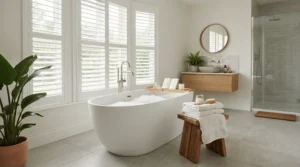
Shutters. Louvres tilt through a wide range, so you can keep a room bright while stopping passers-by seeing in. Airtasker’s comparison notes that small streams of light can still escape between tilted louvres, which is useful to know if you’re hoping for a perfect seal.
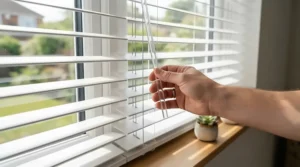
Venetian blinds. English Blinds highlights that Venetians filter light by tilting, and give more privacy when open than a roller can, because a roller is either up or down. For kitchens and offices, that flexibility is a real advantage.
Roller blinds. They’re all-or-nothing, which is exactly what you want at 3pm on a night-shift day. For daytime privacy, though, you may need a separate sheer or a day-night style.
A good rule of thumb: the more you need nuanced control through the day, the more you’ll value slats or louvres. The more you need darkness, the more you’ll value a solid fabric.
Roller and Venetian Blinds: Head-to-Head
Roller and Venetian blinds are the two workhorses of UK windows, and they solve different problems.
Roller blinds win on blackout, simplicity and low maintenance. English Blinds notes that only roller blinds can be made as full blackout, and that rollers have far less to go wrong, which is why they suggest them for children’s rooms. Blinds Direct also points out that venetian slats and cords can bend or twist over time.
Venetian blinds win on adjustability and privacy when open. Homes & Gardens quotes a designer noting that mini blinds block more light than some expect, because their curved louvres nest together. That’s a useful nuance, but still not the same as true blackout fabric.
Pick rollers for bedrooms, nurseries and shift-worker rooms. Pick Venetians for kitchens, offices and any room where you want daytime light with privacy. If you have both needs, layer a blackout roller behind a Venetian or shutter.
Long-Term Cost & Maintenance
Cost isn’t just the sticker price. Shutters have a high upfront cost, with fitting, but they last for years and wipe clean easily. Blinds cost far less initially, but cheaper models may need replacing sooner.
| Option | Upfront Cost | Lifespan Outlook | Upkeep | Best For |
|---|---|---|---|---|
| Shutters | High | Long | Low | Long-term homeowners |
| Venetian blinds | Low-mid | Medium | Regular dusting | Flexible light control |
| Roller blinds | Low | Medium | Wipe-down | Bedrooms and budgets |
On total cost of ownership, shutters can make sense if you stay for a decade or more, but a roller you replace every few years may still cost less overall. If you add smart motors like the SwitchBot Blind Tilt or Aqara Roller Shade Driver E1, factor in batteries or charging, and the hub.
Common Mistakes When Buying
Measuring once. Measure width and drop in several places and use the smallest number.
Assuming “blackout” means “dark”. Fabric opacity and edge gaps both matter. Which? separates blackout from “blockout”, the latter allowing some light through.
Buying smart before basic. A motor won’t fix a poorly fitted blind.
Ignoring cords. Safety first, especially with children.
Choosing shutters for the wrong reason. They’re brilliant for privacy and longevity, but not automatically better for darkness.
Safety, Regulations and Child-Safe Cords
In the UK, blinds with cords or chains carry a safety duty. Look for products made to BS EN 13120, and use the cleats, tensioners or breakaway connectors supplied. Better still, choose cordless or chainless designs for children’s rooms. Keep cots and beds away from windows and cords.
For motorised options, check how the product is powered. Solar and battery designs avoid mains wiring near windows, which is simpler for renters.
Features That Actually Matter (And Those That Don’t)
Matter: edge sealing, fabric opacity, correct measurement, safe cord design, ease of cleaning.
Sometimes matter: thermal backing, smart-home compatibility, solar charging.
Rarely matter: fancy colours in a room you only use for sleeping, or an app with fifty features you’ll never touch.
If you’re comparing window shutters vs blinds for a bedroom, ask what each feature does for your sleep. If it doesn’t help you get darker, cooler or quieter, it’s decoration.
FAQs
❓ Are window shutters better than blinds for blackout?
❓ Are shutters or blinds cheaper for UK windows?
❓ Can I fit blackout blinds without drilling?
❓ Can I make my Venetian blinds smart?
❓ What's best for sleeping after a night shift?
Conclusion
So, who wins window shutters vs blinds? It depends on what you’re optimising for.
If you want darkness at the lowest cost, blackout roller blinds win, and made-to-measure options like Furnished Blackout Roller Blinds or budget-friendly Argos Home Blackout Insulating Roller Blind do the job. If you’re renting, the ZeroLux No Drill Blackout Blind keeps your deposit safe. If you travel or need a quick trial, the Gro Company Gro-Anywhere Blind is handy.
If you already own Venetians or rollers, the SwitchBot Blind Tilt, SwitchBot Roller Shade and Aqara Roller Shade Driver E1 add convenience without replacing everything.
Shutters win on durability, insulation and sheer polish, especially for street-facing rooms in homes you’ll keep. But if your priority is sleeping, particularly after night shifts, remember they’re not a perfect blackout. Pair them with blackout fabric or choose solid panels.
Whichever way you go, measure carefully, mind the cords and test for light leaks at midday. Your future, well-rested self will thank you.
✨ Ready to upgrade your windows?
🔍 Click any highlighted product to check current pricing and availability, and sleep like you mean it!
Recommended for You
- Made To Measure Window Shutters Online: 7 Best Picks (2026)
- Window Shutters Under £100: 7 Smart Buys For UK Homes (2026)
- Tab Top Curtains Vs Eyelet Curtains: 7 Proven Picks (2026)
Disclaimer: This article contains affiliate links. As an Amazon Associate, I earn from qualifying purchases. If you purchase products through these links, we may earn a small commission at no additional cost to you.
✨ Found this helpful? Share it with your friends! 💬🤗
