
In This Article
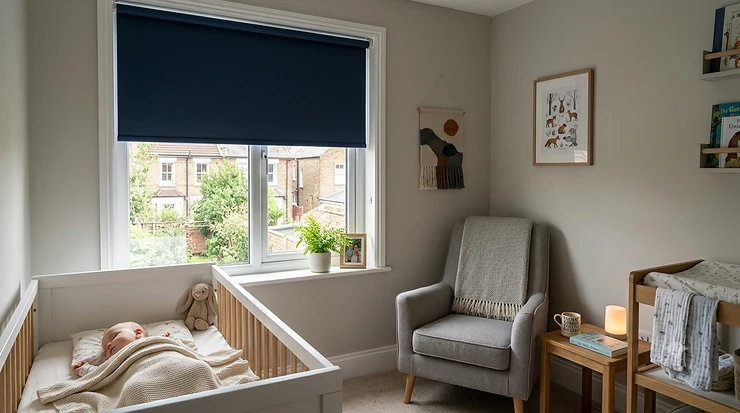
Ask any sleep-deprived British parent what single purchase transformed their household, and odds are good you’ll hear about blackout blinds before you hear about any fancy white noise machine, swaddle blanket, or overpriced dummy clip. It’s not glamorous. It’s a piece of dark fabric over a window. And yet — for many families — it’s the difference between a 5:30am alarm-clock baby and a glorious 7am lie-in.
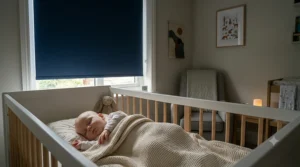
Here’s the science behind it. Blackout blinds for baby room create the deep darkness that signals to your infant’s brain that it is time to produce melatonin — the sleep hormone. Babies are not born with a developed circadian rhythm, which means they can’t naturally distinguish day from night without environmental cues. Light is the most powerful of those cues. As the NHS and Sheffield Children’s NHS Foundation Trust both confirm, blocking out as much light as possible helps promote melatonin production and encourages longer, more restful sleep. In plain English: dark room = sleepy baby.
Now factor in the reality of British summers. From May through to late August, sunrise creeps in before 5am across much of England and Scotland. By June, the sky in Yorkshire or Edinburgh is still stubbornly bright at half past nine at night. Standard curtains — even the supposedly “lined” ones you paid decent money for — let light bleed around the edges like a failed attempt at blackout curtains. A proper blackout blind, fitted correctly, seals those gaps. That’s the difference between a baby who wakes with the birds and one who sleeps through the sunrise entirely.
But the British nursery context throws up some unique challenges. Rented flats mean no-drill solutions are essential. Smaller rooms in terraced housing mean compact storage matters. Older sash windows or awkwardly shaped Victorian frames don’t always play nicely with standard-size blinds. Holidays to a cottage in the Lake District or grandma’s spare bedroom in Birmingham demand portability. This guide covers all of it — seven real products currently available on Amazon.co.uk, tested against real UK living conditions, with honest commentary on what actually works.
Quick Comparison: Top 7 Blackout Blinds for Baby Room at a Glance
| Product | Type | Max Size | Fitting Method | Thermal? | Travel-Friendly? | Price Range |
|---|---|---|---|---|---|---|
| Tommee Tippee Sleeptight (Large) | Fabric blind | 130×198cm | Suction cups + velcro | ❌ | ✅ Excellent | £25–£35 |
| Easynight Blackout Blind (home) | Stick-on fabric | Up to 300×145cm | VELCRO Brand adhesive | ✅ Silver coating | ✅ Good | £20–£45 |
| Easynight Portable Travel Blind | Fabric blind | Up to 300×145cm | Suction cups + velcro | ✅ Silver coating | ✅ Excellent | £25–£50 |
| MaximoLife® Ultimate Blackout Blind | Cut-to-size fabric | Custom | 16 suction cups + hook/loop | ✅ Yes | ✅ Good | £25–£40 |
| BKSAI Magnetic Blackout Blind | Magnetic fabric | 100×145cm | 12 magnets | ✅ Silver coating | ✅ Good | £15–£30 |
| Lights Out XL Popup Blind (2 Pack) | Pop-up blind | 120×100cm each | Single suction cup per blind | ❌ | ✅ Very Good | £20–£35 |
| Amazon Basics Portable Blackout Curtain | Fabric shade | 198×127cm | Suction cups | ❌ | ✅ Good | £10–£20 |
What jumps out immediately is how this market has split into two clear camps: the portable, versatile stick-on or suction-cup designs that travel brilliantly and require zero tools, and the slightly more permanent cut-to-size options that sacrifice convenience for a truly gapless blackout. If you’re in a rented property or need flexibility, the former camp wins. If your baby sleeps in one room and light is leaking in from every angle despite your best efforts, the latter is worth the extra ten minutes of setup.
💬 Just one click — help others make better buying decisions too! 😊
✨ Don’t Miss These Exclusive Deals!
🔍 Take your nursery setup to the next level with these carefully selected blackout blinds. Click on any highlighted item to check current pricing and availability on Amazon.co.uk. These picks will help every parent find exactly what their baby’s room needs!
Top 7 Blackout Blinds for Baby Room: Expert Analysis
1. Tommee Tippee Sleeptight Portable Blackout Blind (Large)
The gold standard of nursery blackout blinds in the UK — and for very good reason. The Sleeptight has been sitting at the top of the Mumsnet recommendation lists for years, and the large version (130×198cm) is the one worth buying. The sizing matters here: the regular version (130×99cm) is often too short for a standard UK sash or uPVC window, particularly in older Victorian or Edwardian terrace conversions that are, let’s be honest, the dominant housing stock in cities like Leeds, Bristol, and Liverpool.
Fitting works via a dual system of long-lasting suction cups running the full perimeter of the blind, paired with velcro fastenings that let you resize it down to roughly a third of its maximum dimensions. What this means in practice is a single blind that can cover a standard bedroom window at home, then be reconfigured in minutes to fit the narrow side window at a holiday cottage in Cornwall or the skylight-adjacent window at Grandma’s house in Surrey. The fabric is a genuine blackout material — not “room darkening,” which is industry code for “not actually that dark” — and at 680g the whole thing collapses into a neat travel bag that fits in a change bag. Machine-washable at 40°C, which parents of small children will appreciate enormously.
The honest caveat: it has no thermal properties. In the height of summer, a British nursery facing south or west can build up heat, and this blind won’t help with that. It’s purely a light-blocker, not a temperature regulator.
UK customers consistently give it top marks for durability and ease of use over repeated cycles of putting up and taking down. One Mumsnet user described it as “probably the best child-related purchase I ever made in sixteen years of parenting” — which is saying something.
✅ Genuinely portable — goes wherever you go
✅ Adjustable sizing covers most UK window shapes
✅ Machine-washable, 680g, comes with travel bag
❌ No thermal insulation
❌ Suction cups need dampening before use if stored a while
Best for: Families who travel regularly — cottages, hotel stays, visiting relatives. Also excellent as a primary home blind if temperature management isn’t a concern. Price range: around £25–£35 on Amazon.co.uk. Prime-eligible.
2. Easynight Blackout Blind (Home Version, Stick-On)
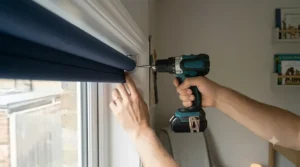
A British small business product that has earned its loyal following quietly and deservedly. The home version of the Easynight uses removable VELCRO Brand self-adhesive strips applied to the window frame — not the glass — meaning it works on uPVC and painted wooden frames without any drilling or tools. Crucially, it overlaps beyond the edge of the glass, which is the detail that separates a truly dark room from one with persistent light halos around the perimeter.
The fabric itself carries OEKO-TEX Standard 100 and GRS (Global Recycled Standard) certification, both of which confirm it’s made from at least 50% recycled material and free from harmful chemicals — relevant if you’re thinking about what’s hanging 30cm from your baby’s face for twelve hours a day. The silver coating on the reverse side reflects both heat and light, making it meaningfully cooler in summer. For parents in south-facing flats or new-build properties with large glazed windows that function effectively as solar collectors, this thermal benefit is genuinely useful and not just marketing speak.
Sizes run from a regular option covering windows up to 150×145cm right up to extra-large at 230×145cm, and the fabric can be cut to fit without fraying — which makes it the right pick for non-standard window shapes common in older British properties.
The limitation is that spot-cleaning only (no machine wash) makes it less appealing for frequent travellers. And the velcro process, while genuinely effective, takes perhaps fifteen minutes the first time you set it up — not the thirty-second solution that suction-cup blinds offer.
✅ OEKO-TEX certified — safer materials around baby
✅ True gapless blackout thanks to overlapping design
✅ Thermal silver coating keeps the nursery cooler in summer
❌ Spot clean only — not ideal for travel use
❌ First-time setup takes a little more patience
Best for: Parents in rented properties wanting a more permanent-feeling solution; south-facing nurseries that get warm in the British summer. Price range: around £20–£45 depending on size. Prime-eligible.
3. Easynight Portable Travel Blackout Blind
Think of this as the holiday-ready big sibling of the stick-on Easynight. It uses both suction cups (on the glass) and optional VELCRO Brand adhesive strips (on the frame), giving you two ways to fix it — or a combination of both for maximum seal. The patented overlapping edge design is the same as the home version, meaning those infuriating strips of light around the border simply don’t happen the way they do with cheaper alternatives that merely cover the glass area without any overlap.
This has won awards in the UK nursery category, and it shows. The silver thermal coating works in both directions: it deflects incoming heat in summer (useful when a holiday cottage in Devon has no air conditioning and the July sun is relentless) and retains warmth in winter. Coming in sizes up to 300×145cm, it will cover almost any window you’re likely to encounter in British accommodation — including the bizarrely wide sash windows found in converted Georgian properties.
The spot-clean-only instruction is a recurring minor irritant across the Easynight range, though it’s a minor trade-off given the quality of the blackout performance. UK reviewer feedback consistently highlights how this blind handles the lateral light leakage problem that suction-cup-only designs struggle with. If you’ve ever taped foil around the edges of a cheaper blind at 6am while your baby stares at you from the cot, you’ll understand why this matters.
✅ Award-winning overlapping design — no edge light leakage
✅ Dual attachment: suction cups AND velcro for maximum flexibility
✅ Available up to 300cm wide — handles large UK windows
❌ Spot clean only
❌ Slightly pricier than simpler alternatives
Best for: Regular travellers who refuse to compromise on sleep quality; large or awkwardly shaped UK windows. Price range: around £25–£50 depending on size.
4. MaximoLife® Ultimate 100% Blackout Blind
Where the Easynight earns respect through refined simplicity, the MaximoLife takes a more muscular approach: 16 suction cups, 25 hook tabs, 32 loop tabs, a unique printed cutting grid on the fabric itself to guide precise sizing, and an included installation kit complete with a chalk marker, fabric cutter, tape measure, and easy-to-follow manual. It sounds like a lot — and honestly, it is — but the result is a blind that stays put with an impressive tenacity. UK customers report using it in baby nurseries with considerable success, with one reviewer noting that the room went from showing a cloudy-day glow behind the curtains to “pitch black, couldn’t even take an after picture.”
The thermal performance is solid: the silver coating handles both heat reflection in summer and cold retention in winter. For parents in newer flats or newbuilds with floor-to-ceiling glazing — common in Manchester and London city-centre developments — the combination of suction cups on the glass and hook-and-loop on the frame creates an almost total blackout seal. The fabric at 0.4kg is impressively lightweight given its sturdiness.
What to watch: the velcro grip is exceptionally strong (which is the point), and some UK reviewers note it requires care when opening during the day. The cutting grid markings can also be faint, so cutting in good light with a ruler is recommended. But as a nursery blind that you want to trust with a night feed at 3am without suddenly discovering the suction cups have surrendered, this is among the most reliable options on Amazon.co.uk.
✅ Industrial-grade attachment system — doesn’t fall off at 2am
✅ Full installation kit included — good for less DIY-confident parents
✅ Thermal insulation both ways — relevant for UK climate
❌ Very strong velcro requires care when removing
❌ Slightly more involved setup than simpler alternatives
Best for: Parents in modern flats with large windows who need a reliable, semi-permanent solution. Also good for rented properties where drilling isn’t permitted. Price range: around £25–£40 on Amazon.co.uk.
5. BKSAI Magnetic Blackout Blind (100×145cm)
The most distinctive mechanism on this list. Rather than suction cups or velcro, BKSAI uses a system of 12 adhesive-backed magnets mounted to the window frame, which attract corresponding magnetic strips on the blind fabric itself. The result is a traceless, re-attachable blind that goes up and comes down with a satisfying snap. There’s no residue on the woodwork, which is genuinely valuable in period properties or rental flats where the landlord would notice marks.
The 100×145cm size covers a standard UK bedroom window — the classic Victorian sash or modern uPVC casement — comfortably when cut to allow a 3-4cm overlap at each edge. The fabric is silver-coated for heat and light reflection, and cuttable without fraying. UK parent reviewers buying it specifically for baby nursery use report excellent results, with one noting they went from light-bleeding blackout curtains to a pitch-black room with complete confidence.
The limitation worth noting: the magnet-based system requires the adhesive backing to cure properly (about an hour before use) and while the strength is good once set, the adhesive pads are not infinitely repositionable. If you need to move the blind to a different window frequently, the suction-cup alternatives are better suited. For a fixed nursery window, however, the magnetic system is wonderfully clean and re-usable.
✅ Traceless magnetic fixing — no marks on woodwork
✅ Silver coating for heat and light reflection
✅ Genuinely cut-to-size — covers odd-shaped or smaller windows
❌ One-hour wait for magnet adhesive to cure before first use
❌ Not the best option for frequent repositioning
Best for: Parents in rented flats with careful landlords; nursery rooms with standard-sized windows needing a clean, repeatable solution. Price range: around £15–£30 on Amazon.co.uk. Excellent value.
6. Lights Out XL Popup Window Blackout Blinds for Nursery (2 Pack)
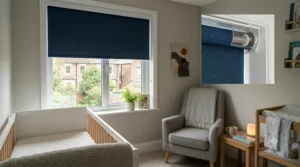
Speed is the USP here — and it’s not exaggerating. Each 120×100cm blind uses a single central suction cup and pops open from its folded state to cover a window in a matter of seconds. No tapes, no scissors, no VELCRO Brand strips to align. You unfold it, press the cup to the glass, and that’s genuinely it. For parents who routinely dash between nursery and living room trying to get a reluctant napper to stay asleep, those thirty seconds of fuss-free installation matter more than any spec sheet suggests.
The 2-pack format is clever: two blinds side by side can cover a wider window, or one can stay at home while the other travels in the change bag. Each blind at 120×100cm suits a standard single-pane window, and the pack comes with a compact travel bag. A UK parent reviewer buying these for a rented flat specifically praised the suction cup grip staying firm and the ease of transport to visits at “nanny’s.”
The honest limitation is that the rounded corners can allow very small amounts of light to creep in at the edges — not pitch black in the way the Easynight’s overlapping system is, but satisfactory for most nursery setups. Some reviewers also find the folding mechanism requires a little practice. For the price, though — and considering you’re getting two blinds — the value is excellent.
✅ Fastest setup of any blind on this list — thirty seconds
✅ 2-pack value — use one at home, one for travel
✅ No tape, no adhesive, no wall damage
❌ Rounded corners can allow minor edge light leakage
❌ Folding mechanism takes practice
Best for: Parents who prioritise speed above all else; anyone who juggles multiple rooms or travel frequently. Price range: around £20–£35 for the 2-pack.
7. Amazon Basics Portable Blackout Curtain Blind with Suction Cups (198×127cm)
More than 14,000 Amazon.co.uk reviews and a price point that makes the others look rather serious — this is the entry-level option that consistently surprises people with how well it performs. The 198×127cm dimensions cover the majority of standard UK bedroom windows, the suction cups attach directly to glass, and setup takes under two minutes. That’s it. No bells, no whistles, no thermal lining, no cutting grid.
What it is, is a reliable blackout fabric that does what it says at a price that won’t cause anxiety if it gets left behind at a holiday cottage or develops a small tear after eighteen months of heavy use. The 14,000+ review count means you can trust the general consensus: it blocks light effectively, the suction cups hold reasonably well (better when the glass is clean and dry), and it rolls up into a manageable bundle. UK parents routinely describe it as a back-up for travel or a budget starting point before upgrading if the nursery situation demands something more robust.
The gap between “budget” and “premium” is real here: the Amazon Basics won’t give you the edge-to-edge seal of the Easynight, nor the thermal properties of the BKSAI. But for under £20, it is a thoroughly competent piece of kit that will darken a room impressively well.
✅ Exceptional value — largest reviews count on this list
✅ Quick no-tool setup
✅ Good size for standard UK windows
❌ No thermal properties
❌ No overlapping edge design — some light can creep around perimeter
Best for: Budget-conscious parents testing the blackout blind concept for the first time; a travel backup. Price range: around £10–£20. Often Prime-eligible.
How to Set Up Your Blackout Blind Properly: A UK Parent’s Practical Guide
Buying the right blind is only half the battle. The number of parents who invest in a decent blackout blind, stick it up in five minutes, then declare “it doesn’t really work” — while a thin seam of light blazes around three edges — is higher than it ought to be. Here’s how to actually get this right.
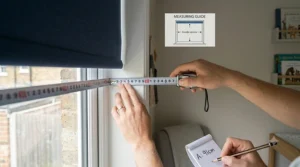
Step 1: Measure before you order. Measure your window glass area, then the window recess or frame, then the full wall section above the window if you’re planning curtain poles too. For stick-on blinds like the Easynight, the fabric needs to be slightly larger than the glass — the overlap is what creates the blackout. For suction cup blinds like the Tommee Tippee or Amazon Basics, the blind should cover the glass with 3–4cm spare on each side.
Step 2: Clean the glass and frame thoroughly. Suction cups on dusty or greasy glass will fail by 3am. Wipe down with a damp cloth, let dry, then apply. For adhesive strips, the frame must be clean, dry, and ideally warm — a cold morning in a draughty British terraced house is not the time to be sticking velcro to a painted frame.
Step 3: Dampen suction cups before use. This is the tip the product pages don’t always emphasise clearly enough. A slightly damp suction cup grips glass far more firmly than a dry one. Run them under a tap, shake off excess water, then press firmly and twist slightly to engage. The Tommee Tippee instruction leaflet covers this, but many people skip it and then wonder why the blind surrenders at 2am.
Step 4: Address the gap problem proactively. Even with a well-fitted blind, light can creep under the door from a hallway, particularly in older UK properties with ill-fitting internal doors. A draught excluder along the bottom of the nursery door costs very little and dramatically reduces ambient light intrusion. It also helps with temperature regulation — keeping the room within the Lullaby Trust’s recommended 16–20°C range, which is important for safe sleep.
Step 5: Common British-specific issues to know. Sash windows create particular challenges because the lower sash can rattle and vibrate in the kind of wind a Manchester winter produces, which loosens suction cups over time. For sash windows, velcro-based systems like the Easynight or magnetic systems like BKSAI tend to hold more reliably than suction cups alone.
Which Blind Is Right for Which UK Family? Real-World Scenarios
Not every nursery situation is the same, and the product that works brilliantly in a new-build semi in Hertfordshire may be entirely wrong for a Victorian conversion flat in Edinburgh. Here are three realistic UK profiles matched to the best products from our list.
👶 Profile 1: First-time parents in a rented two-bed flat, Leeds. They can’t drill, the landlord is particular about marks on the paintwork, and they have a standard uPVC casement window. They also travel to visit family in Sheffield every fortnight. The BKSAI Magnetic Blackout Blind suits home use beautifully — the traceless magnetic system leaves no evidence — paired with the Lights Out XL 2 Pack for travel. Total outlay: around £40–£55. Problem solved on both fronts.
👶 Profile 2: Parents in a south-facing newbuild in Milton Keynes with floor-to-ceiling glazing. The nursery gets hot. Summer bedtimes are a challenge even with a fan running. Here the thermal properties of the MaximoLife® Ultimate Blackout Blind or the Easynight Portable Travel Blind earn their keep. The silver coatings meaningfully reduce solar gain, keeping the room closer to the Lullaby Trust’s recommended temperature range. Worth spending in the £30–£50 range here rather than going budget.
👶 Profile 3: Frequent-travelling family, Edinburgh. The parents visit in-laws in Glasgow, friends in the Peak District, and attempt a summer cottage holiday in the Highlands every July. The northern Scottish summer means sunrise before 4am and sunset past 10pm — blackout is not optional, it’s survival. The Tommee Tippee Sleeptight Large is the clear winner: 680g, fits any window, machine-washable, packs into a bag that fits in a changing rucksack. Nothing else on this list travels as gracefully.
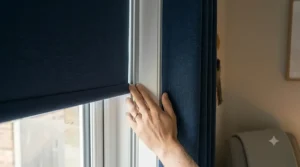
How to Choose Blackout Blinds for Baby Room in the UK: 6 Key Criteria
1. Actual Blackout vs Room-Darkening — Know the Difference
This is the single most important distinction in the market. “Room darkening” products reduce light by 60–80%. That sounds substantial until it’s 5:30am on a June morning in Yorkshire and your baby is still registering the glow. True blackout means 99–100% light blocking. Every product on our list is genuine blackout, but when you’re browsing Amazon.co.uk beyond this guide, read the small print carefully.
2. Fitting Method Matched to Your Property
UK renters cannot drill. UK landlords can be remarkably proprietorial about nail holes, never mind screw fixings. Suction cup systems (Tommee Tippee, Lights Out, Amazon Basics) and adhesive velcro systems (Easynight) are the renter-friendly options. Magnetic systems (BKSAI) are cleanest of all. If you own your home and the nursery is permanent, a proper fitted roller blind installed correctly will always outperform a portable solution on total light exclusion.
3. Window Type Matters More Than Buyers Expect
Modern uPVC casements: most portable systems work well. Victorian sash windows: vibration loosens suction cups — prefer velcro or magnetic. Skylights and roof windows: neither suction nor velcro works reliably; consider the specialist VELUX blackout blind or similar. Unusually wide windows: the Easynight range goes up to 300cm wide, which covers most situations.
4. Thermal Properties for British Summers and Winters
The UK climate is famously mild but unpredictable. A south-facing nursery in June can reach 28–30°C without intervention, which sits outside the Lullaby Trust’s recommended safe sleep temperature range. Silver-coated blinds (Easynight, BKSAI, MaximoLife) provide a meaningful reduction in solar gain. In winter, the same coating helps retain warmth — relevant in older British properties with single-glazed windows that radiate cold.
5. Cord Safety — A Legal Requirement in the UK
Since 2014, all blinds sold in the UK must comply with window blind safety standards. If any blind has a cord or chain, it must include a safety device. Every product on our list is cordless or cord-free by design, which is one of the reasons suction cup and velcro systems dominate the nursery market. If you’re considering a standard roller blind for the nursery, ensure it has a spring mechanism rather than a chain pull.
6. The Portability Question
It’s tempting to solve the home problem and deal with travel separately, but the UK family holiday — a National Trust cottage in Northumberland, a rented static caravan in Pembrokeshire, a budget hotel near a theme park — almost always creates a secondary blackout problem. Choosing a portable primary blind from the start (Tommee Tippee, Easynight Portable, Lights Out) solves both at once and is more cost-effective than buying a home blind and a travel blind separately.
Blackout Blinds vs Blackout Curtains: The Honest Comparison
Parents often ask whether to fit blackout curtains or a blackout blind. The answer depends on what you’re actually trying to achieve — and the British window setup puts its own twist on things.
| Factor | Blackout Blind | Blackout Curtains |
|---|---|---|
| Light sealing | Better — less edge gap | Can bleed light around all edges |
| Installation | No drill needed (portable types) | Curtain pole required |
| Cost | £10–£50 | £30–£150+ including pole |
| Portability | Excellent (portable types) | None |
| Aesthetics | Minimal | More decorative |
| Best for | Nursery darkness priority | Combined privacy and aesthetics |
The key insight from actual nursery experience: blackout curtains that hang away from the wall on standard poles allow a substantial halo of light to enter around the top, sides, and bottom. In a bright June morning, this is often enough to wake a light-sensitive baby. A well-fitted blackout blind that overlaps the glass eliminates this problem entirely. Many parents end up using both — a blackout blind fitted to the glass for genuine light exclusion, combined with curtains purely for aesthetics and draught management.
The financially shrewd move is to prioritise a good blackout blind first (£20–£40), assess whether it solves the problem, and only add curtains later if you want the room to look less like a cave during daytime.
Common Mistakes When Buying Nursery Blackout Blinds in the UK
Buying “room darkening” when you need “blackout.” As above — these terms are not interchangeable, and the difference at 5am is enormous.
Ordering the wrong size. The most common Amazon return in this category. Measure your glass width and height, then add 6–8cm to each dimension for an overlapping fit. Standard UK bedroom windows typically run between 90cm and 120cm wide, but Victorian or period properties vary wildly.
Trusting suction cups on dirty glass. Installation in a rush without cleaning the glass first accounts for a significant proportion of “suction cups don’t work” reviews. Damp, clean glass changes everything.
Ignoring the thermal issue in summer. Buying a non-thermal blind for a south-facing nursery in a newbuild is a common mistake. By July, the room temperature problem can outweigh the light problem. If your nursery faces south or west, thermal blind variants are worth the modest extra cost.
Buying purely the cheapest option. The Amazon Basics blind is excellent value for what it does — but if your baby is a genuinely light-sensitive sleeper, the edge-light leakage on a basic suction-cup blind will be enough to cause problems. Spending an extra £10–£15 on a properly designed overlapping system often saves weeks of sleep regression.
Forgetting to account for travel. Installing a perfect fitted roller blind in the nursery and then discovering that the caravan in Wales doesn’t have blackout anything in July is an avoidable problem. Keep a portable solution in reserve.
UK Safety Standards and Regulations for Nursery Blinds
This is an area that deserves proper attention rather than a footnote. Since 2014, all blinds sold in the UK have been required to comply with BS EN 13120 — the British Standard for internal blinds — which specifically addresses cord and chain safety hazards for children. Corded blinds must be supplied with a safety device such as a tie-down anchor or breakaway fitting. The Lullaby Trust recommends that blind cords should be positioned at least 1.5 metres from the cot.
All seven products reviewed here are cordless, which removes this risk entirely. However, if you’re inheriting an older corded roller blind that came with the property and considering fitting it in the nursery — don’t, unless it has been retrofitted with an up-to-date safety device. The Royal Society for the Prevention of Accidents (RoSPA) treats blind cord strangulation as a significant preventable hazard.
On material safety: OEKO-TEX Standard 100 certification (carried by the Easynight range) confirms the fabric has been tested and found free from harmful substances — relevant reassurance for a product hanging close to an infant’s sleeping space.
Post-Brexit, UKCA marking has replaced CE marking for products entering the UK market. For nursery accessories, this relates primarily to physical safety standards. Products sold on Amazon.co.uk are required to meet UK product safety regulations, and Amazon itself enforces compliance requirements on marketplace sellers.
Frequently Asked Questions About Blackout Blinds for Baby Room
❓ Do blackout blinds really help babies sleep longer?
❓ Are blackout blinds safe to use in a baby's nursery in the UK?
❓ Can I use a blackout blind in a rented flat without drilling?
❓ Which blackout blind works best for travel in the UK — holidays and visiting family?
❓ At what temperature should I keep my baby's nursery at night, and do blackout blinds help?
Conclusion: The Dark Room Is Worth the Investment
Here’s the bottom line. Babies are not designed to filter out a June evening sky at 9pm or ignore the cheerful brightness of a July morning at quarter past five. Their brains are wired to respond to light — and no amount of gentle sleep training, consistent bedtime routines, or white noise playlists will fully compensate for a room that isn’t actually dark. Blackout blinds for baby room are, in the hierarchy of nursery investments, genuinely one of the most impactful purchases you can make.
The seven products on this list are all currently available on Amazon.co.uk, all verified as genuine blackout (not merely room-darkening), and all suited to different UK living situations — from the rented Victorian flat in Manchester to the modern newbuild in Milton Keynes to the frequent-travel family heading to Scotland for summer. Match the product to your specific situation rather than defaulting to the most popular or the cheapest. As a broad guide: prioritise thermal properties if your nursery faces south or west; prioritise portability if you travel with baby regularly; prioritise the overlapping edge design (Easynight range) if you’ve been frustrated by light halos around other blinds.
Good sleep is not a luxury. For babies, it’s biology. And in British summers especially, a decent blackout blind is the closest thing to a guaranteed night of peace that money can buy.
✨ Don’t Miss These Exclusive Deals!
🔍 Check current pricing and availability on Amazon.co.uk for any of the seven blackout blinds reviewed above. Prices fluctuate — especially around sale events — so click through to see the latest. These are some of the best nursery blackout blind options available to UK parents right now!
Recommended for You
- Best Blackout Roller Blinds for Bedroom UK 2026 – Top 7 Picks
- 7 Best Blackout Roller Blinds UK 2026: Expert Reviews & Top Picks
- Made to Measure Roller Blinds UK: 7 Best Picks for 2026
Disclaimer: This article contains affiliate links. As an Amazon Associate, I earn from qualifying purchases. If you purchase products through these links, we may earn a small commission at no additional cost to you.
✨ Found this helpful? Share it with your mates! 💬🤗
