
In This Article
Right, let’s be honest about something before we go any further: nobody grows up dreaming about window dressings. And yet here you are, staring down a bare pane of glass, phone in hand, typing “best venetian blinds” into a search bar at eleven o’clock at night because the streetlight outside your bedroom has apparently decided to double as a second sun. You are not alone, and you’re in the right place.
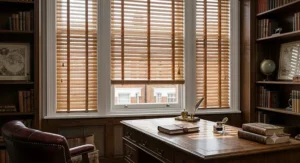
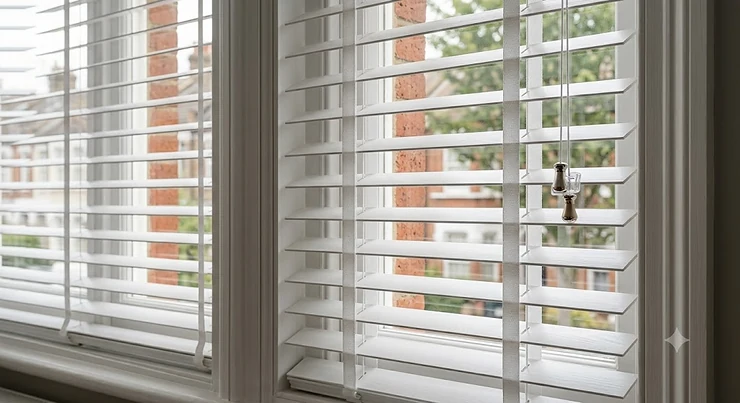
A venetian blind is a window covering made from a series of horizontal slats — wood, PVC, faux wood or aluminium — strung together so they can be raised, lowered, or tilted to control light and privacy independently. That last bit is the magic trick: unlike curtains, which are really only “open” or “closed,” a good set of slats lets you flood a room with soft, diffused daylight while keeping next door’s window cleaner firmly out of your business.
This guide skips the marketing fluff you’ll find on a standard product page and gets into the stuff that actually matters: real slat materials, genuine aggregated review sentiment from UK shoppers, honest pros and cons, and a proper look at where venetian blinds sit against their rivals. We’ll walk through seven real products spanning budget PVC through to hand-finished real wood, work out what each one is genuinely good for, and untangle the UK safety rules that most listings quietly skip over. By the end, you’ll know exactly which slats suit your windows — and your wallet.
Quick Comparison Table
Before we get stuck into the full detail, here’s the lay of the land. This table is a shortcut, not a substitute — the analysis underneath explains why the numbers matter.
| Product | Material | Slat Width | Price Range | Best For |
|---|---|---|---|---|
| FURNISHED PVC Venetian Blind | PVC | 25mm | Under £15 | Budget kitchens & bathrooms |
| Lister Cartwright PVC Venetian Blind | PVC | 25mm | Around £10-£20 | Renters & first flats |
| EV DEKOR Faux Wood Venetian Blind | Faux wood | 50mm | £15-£30 range | Living rooms wanting a wood look |
| REHAN & CO Made to Measure Blind | PVC | 25mm | £20-£40 range | Awkward or non-standard windows |
| Aluminium Metal Venetian Blind | Aluminium | 25mm | Under £25 | Home offices & studies |
| Sol Royal Wooden Venetian Blind | Real wood | 50mm | £45-£70 range | Premium living & dining spaces |
| New Edge Blinds Faux Wood Blind | Faux wood | 50mm | £30-£60 range | Bespoke fits with colour matching |
Looking across the table, the split is really about slat width and material rather than price alone: 25mm slats keep things neat and unobtrusive on smaller windows, while 50mm slats let more light through per tilt and suit bigger panes. The FURNISHED PVC Venetian Blind and the Lister Cartwright PVC Venetian Blind anchor the value end for anyone furnishing on a shoestring, whereas the Sol Royal Wooden Venetian Blind and New Edge Blinds Faux Wood Blind justify their higher price with build quality that’s built to outlast a house move or two.
💬 Found your budget bracket already? Scroll down to the full breakdown before you commit — the small print really does change the recommendation.
Top 7 Best Venetian Blinds: Expert Analysis
Right, the main event. These seven were chosen to cover every realistic buyer: the student moving into their first rental, the family childproofing a kitchen, and the homeowner who wants their study to look like it belongs in an interiors magazine.
1. FURNISHED PVC Venetian Blind — best all-rounder for wet rooms
The FURNISHED PVC Venetian Blind is one of the most consistently purchased slat blinds on Amazon UK, and once you look past the unglamorous name, it’s easy to see why. It’s a straightforward 25mm-slat PVC blind, trimmable at home with scissors or a slat cutter, which means one size genuinely fits a whole range of windows without a joiner’s visit.
The PVC construction is fully wipeable and doesn’t warp in steam, which matters more than it sounds — timber and even faux wood can cup or swell in a bathroom that gets properly humid every morning. The tilt wand and child-safe cord fittings come included, so there’s no separate trip to a hardware shop before it’s fit to hang.
Reviewers consistently report that the trimming process is easier than expected, needing only basic tools and a steady hand, though a handful note that the plastic feels noticeably lighter and less rigid than pricier alternatives. That’s a fair trade-off for a blind that costs less than a round of coffees.
This is the blind for someone who wants function first: kitchens, bathrooms, and rental properties where the priority is “does it work and does it survive condensation,” not “does it match my curtain rail.”
Pros:
- ✅ Trimmable at home to fit almost any window
- ✅ Fully wipeable PVC handles steam and grease well
- ✅ Child-safe fittings included as standard
Cons:
- ❌ Slats feel thinner than faux wood or aluminium options
- ❌ Limited colourways compared with made-to-measure ranges
Priced under £15 in most sizes, this is about as low-risk a purchase as window dressing gets — genuinely good value if your windows are standard shapes.
2. Lister Cartwright PVC Venetian Blind — best for quick, no-fuss fitting
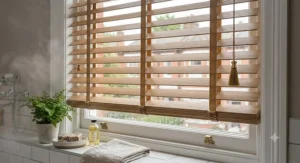
The Lister Cartwright PVC Venetian Blind takes a similar approach to the previous entry but leans into a slightly more textured, steel-effect finish that reads a bit less “plastic” from across the room. It’s another 25mm PVC slat design with the now-familiar easy-fit brackets and integrated child-safety features.
What sets it apart on paper is the textured steel colourway, which mimics an aluminium look without the dents that thin metal slats can pick up in transit. For a renter who wants something that looks a touch more considered than the cheapest white PVC on the shelf, that’s a meaningful upgrade for very little extra outlay.
Aggregated feedback suggests buyers are pleasantly surprised by how quick the fitting process is, with most describing it as a same-afternoon job even for first-timers; a smaller number mention that the tilt mechanism can feel slightly stiff straight out of the box before it loosens with use.
This is best suited to first flats and short-term lets, where you want something that looks deliberate rather than default-white but don’t want to spend real-wood money on a blind you might not take with you.
Pros:
- ✅ Textured steel finish looks smarter than plain white PVC
- ✅ Genuinely quick to fit without professional help
- ✅ Child safety fittings included in the box
Cons:
- ❌ Tilt wand can feel stiff initially
- ❌ Fewer size options than dedicated made-to-measure brands
Sitting in the same broad £10-£20 range as our first pick, the value case rests on whether the steel-effect finish matters to your décor — if it does, it’s worth the negligible premium.
3. EV DEKOR Faux Wood Venetian Blind — best faux wood for the money
Step up to the EV DEKOR Faux Wood Venetian Blind and the material shift to 50mm faux wood slats immediately changes the feel of a room. Wider slats let in noticeably more light per degree of tilt than 25mm PVC, and the moulded wood-grain finish photographs and reads almost indistinguishably from real timber at a normal viewing distance.
Faux wood is PVC engineered to imitate timber, which means it inherits real wood’s warmer look while keeping PVC’s resistance to warping — a genuinely useful combination for kitchens with big windows where a real wood blind would be a risky bet. The tape-covered ladder cords also hide the internal stringing, which is a small but noticeable style upgrade over exposed-string budget blinds.
Reviewer sentiment leans strongly positive on the visual impact for the price point, with the wood-effect finish repeatedly singled out as looking more expensive than it costs; the main recurring gripe is that the included fitting brackets are on the flimsy side and some buyers opt to buy sturdier third-party brackets separately.
Best suited to living rooms, home offices and larger kitchen windows where you want the warmth of wood-look styling without real wood’s humidity sensitivity or price tag.
Pros:
- ✅ 50mm slats let in more light per tilt than 25mm blinds
- ✅ Wood-grain finish looks considerably pricier than it is
- ✅ Moisture-resistant, unlike real timber
Cons:
- ❌ Included brackets feel less sturdy than the blind itself
- ❌ Heavier than plain PVC, so needs a secure fixing point
Landing in the £15-£30 range depending on size, this is arguably the best value-to-appearance ratio of the whole list — genuine “hallway test” upgrade material.
4. REHAN & CO Made to Measure PVC Venetian Blind — best for oddly sized windows
Not every window in a British house is a tidy standard size — bay windows, Victorian sashes and converted lofts all throw up dimensions that off-the-shelf blinds simply don’t cover. That’s where the REHAN & CO Made to Measure PVC Venetian Blind earns its keep, offering custom width and drop combinations built to order rather than trimmed at home.
Because it’s manufactured to your exact measurements rather than cut down from a larger stock size, you avoid the slightly uneven trimmed edge that can happen with DIY-cut blinds, and the headrail is sized correctly from the outset rather than being an oversized bracket hiding excess width. The 25mm slats and embossed grey or plain colourways keep things understated for offices and studies.
Buyer feedback on made-to-measure PVC ranges consistently highlights the accuracy of sizing as the standout benefit over trimmable stock blinds, with the trade-off being a longer dispatch window since each blind is produced against the order rather than pulled off a shelf.
If your window has an unusual width, an awkward recess depth, or you’ve simply been burned before by a trimmed blind that never quite sat flush, this made-to-measure route removes that guesswork entirely.
Pros:
- ✅ Manufactured to your exact width and drop
- ✅ No uneven edges from home trimming
- ✅ Suits recessed, bay and non-standard windows
Cons:
- ❌ Longer lead time than stock, off-the-shelf blinds
- ❌ Costs more than equivalent trimmable PVC options
Expect to pay in the £20-£40 range depending on size, which is a fair premium for a blind that actually fits first time.
5. Aluminium Metal Venetian Blind — lightest option for home offices
Metal slats bring a distinctly different character to a room, and the Aluminium Metal Venetian Blind — available in silver, black and white — is the classic choice for studies, home offices and anywhere with a more contemporary, minimal aesthetic. The 25mm aluminium slats are trimmable at home, much like the PVC options above, but the material itself behaves very differently once fitted.
Aluminium is naturally flame-resistant and doesn’t discolour under direct sunlight the way some PVC formulations can over several summers, which is a genuine long-term durability point in south-facing rooms. It’s also the lightest of the seven blinds here, putting less strain on fixing points in plasterboard or older window frames.
Aggregated review sentiment describes the finish as sleeker and more “office-appropriate” than plastic alternatives, while a recurring criticism is that individual slats can bend or dent if handled roughly during cleaning or fitting — a fair trade for the material’s light weight.
This is the pick for anyone kitting out a home office, especially where video calls mean you want tidy, tilt-adjustable light without curtains bunching in the background.
Pros:
- ✅ Flame-resistant and colour-stable in strong sunlight
- ✅ Lightest option, easy on older fixing points
- ✅ Sleek, contemporary look in three neutral colours
Cons:
- ❌ Individual slats can dent if handled carelessly
- ❌ Metal can feel colder to the touch than PVC or wood
At under £25 in most sizes, it’s a genuinely smart-value pick for anyone prioritising a clean, modern look over softness of material.
6. Sol Royal Wooden Venetian Blind — best premium real wood option
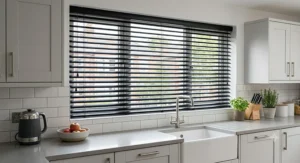
For a genuinely upscale finish, the Sol Royal Wooden Venetian Blind moves into real timber rather than faux wood or PVC, with 50mm solid wood slats designed for darkening and a warmer, more tactile finish than any moulded alternative can fully replicate. This is the blind that tends to anchor a room rather than simply cover a window.
Real wood slats provide better natural insulation than PVC or aluminium, thanks to timber’s inherently lower thermal conductivity, which can take a small but real edge off heat loss through a large window on a cold night. The trade-off is that real wood is more sensitive to humidity than faux alternatives, so it’s not the natural first choice for a steamy bathroom.
Reviewer sentiment tends to focus heavily on the tactile quality and finish, with buyers frequently noting that the wood slats look noticeably richer in person than in product photography; a smaller number flag that real wood requires more careful cleaning than a simple wipe-down to avoid marking the grain.
Best suited to living rooms, dining rooms and bedrooms where you want a considered, design-led finish and are prepared to keep the blind away from consistently humid conditions.
Pros:
- ✅ Genuine solid timber slats with a rich, tactile finish
- ✅ Better natural thermal insulation than PVC or aluminium
- ✅ Reads as a considered, design-led choice in living spaces
Cons:
- ❌ Not recommended for bathrooms or steamy kitchens
- ❌ Requires more careful, non-abrasive cleaning
Sitting in the £45-£70 range, this is the most expensive blind on the list, but the material upgrade over faux wood is genuinely noticeable, not just marketing spin.
7. New Edge Blinds Faux Wood Venetian Blind — best bespoke colour matching
Rounding out the list, the New Edge Blinds Faux Wood Venetian Blind combines the made-to-measure accuracy of our earlier PVC pick with the wider 50mm faux wood slats and ladder-tape styling of our mid-range entry, while adding a genuinely wide colour range — reportedly around 14 shades — for buyers who want a precise match to existing woodwork or trim.
Being custom fit removes the sizing compromises of stock blinds, and the moisture-resistant faux wood construction means it can go anywhere in the house, kitchens and bathrooms included, without the humidity concerns that apply to genuine timber. Top, side, or face-fix brackets are all included, which covers most fitting scenarios without a separate hardware run.
Feedback on bespoke faux wood ranges from smaller UK suppliers tends to praise the colour accuracy against sample swatches and the turnaround speed relative to expectations for a made-to-order product, with the main caveat being that returns on a custom-cut blind are inherently more restricted than for stock sizes.
If you’ve already chosen your skirting boards, door frames or kitchen units and want the blind to match rather than clash, this is the pick that takes colour-matching seriously.
Pros:
- ✅ Around 14 colour options for precise décor matching
- ✅ Moisture-resistant, so it suits kitchens and bathrooms too
- ✅ Multiple bracket types included for flexible fitting
Cons:
- ❌ Custom sizing means limited return flexibility
- ❌ Costs more than generic 50mm faux wood stock blinds
Priced in the £30-£60 range, it sits as a sensible middle ground between the EV DEKOR stock option and the premium Sol Royal timber blind above.
Practical Usage Guide: Fitting, Adjusting & Maintaining Your Venetian Blinds
Getting a blind home is only half the job — fitting it properly and looking after it is what determines whether it still tilts smoothly in three years or starts jamming within three months. Start by measuring twice: for an inside-the-recess fit you’ll want at least 5-6cm of depth so the headrail sits flush, while an outside fit (face-fixed to the wall or frame) suits shallower recesses or windows that let in draughts around the edges.
When trimming a stock PVC or aluminium blind at home, always cut from the bottom slat upward and re-thread the ladder cords rather than simply chopping the headrail — cutting the headrail without adjusting the internal mechanism is the single most common reason DIY-trimmed blinds jam within the first month. A basic slat cutter tool, sold separately for a few pounds, makes cleaner cuts than household scissors and is worth the small outlay if you’re trimming PVC or aluminium yourself.
Maintenance is refreshingly low-effort if you stay ahead of it: a monthly pass with a microfibre duster (purpose-made blind dusters exist and genuinely speed this up) stops dust building into the kind of grime that needs a wet wipe-down. For PVC and faux wood, a damp cloth with mild washing-up liquid handles most marks; for real wood, stick to a dry or barely-damp cloth to avoid raising the grain or causing warping over time.
Common first-30-days mistakes worth avoiding: over-tightening the tilt wand (it should turn with light finger pressure, not force), forgetting to fasten cords into a figure-of-eight on the cleat after use, and mounting brackets into plasterboard without a wall plug, which is the leading cause of an otherwise well-fitted blind eventually working loose.
Real-World Scenarios: Which Venetian Blind Suits Your Home?
The first-flat renter. Picture someone moving into a rented one-bed with bare windows and a deposit they’d quite like back in full. Budget is tight, drilling permanent fixings is off the table, and the priority is something that looks tidy without committing to it. The Lister Cartwright PVC Venetian Blind or FURNISHED PVC Venetian Blind fit this brief precisely — cheap enough to leave behind if needed, easy-fit brackets that don’t demand serious DIY, and a look that beats bare glass without any long-term commitment.
The young family in a period house. Here the windows are original sashes, slightly non-standard, and there’s a toddler who treats every dangling object as a personal challenge. This is where the REHAN & CO Made to Measure PVC Venetian Blind earns its higher price tag through accurate sizing, paired with strict attention to the child-safety fittings covered later in this guide — non-negotiable in any home with young children.
The remote worker upgrading their study. Someone spending forty hours a week on video calls wants a background that looks put-together and light that doesn’t wash out their webcam feed at 9am. The Aluminium Metal Venetian Blind in black or white delivers exactly that: a clean, adjustable, professional look that’s inexpensive enough to buy without a second thought.
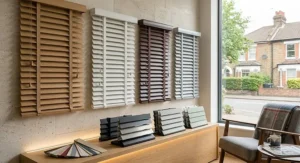
Buyer’s Decision Framework: How to Choose the Right Venetian Blind for You
Cutting through the marketing, here’s a genuinely practical way to choose venetian blinds without spending a weekend comparing spec sheets:
- Identify the room’s humidity level first. Bathrooms and steamy kitchens rule out real wood immediately — go PVC or faux wood instead.
- Measure your recess depth. Anything under 5cm favours an outside/face-fix mount over an inside-recess fit.
- Decide your budget tier honestly. Sub-£20 PVC is genuinely fine for rentals and utility rooms; save the premium timber for rooms you’ll actually sit in.
- Check for children under 42 months in the household. If so, cordless or fully tensioned designs are the only sensible option — more on this below.
- Match slat width to window size. 25mm slats suit smaller panes and a neater look; 50mm slats suit larger windows and let in more light per tilt.
- Consider colour-matching needs. If your trim and skirting are already a fixed colour, a made-to-measure range with a wide colour palette avoids an awkward clash.
- Factor in dispatch time for custom sizes. Stock blinds ship fastest; made-to-measure ranges typically need longer lead times, so order ahead of a moving date rather than the week before.
If you want to buy venetian blinds with total confidence, running through this checklist before adding anything to your basket takes about five minutes and saves the far more annoying return-and-reorder cycle that comes from guessing.
Venetian Blinds vs Other Window Treatments: Horizontal Slat Blinds Compared
It’s worth being clear-eyed about what venetian blinds — a category of horizontal slat blinds — actually do better and worse than the alternatives, rather than assuming they’re automatically the right choice.
Against vertical blinds, horizontal slat blinds generally win on smaller and standard-sized windows, giving a neater, more traditional look, while vertical blinds still have the edge on very wide sliding doors and patio openings where horizontal slats can look visually busy stacked across a big span. Against roller blinds, venetian blinds offer a genuine advantage in light control precision — tilting slats lets you dim a room without total blackout, something a roller blind simply can’t do short of raising or lowering it fully. Roller blinds do win on sheer simplicity and a cleaner minimalist look when fully closed.
Against curtains, venetian blinds are the clear winner for privacy without sacrificing daylight, and they’re dramatically easier to keep clean in a kitchen environment where fabric would trap grease and odours. Curtains, in turn, still beat blinds on softening room acoustics and providing better insulation against draughts when lined properly, so a layered approach — blinds plus curtains — is genuinely common in UK living rooms for exactly this reason.
Common Mistakes When Buying Venetian Blinds
The single biggest mistake is measuring the window opening rather than the intended mounting surface — an inside-recess blind needs the internal recess width, while an outside-mount blind needs the wall or frame width plus overlap, and mixing these two up is the most frequent cause of a returned blind. A close second is assuming all “trimmable” blinds can be cut equally easily: PVC trims cleanly with basic tools, but aluminium needs a proper slat cutter or the edges burr and catch on the headrail.
Buyers also regularly underestimate lead times on made-to-measure ranges, ordering the week before they need a blind fitted rather than allowing the one-to-two week production window that custom sizing typically requires. According to the British Blind and Shutter Association, choosing a genuinely cordless or tension-operated design is strongly recommended in any home where young children live or visit — yet plenty of buyers still default to the cheapest corded option without checking what safety devices are actually included in the box.
Finally, colour-matching from a small on-screen thumbnail rather than ordering a physical sample is a classic and entirely avoidable error — screen colour calibration varies enough between phones and monitors that “off-white” can arrive looking distinctly grey or cream against your existing trim.
What Venetian Blind Reviews on Amazon Actually Reveal
Scroll through venetian blind reviews on Amazon UK and a few patterns show up again and again, regardless of brand or price point. Genuinely positive feedback clusters consistently around ease of trimming and fitting — buyers repeatedly express surprise at how quickly a blind goes from box to window, often citing well-illustrated instructions as the reason. Reviewers researching the best venetian blinds for their specific room size also frequently mention that checking the exact drop measurement against their own window, rather than trusting a generic size chart, made the biggest difference to satisfaction.
On the critical side, the most recurring theme across budget PVC ranges is bracket quality — several products in this guide received specific reviewer feedback that the plastic fixing brackets feel like the weakest link in an otherwise decent blind, which is exactly why we’ve flagged this individually where it applies above. When shoppers are actively comparing venetian blinds on Amazon, star ratings alone don’t tell this story; it only surfaces once you read a reasonable sample of the actual written reviews rather than trusting the headline average.
The most useful takeaway from browsing genuine review sentiment isn’t which single product is “best” in the abstract — it’s that fit, humidity conditions and honest expectations about bracket sturdiness matter more to satisfaction than brand name alone.
✨ Want the shortlist without the scrolling? Jump back up to the Top 7 for the full breakdown of what to buy and why.
Safety, Regulations & Compliance: What UK Buyers Must Know
This is the section most product listings skip entirely, and it genuinely matters if there are young children in or visiting your home. Since February 2014, all internal blinds sold in the UK — venetian blinds included — have had to comply with British Standard BS EN 13120 and its companion strangulation-prevention standards, EN 16433 and EN 16434. In practice, this means any blind sold with a looped cord or chain must now include a child safety device fitted at the point of manufacture, such as a breakaway connector, a tension device, or a cleat to keep spare cord tidied away.
According to GOV.UK guidance on blind cord safety, cords and loops pose a genuine risk to young children, and the safest practical step for any household is to keep cots, beds, highchairs and playpens well away from window blinds altogether, regardless of which safety device is fitted. If you’re buying for a nursery, a child’s bedroom, or simply want maximum peace of mind, actively seeking out a cordless or fully tensioned design — rather than a corded blind with an add-on safety clip — removes the risk at the source rather than merely managing it.
For anyone with older blinds still fitted from before 2014, it’s worth checking cords for looping and retrofitting a cleat or tensioner rather than assuming an older product is automatically compliant. NIdirect’s blind cord safety advice recommends examining every blind in the home periodically, particularly after moving furniture, since a previously safe cord can become an accessible loop simply by being repositioned.
Long-Term Cost & Maintenance: The Real Value of a Classic Window Blind
A classic window blind isn’t a one-off purchase to forget about — it’s a fixture you’ll interact with daily for years, so it’s worth thinking in terms of total cost of ownership rather than sticker price alone. A sub-£15 PVC blind might need replacing within three to five years in a high-humidity room if the tilt mechanism wears out from daily use, whereas a well-maintained real wood or quality faux wood blind can comfortably outlast a decade with basic care.
Run the numbers and the picture shifts a little: two replacement budget PVC blinds over a decade can cost roughly the same as one mid-range faux wood blind bought once, without accounting for the hassle of re-measuring and re-fitting each time. That doesn’t make budget PVC a bad choice — for a rental you’ll leave in a few years, replacing cheaply is entirely rational — but for a forever home, the maths increasingly favours paying more once.
Ongoing costs are genuinely low across the board: replacement tilt wands and cord sets cost only a few pounds when something does wear out, and none of the seven products here require professional servicing under normal domestic use. The only meaningful ongoing cost is time — a monthly dust and an occasional deeper clean is realistically all any of these blinds ask of you.
Light Control & Privacy: Getting the Most from an Adjustable Light Blind
The whole appeal of an adjustable light blind over a fixed curtain or roller shade is the ability to fine-tune exactly how much daylight enters a room without an all-or-nothing decision. Tilting slats to around 45 degrees typically bounces light up toward the ceiling rather than directly into the room, which is a genuinely useful trick for reducing glare on a TV or laptop screen during the day while still keeping the room bright.
For bedrooms, a fully closed tilt with overlapping slats gets you meaningfully darker than an open blind, though true blackout still requires a dedicated blackout lining or blind if you’re a shift worker or simply a very light sleeper — venetian blinds narrow the light gap rather than eliminating it entirely. For south-facing rooms prone to overheating, partially closed slats angled to deflect direct sun can measurably reduce solar gain compared with an uncovered window, which is a small but real contribution to keeping a room comfortable on a hot day.
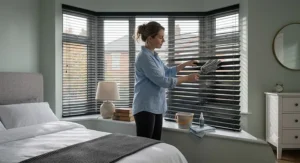
The practical upshot: don’t judge an adjustable light blind purely on how it looks fully open or fully closed in a product photo — the entire value proposition sits in the range between those two extremes, and that’s genuinely difficult to convey in a static image.
Features That Actually Matter (And Those That Don’t)
Cutting through the spec-sheet noise, a handful of features genuinely change day-to-day experience, while others are largely cosmetic. Slat width matters more than most buyers assume: 25mm slats suit smaller windows and a neater, more traditional look, while 50mm slats let in more light per degree of tilt and generally suit larger panes better. Child safety fittings matter enormously if there’s any chance of a young child accessing the room, full stop — this isn’t a nice-to-have, it’s close to non-negotiable.
On the other hand, headrail colour is almost entirely cosmetic once the blind is mounted and largely hidden by the surrounding frame, so it’s rarely worth paying a premium purely for headrail finish. Similarly, marketing claims about “premium” cord material make little practical difference for a domestic blind that’s opened and closed a handful of times a day — the safety device fitted matters far more than the cord’s branding.
Genuinely worth paying for: accurate made-to-measure sizing if your window is non-standard, moisture resistance if the room is a kitchen or bathroom, and tested child-safety devices in any household with young children. Genuinely skippable: elaborate decorative valances bundled with basic blinds, and colour ranges beyond what your actual room needs.
FAQ
❓ What is the difference between venetian blinds and vertical blinds?
❓ Are venetian blinds safe for houses with young children?
❓ How do I measure my window for a venetian blind?
❓ Can venetian blinds go in a bathroom?
❓ How much do good venetian blinds cost in the UK?
Conclusion
If there’s one thing worth taking away from all this, it’s that “best” genuinely depends on the room, not the reviews alone. A rental kitchen and a considered living room have almost nothing in common as buying briefs, and treating them the same way is how people end up with a blind that technically works but never quite feels right. Budget PVC options like the FURNISHED PVC Venetian Blind and Lister Cartwright PVC Venetian Blind solve the “I just need this sorted” problem brilliantly and cheaply. Faux wood picks like the EV DEKOR Faux Wood Venetian Blind and New Edge Blinds Faux Wood Blind bridge the gap between looks and practicality. And for the rooms you actually want to feel finished, the Sol Royal Wooden Venetian Blind delivers a genuinely different tactile experience that photographs and feels the part.
Whichever direction you land on, run it through the safety checklist above if there’s any chance a child will share that space, and measure twice before you order once — it’s the single habit that separates a happy first-time fit from a frustrated return.
✨ Don’t Miss These Exclusive Deals!
🔍 Take your window styling to the next level with the seven picks above. Click through on any highlighted product to check current pricing and availability before it changes — a smarter, brighter room is one click away!
Recommended for You
- Day and Night Roller Blinds UK: 7 Best Zebra Picks for 2026
- Geometric Roller Blinds: 7 Bold Picks for Modern UK Homes (2026)
- Floral Roller Blinds UK: 7 Best Botanical Picks for 2026
Disclaimer: This article contains affiliate links. As an Amazon Associate, I earn from qualifying purchases. If you purchase products through these links, we may earn a small commission at no additional cost to you.
✨ Found this helpful? Share it with your friends! 💬🤗
