
In This Article
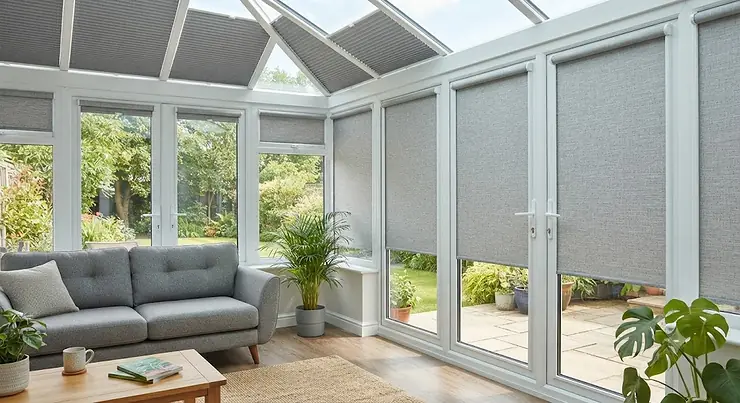
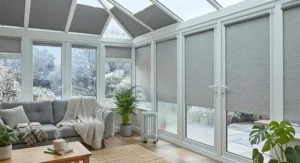
There’s a particular kind of misery that only conservatory owners understand. It’s July, and your glass room has quietly transformed itself into a greenhouse you can’t escape. Or it’s January, and that same room is so cold you can see your breath while pretending to enjoy your coffee in it. Thermal roller blinds for conservatory windows exist precisely because glass is a terrible insulator and an even worse mood regulator. Fitted correctly, they trap a slim cushion of still air between the fabric and the glazing, which slows down heat escaping in winter and heat pouring in during summer.
In fact, closing internal blinds on sun-facing windows is one of the specific steps GOV.UK’s own hot weather guidance recommends for reducing the risk of a home overheating, so this isn’t just a comfort upgrade.
This guide walks through seven real, currently available options on amazon.co.uk, spanning budget rolls you can fit yourself in an afternoon through to made-to-measure and roof-specific systems. We’ll also dig into the comparisons, the maintenance habits nobody tells you about, and the regulatory bits (child safety, mainly) that genuinely matter. If you’ve searched conservatory blinds amazon and found yourself drowning in near-identical listings, this should help you narrow things down with a bit more confidence than a five-star average alone can offer.
Quick Comparison Table
| Blind Type | Typical Price Range | Fitting Style | Best For |
|---|---|---|---|
| Budget trimmable roller | Under £30 | Face-fix or recess, drill required | First-time buyers on a tight budget |
| Made-to-measure roller | £25-£45 range | Bespoke cut, drill required | Awkward or non-standard window sizes |
| No-drill cellular (honeycomb) | £40-£70 range | Tension-fit, no drilling | Renters and precise thermal control |
| Roof-specific anti-heat blind | £45-£70 range | Model-matched roof window fixings | Conservatories with a glazed roof |
The pattern here is fairly predictable once you see it laid out: cheaper roller blinds win on upfront cost but generally rely on a snug, gap-free fit to do any real insulating work, whereas honeycomb and roof-specific systems earn their higher price through trapped-air construction and precision engineering. If your conservatory roof is the main heat culprit (and for most lean-to and Victorian-style conservatories, it is), no amount of window blind will fix that on its own — you’ll want at least one roof-appropriate product in the mix.
💬 Just one click — help others make better buying decisions too!😊
Top 7 Thermal Roller Blinds for Conservatory: Expert Analysis
1. FURNISHED Thermal Blackout Roller Blind — cheapest true entry point into thermal blackout
This is the blind most people stumble onto first, and there’s a reason it’s amassed thousands of reviews on amazon.co.uk. It’s a trimmable, polycotton roller blind with a triple-pass blackout coating and a stated thermal lining, sold in a huge range of widths and around sixteen colourways. Because it’s trimmable, you buy slightly oversized and cut down with scissors, which sounds fiddly but is genuinely one of the more forgiving DIY jobs in this list. Based on the spec comparison with the pricier entries here, the thermal claim rests almost entirely on the three-layer coating rather than any air-gap engineering, so its heat-blocking performance depends heavily on how tightly you fit it against the recess. Reviewers consistently note it fits conservatories well when face-fixed close to the glass, and several specifically mention using it on conservatory windows rather than just bedrooms. What most buyers overlook is that the quoted width includes the bracket allowance, so the actual fabric is a few centimetres narrower — measure twice or you’ll end up with light bleed down both edges. Aggregated review sentiment is largely positive on fit and value, with a recurring minor complaint about one side of the fabric looking less finished than the other once rolled.
Pros:
✅ Very low cost of entry for full-width conservatory coverage
✅ Enormous colour and size range for oddly proportioned panes
✅ Genuinely easy to trim yourself with basic scissors
Cons:
❌ Thermal performance relies on a tight, gap-free fit
❌ Reverse side of the fabric looks less polished when rolled
Price sits comfortably under £30 for most standard conservatory sizes, and on a pure pounds-per-window basis it’s hard to beat if you’re kitting out several panes at once.
2. Amazon Basics Blackout Roller Blind, UV Protection, Thermal Insulated — house-brand consistency at a fair price
Amazon’s own-label entry does what own-label products usually do well: strip out the branding flourishes and deliver a fairly uncomplicated blind at a competitive price. It’s marketed with UV protection and thermal insulation properties, is trimmable, and skips drilling in favour of a no-drill bracket system on several size variants. Here’s what to weigh: because this is a house brand rather than a specialist blinds manufacturer, the fabric weight and finish tend to sit a notch below dedicated thermal ranges, so treat the “thermal insulated” claim as a genuine but modest improvement over a plain blackout blind rather than a honeycomb-level upgrade. It’s a sound pick for a conservatory used mainly as a home office or reading nook where blocking glare and cutting some heat gain matters more than shaving pounds off a winter heating bill. Because it’s an Amazon-fulfilled product, returns and replacements tend to be straightforward, which matters more than people admit when a blind arrives 3cm out from what you measured.
Pros:
✅ Competitive pricing typical of Amazon’s own-label ranges
✅ No-drill bracket options available on several sizes
✅ Straightforward Amazon returns process if sizing goes wrong
Cons:
❌ Fabric weight is lighter than dedicated thermal specialist brands
❌ Colour range is narrower than most third-party alternatives
Expect a price in the £15-£25 range depending on width, making it one of the cheapest genuinely branded options on this list.
3. Sunlover Thermal Blackout Roller Blind — the long-standing ready-made choice
Sunlover has been a fixture of the UK ready-made blinds market for years, and its thermal blackout roller blind is designed to be fitted without drilling, clipping directly over the window frame top and bottom. This matters enormously for uPVC conservatory frames, where owners are often reluctant to drill into brand-new glazing. On paper this means less commitment than a permanent bracket system, and it’s fully removable without leaving marks. Reviewers who’ve used it specifically in conservatories describe it as effective at blocking the low, glaring early-morning sun that conservatories catch worse than almost any other room, letting it be raised again once the sun has moved round. The trade-off, based on the spec sheet and aggregated feedback, is that clip-over fitting inherently leaves small gaps at the sides compared with a bracket-mounted or made-to-measure blind, so its thermal performance leans more towards glare and light control than serious winter heat retention. Availability has been inconsistent for some colourways historically, so check current stock before building a whole-conservatory order around this single range.
Pros:
✅ Genuine no-drill clip-over fitting suits new uPVC frames
✅ Well established brand with a long UK retail track record
✅ Easy to remove and reposition without leaving marks
Cons:
❌ Clip-over design leaves minor edge gaps versus bracket fitting
❌Some colourways experience patchy stock availability
Prices typically land in the £20-£35 range depending on width and finish, at the time of research.
4. Caecus Thermal Blackout Roller Blind (Made to Measure) — bespoke sizing for awkward panes
Caecus specialises in made-to-measure roller blinds, meaning you enter your exact width and drop rather than choosing from fixed sizes, which is a genuine advantage in conservatories where panes rarely match standard window dimensions. The blackout backing is described as adding thermal properties alongside privacy, and brackets can be fitted inside or outside the recess, or face-fixed. This is honestly one of the more interesting entries here from an honesty standpoint, because the aggregated review picture is mixed rather than uniformly glowing. A meaningful slice of reviewers report it performing well as a true blackout blind with accurate made-to-measure sizing; a smaller but consistent slice specifically flag that it doesn’t retain heat as expected and that slip resistance on the roller mechanism can be inconsistent. What most buyers overlook is that “thermal properties” in a blackout-backed roller blind usually means the layered fabric itself, not an insulating air gap, so temperature swings from a poorly-sealed recess will still get through regardless of how blackout the fabric is. For conservatories with unusual pane widths, the bespoke sizing alone often justifies the modest premium over ready-made ranges.
Pros:
✅ True made-to-measure sizing for non-standard conservatory panes
✅ Flexible bracket placement, inside, outside or face-fixed
✅ Strong blackout performance reported by most reviewers
Cons:
❌ A notable minority report disappointing heat retention
❌ Roller mechanism slip has been flagged in aggregated feedback
Expect to pay in the £25-£45 range depending on the dimensions you specify, with made-to-measure naturally costing more than fixed-size stock.
5. Lister Cartwright Crushed Velvet Roller Blind, Thermal Insulated — heritage styling with a design-led edge
Lister Cartwright trades on being a British brand with over 150 years in window furnishings, and its crushed velvet thermal roller blind range brings a genuinely different aesthetic to this list, richer texture and a more premium look than the flat matte fabrics used elsewhere. It’s cut-to-size, described as thermal insulated, and includes the mandatory child safety fixing. Reviewers consistently note the fabric quality and colour accuracy stand out, particularly for anyone using the conservatory as a more formal or design-conscious space rather than a purely functional one. Based on aggregated feedback, the caveats here sit less with the blind itself and more with delivery and customer service consistency, some buyers report smooth, fast dispatch, while others describe frustrating delays or sizing discrepancies of several centimetres against the stated dimensions. What this means practically: measure your recess with a little tolerance built in, and if buying via Amazon rather than direct, keep an eye on delivery timelines before committing to an installation date. On the thermal side, the crushed velvet’s denser weave gives it a genuine edge over thin polycotton alternatives in terms of draught resistance, even without a dedicated honeycomb structure.
Pros:
✅ Distinctive crushed velvet finish rare among thermal roller blinds
✅ Denser fabric weave offers better draught resistance than thin polycotton
✅ British heritage brand with long-standing manufacturing experience
Cons:
❌ Delivery and customer service consistency has drawn mixed reports
❌ A minority of buyers note dimensions running slightly under spec
Pricing generally sits in the £20-£40 range depending on width and fabric depth, in the mid-range bracket for this category.
6. Keego Cordless Cellular Honeycomb Blind — genuine air-gap insulation, no drilling required
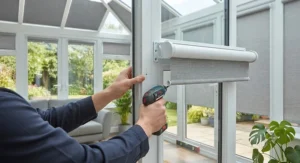
This is where the category shifts from “blackout fabric with thermal marketing” to actual insulating construction. Keego’s cordless cellular blind uses a honeycomb-shaped double-wall fabric that traps a layer of still air between the two faces, the same underlying principle used by premium pleated conservatory ranges from specialist retailers, just delivered as a simpler, tension-fit product you install without brackets, screws or drilling. Based on the spec comparison with the roller blinds above, this construction genuinely changes the physics: a sealed honeycomb cell resists heat transfer far more effectively than a single layer of fabric, however thick. The cordless lift system is also a meaningful safety upgrade over corded rollers, since there’s no hanging cord for young children or pets to catch on. What the spec sheet won’t tell you, but user reports suggest, is that precise measuring matters more here than with any trimmable roller blind, because cellular shades are made to the size you specify and can’t be adjusted afterwards without compromising the tension-fit mechanism. For a conservatory side window that gets serious morning glare and needs genuine year-round temperature buffering rather than just blackout, this is the strongest option on this list on pure insulating merit.
Pros:
✅ True honeycomb air-gap construction, not just fabric thickness
✅ Cordless lift system improves child and pet safety
✅ No drilling, screws or brackets needed for installation
Cons:
❌ Custom sizing means no room for measuring error after ordering
❌ Sits at the higher end of the price range for a roller-style category
Expect to pay in the £40-£70 range, which reflects the more sophisticated construction versus a standard roller blind.
7. VELUX Original Roof Window Anti-Heat Awning Blind — purpose-built for the glazed roof, not just the walls
Every product above addresses conservatory side windows, but as independent research commissioned by the British Blind and Shutter Association and multiple specialist retailers consistently point out, a huge share of a conservatory’s overheating problem comes through the roof, not the walls, because the sun sits directly overhead for hours at peak intensity. VELUX’s anti-heat awning blind is designed specifically for its own roof window range (check compatibility against your model code before buying, since it’s explicitly not a universal fit), and is stated to block a substantial majority of incoming solar heat before it reaches the glass itself, while still allowing some visibility outward through a semi-transparent mesh. Reviewers who’ve fitted it on roof glazing report a genuinely noticeable temperature drop, with several specifically mentioning it as an alternative to buying a portable air conditioning unit. Based on the spec comparison with interior-only roller blinds, exterior or awning-style shading like this has a structural advantage: it stops solar energy before it ever reaches the glass, rather than trying to manage the heat after it’s already inside the room, which UK parliamentary written evidence on overheating also confirms is a meaningfully more effective approach than internal shading alone.
Pros:
✅ Purpose-engineered for VELUX roof windows, precise fit
✅ Blocks solar heat before it reaches the glass, not after
✅ Backed by a recognised specialist brand with strong warranty support
Cons:
❌ Only compatible with matching VELUX window model codes
❌ Not a solution for standard vertical conservatory side windows
Prices generally sit in the £45-£70 range depending on your specific window model, positioning it as a premium, targeted purchase rather than a whole-conservatory solution.
Fitting and Maintaining Your Conservatory Blinds
Getting the fit right does more for thermal performance than the fabric choice itself, so it’s worth treating installation as part of the buying decision rather than an afterthought. Start by measuring at three points across both the width and the drop, conservatory frames are notoriously inconsistent, and use the smallest measurement to avoid ordering a blind that won’t sit flush. Fit as close to the glass as practically possible; every millimetre of gap between fabric and pane is a millimetre where warm room air can circulate against cold glass, undoing much of the insulating benefit. In the first thirty days, the most common mistake isn’t the blind itself but forgetting to actually operate it strategically, closing blinds only at night misses the entire point in summer, when the priority is keeping midday sun out before it heats the room, then opening again once the sun has passed. For maintenance, dust roller blinds monthly with a soft brush attachment and spot-clean fabric with a barely damp cloth rather than soaking it, since saturating a thermal-backed fabric can delaminate the coating over time. Cellular and honeycomb blinds need gentler treatment still; a hairdryer on a cool setting is genuinely the recommended method for clearing dust from inside the cells without crushing the structure.
Real-World Scenarios: Matching Blinds to How You Actually Live
Consider three different households, because the “best” thermal roller blinds for conservatory rooms genuinely depends on how the space gets used. First, a young family using the conservatory as a playroom on a tight renovation budget: several FURNISHED or Amazon Basics blinds across multiple panes, prioritising blackout and basic thermal benefit over premium finish, makes financial sense when covering five or six windows at once. Second, a retired couple who use their south-facing conservatory daily as a reading and dining space and are more sensitive to both glare and temperature swings: a cellular honeycomb option like the Keego range on the side windows, paired with a roof-specific anti-heat blind if the conservatory has a glazed roof, addresses both comfort dimensions properly rather than compromising on one. Third, a homeowner in a period property with an ornate, design-led conservatory who wants function without sacrificing aesthetics: the Lister Cartwright crushed velvet range or a Caecus made-to-measure blind in a coordinating colour delivers a considered look while still contributing genuine thermal benefit through denser fabric weave. In each case, frequency of use matters as much as budget, a conservatory used daily justifies investing more in the roof and the most-exposed windows first, then filling in cheaper coverage elsewhere.
Problem to Solution: Fixing the Most Common Conservatory Complaints
Five issues come up again and again for conservatory owners, and thermal roller blinds address most of them directly. If the room is unbearably hot by early afternoon, the fix is closing blinds before the sun peaks rather than after, ideally by mid-morning on south or west-facing panes, and prioritising a roof blind if the ceiling is glazed. If mornings bring a freezing chill despite central heating running overnight, gaps around the blind edges are the likely culprit; a tighter, closer-fitting product like a made-to-measure or cellular option will outperform a loose clip-over blind here. If glare is making screens unusable during the day without wanting full blackout, a lighter-filtering thermal fabric rather than a blackout-backed one lets you dim the room without plunging it into darkness. If condensation is building on the inside of the glass behind a closed blind, that’s actually a sign the blind is doing its insulating job, trapping warm moist room air against cold glass, and the practical fix is ventilating briefly each morning rather than abandoning the blind. Finally, if fading furniture and flooring is the concern rather than temperature, UV-protective fabrics, several of which appear across this list, address that specific problem independently of thermal performance.

How to Choose Thermal Roller Blinds for Conservatory Windows
Choosing the right option comes down to seven practical checks, run through in order before you commit to a purchase.
- Measure every pane individually rather than assuming they match, since conservatory frames rarely have perfectly uniform dimensions across multiple windows.
- Decide between roof and side-window coverage first, because a common and costly mistake is buying only side blinds while the glazed roof remains the primary source of heat gain.
- Choose fixing method based on your frame: no-drill clip or tension-fit for uPVC you don’t want to damage, bracket-mounted for a permanently tighter seal.
- Weigh blackout versus light-filtering fabric against how the room is actually used day to day, working spaces generally want filtering, bedrooms or media rooms want blackout.
- Factor in child safety from the outset if young children or pets use the space, cordless or cleat-secured designs are worth prioritising over loose corded mechanisms.
- Set a realistic budget per pane rather than per conservatory, since mixing a premium roof blind with budget side coverage is often more cost-effective than uniform mid-range spend everywhere.
- Check current stock and delivery timelines before finalising a fitting date, particularly for made-to-measure ranges, which can carry longer lead times than ready-made stock.
Heat Control Conservatory Blinds vs Traditional Curtains
It’s worth addressing this comparison directly, because curtains remain the default window covering in most UK homes, and plenty of conservatory owners assume they’ll simply extend what already works elsewhere in the house. Heat control conservatory blinds and curtains both create an insulating barrier in principle, but they behave very differently at the edges, which is where most heat transfer actually happens. Curtains typically hang loose from a pole, leaving gaps at the top, sides and floor where air circulates freely between the room and the cold glass behind. Fitted correctly, thermal roller blinds sit much closer to the frame across their entire perimeter, which meaningfully reduces that edge leakage. Curtains do have real advantages in soft furnishing terms, they add sound dampening and a homely feel that hard-edged blinds can’t quite replicate, and heavy, lined curtains genuinely do offer decent thermal benefit in a standard room with a single window. In a conservatory, though, where the ratio of glass to wall is far higher than any other room in the house, curtains struggle with sheer coverage; running full-length, lined curtains across a wall of floor-to-ceiling glazing is both expensive and impractical to open and close daily. Blinds, being purpose-cut to each pane, scale far better across multiple windows without the bulk.
Insulating Conservatory Roller Blinds: What to Expect from Real-World Performance
Specification sheets talk in percentages, but it’s worth translating that into what you’ll actually feel in the room. Insulating conservatory roller blinds with a tight, close fit typically make the most noticeable difference at the extremes, the coldest early mornings and the hottest midday hours, rather than delivering a dramatic shift in the room’s average temperature across a whole day. Independent testing at the University of Salford’s Energy House laboratory found that well-fitted blinds and shutters can reduce heat loss through a window by up to a third, a figure that’s become something of an industry reference point for internal shading generally. In practical terms, that translates to a conservatory that no longer feels like stepping into a fridge first thing in the morning, and one where you’re not immediately reaching to open a window the moment the sun swings round in the afternoon. Cellular and honeycomb constructions tend to outperform flat roller blinds on this measure specifically because the enclosed air pocket resists heat transfer more consistently than a single fabric layer, however thick that layer is. What none of these products can fully solve, though, is a conservatory roof that’s still single-glazed polycarbonate; in that case, blinds help enormously but a roof-specific product paired with realistic expectations will serve you better than assuming any blind alone can fully offset genuinely poor glazing.
Conservatory Temperature Control: Common Mistakes When Buying
A handful of buying mistakes crop up repeatedly, and most are avoidable with a bit of forethought around conservatory temperature control specifically. The single biggest error is treating the conservatory like any other room and buying one blind style for every pane without considering that side windows and roof glazing face entirely different thermal challenges and often need different products. A close second is under-measuring; buying a blind that’s a centimetre or two too narrow to save on trimming effort leaves permanent light and draught gaps that no amount of careful operation will fix afterwards. Many buyers also skip checking whether their existing frame is compatible with no-drill or clip-fit systems before ordering, only to discover the rubber beading is too shallow or the frame profile doesn’t accommodate the bracket depth. Another recurring mistake is prioritising pure blackout performance for a room that’s actually used during daylight hours, sacrificing natural light unnecessarily when a light-filtering thermal fabric would have served the space better. Finally, plenty of shoppers assume that because a listing says “thermal,” it must include an insulating air gap; as the honest breakdown across this guide shows, several genuinely good budget options achieve their thermal benefit through fabric density and tight fitting rather than any honeycomb structure, and knowing that distinction helps set realistic expectations before you buy.
Glass Room Blind Features That Actually Matter (And Those That Don’t)
Marketing copy on glass room blind listings tends to pile on features, so it’s worth separating what genuinely affects performance from what’s essentially decorative. Fabric density and a close, gap-minimising fit matter enormously, they’re the two factors doing most of the actual insulating work across every product in this guide. A honeycomb or cellular structure matters if genuine air-gap insulation is the priority, since it changes the underlying physics rather than just adding fabric thickness. UV protection matters if furniture and flooring fading is a concern, independent of thermal performance entirely. Child-safe cordless or cleat-secured mechanisms matter unconditionally if children or pets use the space, this isn’t optional from a safety standpoint. On the other side of the ledger, decorative eyelet styles, glitter trims and printed patterns add zero thermal value and exist purely for aesthetics, which is fine if that’s genuinely what you want, but shouldn’t factor into a comparison based on temperature control. Similarly, brand heritage and packaging presentation, while pleasant, tell you nothing reliable about actual insulating performance; several of the newer, less storied brands on this list perform comparably to longer-established names on the metrics that matter. The lesson across the whole category is to shop the construction method and fit quality first, and treat everything else as a secondary style preference.
Sun Blocking Conservatory Shade for Different Types of Buyer
Different households genuinely need different things from a sun blocking conservatory shade, and it’s worth being specific about who each option in this guide suits best. For renters who can’t drill into frames and need everything removable at the end of a tenancy, no-drill clip-fit or tension-fit cellular options are close to essential, and the Keego and Sunlover ranges both fit that requirement without leaving marks. For families with young children, cordless mechanisms and cleat-secured designs remove a genuine safety risk that corded roller blinds carry, making the added cost of a cellular blind easier to justify. For anyone working from home in a conservatory-turned-office, light-filtering rather than full blackout fabric strikes the right balance between reducing glare on a screen and keeping the space usable without artificial lighting during the day. For period-property owners prioritising aesthetics alongside function, the design-led ranges like Lister Cartwright’s crushed velvet options deliver genuine thermal benefit without looking like an obviously budget addition to a characterful room. And for anyone whose conservatory roof is the dominant heat problem rather than the walls, none of the side-window products fully solve that on their own, a roof-specific anti-heat or blackout energy blind needs to be part of the plan regardless of budget tier.
Don’t Miss These Exclusive Deals!
✨ Take your conservatory to the next level with these carefully selected products. 🔍 Click on any highlighted item to check current pricing and availability. These thermal roller blinds could help you create a genuinely comfortable, energy-smarter space your whole household will enjoy!
Long-Term Cost and Maintenance
Thinking beyond the initial purchase price matters here, because the cheapest blind isn’t automatically the best value once you factor in lifespan and ongoing running costs. A budget trimmable roller blind at the lower end of this list might need replacing within two to three years of regular use in a conservatory, where temperature swings and UV exposure are more extreme than in a typical bedroom window, whereas a well-built cellular or made-to-measure product with a reinforced mechanism can reasonably be expected to last considerably longer. On the energy side, the savings from reduced heating and cooling demand accumulate gradually rather than dramatically, but they’re real; if a conservatory currently costs noticeably more to heat through winter than the rest of the house, even a modest percentage reduction in heat loss through the glazing compounds meaningfully across a heating season. Maintenance costs are generally low across every product in this guide, an occasional dust and spot-clean is all most fabrics need, though corded mechanisms do occasionally need a replacement chain or cord after years of daily use, while cordless spring systems tend to be closer to maintenance-free until the mechanism itself eventually wears out. Total cost of ownership, then, tends to favour investing a bit more upfront in the panes that see the most sun exposure, while keeping budget options for less-used or shaded windows within the same conservatory.
Safety and Regulations Guide
UK child safety regulations around window blinds are not optional extras, they’re a genuine legal and safety requirement under British Standard EN 13120, and every reputable blind sold in the UK, including every product referenced in this guide, should ship with a child safety device such as a cord cleat or breakaway connector designed to prevent strangulation risk from looped cords. If young children or pets are regularly in the conservatory, prioritising cordless designs removes the risk entirely rather than relying on correctly fitted safety devices being used consistently. Beyond child safety, it’s worth being aware that conservatories in England generally fall under permitted development rules that exempt them from full Building Regulations in many cases, but this varies by property and any structural changes beyond simply fitting blinds should be checked with your local authority if in doubt. On the temperature side, both the UK Health Security Agency and the Met Office specifically recommend closing blinds or curtains on sun-facing windows during hot weather as a practical, low-cost way to reduce indoor overheating risk, particularly relevant advice for a room as glass-heavy as a conservatory, and one worth following as part of a broader household heat-safety routine rather than treating blinds purely as a decorative purchase.
Frequently Asked Questions
❓ Do thermal roller blinds actually keep a conservatory warm in winter?
❓ What's the best conservatory blind for keeping a room cool in summer?
❓ Can I fit conservatory blinds without drilling into uPVC frames?
❓ Are made-to-measure conservatory blinds worth the extra cost over ready-made?
❓ How do I keep young children safe with conservatory roller blinds?
Conclusion
There’s no single best answer to thermal roller blinds for conservatory shopping, only the right answer for your specific glass room, your budget, and how you actually use the space day to day. A budget-conscious family covering several panes will get real value from the FURNISHED or Amazon Basics ranges, provided the fit is tight. Anyone chasing genuine year-round insulation should lean towards a cellular option like Keego, especially paired with a roof-specific product if the ceiling is glazed. And if your conservatory’s real problem is the roof rather than the walls, no side-window blind, however good, will fully solve that on its own. What matters most across every price point covered here is the same underlying principle: a close, gap-minimising fit does more for comfort and energy use than any single fabric claim on a listing page. Measure carefully, prioritise the most sun-exposed panes first, and build coverage outward from there.
Recommended for You
- Best Thermal Roller Blinds UK 2026: 7 Top Picks to Slash Energy Bills
- Best Waterproof Roller Blinds for Kitchen: Top 7 UK Picks (2026)
- Best Waterproof Roller Blinds for Bathroom UK 2026: 7 Expert Picks
Disclaimer: This article contains affiliate links. As an Amazon Associate, I earn from qualifying purchases. If you purchase products through these links, we may earn a small commission at no additional cost to you.
✨ Found this helpful? Share it with your friends! 💬🤗
