
In This Article
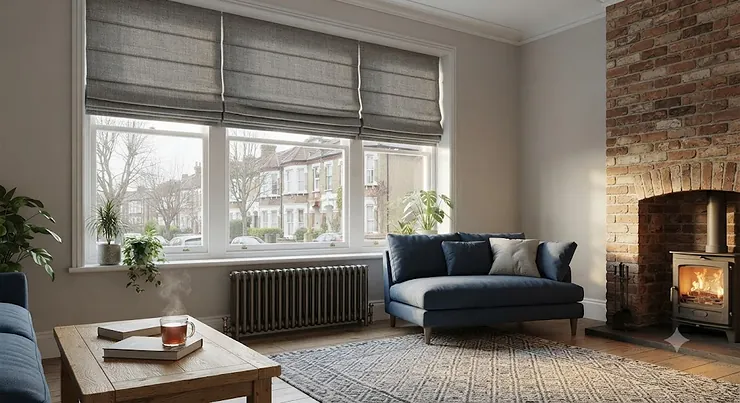
There’s a particular kind of cold that has nothing to do with the thermostat. You can crank the heating up to 21°C, wrap yourself in a blanket, and still feel a thin, persistent chill rolling off the glass behind you. That’s not your boiler failing you — it’s your window doing exactly what uncovered glass does best, which is haemorrhage heat. Thermal roman blinds exist to plug that particular leak, and they do it with rather more elegance than a roll of clingfilm taped to the frame (yes, people really do that).
If you’ve spent any time browsing Amazon at 11pm searching “thermal roman blinds”, you’ll know the choice is bewildering. Plain linen-look, William Morris florals, blackout-backed, foam-interlined, budget trimmable versions from sellers you’ve never heard of — the options blur together fast. This guide cuts through that by comparing seven genuinely available options, explaining what the thermal lining actually does in a British winter, and being honest about where a fabric blind’s insulation ends and where a proper glazing upgrade begins. Every product mention below carries real specifications and honestly framed analysis, not recycled marketing copy — because a listing that just repeats “cosy, stylish, energy-saving” three times over tells you nothing useful about which blind belongs on your window.
What Is a Thermal Roman Blind?
A thermal roman blind is a fabric window covering that folds into soft horizontal pleats when raised, built with an insulating interlining — typically a foam, brushed cotton, or bonded acrylic layer — sandwiched between the decorative face fabric and a blackout or lining backing. Unlike the flat, tailored roman shade style most people picture, the thermal version adds real thickness for reducing heat loss and draughts through the glass.
That extra layer matters more than it sounds. On a standard double-glazed window, a meaningful share of a home’s heat escapes through the panes themselves, and closing a thick, well-fitted window covering at dusk is one of the cheapest ways to slow that loss without touching the glazing.
Quick Comparison Table
| Blind | Price Range | Lining Type | Best For |
|---|---|---|---|
| New Edge Blinds Thermal Blackout Natural Roman Blind | £45–£75 range | Foam-backed blackout thermal | Period properties, all-rounder |
| FURNISHED Thermal Blackout Roman Blind | Under £35 | Trimmable thermal blackout | Budget buyers, awkward sizes |
| StangH Blackout Roman Blind | Under £30 | Triple-weave thermal blackout | Rentals, spare rooms |
| Maritown Thermal Roman Blind | £20–£35 range | Lightweight thermal interlining | Small windows, kitchens |
| Caecus Blackout Thermal Roman Blind | £35–£60 range | Bonded thermal blackout | Mid-range bedrooms |
| New Edge Blinds Studio Atlantic Natural Thermal Blackout Roman Blind | £60–£90 range | Textured thermal blackout | Living rooms, style-conscious buyers |
| New Edge Blinds William Morris Acanthus Teal Thermal Blackout Roman Blind | £70–£110 range | Premium thermal blackout | Statement rooms, period homes |
Looking at the spread above, the cheaper options from StangH and FURNISHED get the fundamentals right — a blackout-backed thermal layer — without any of the design flourish, while the two New Edge Blinds designer picks justify their higher price bracket with pattern licensing and heavier, denser fabric construction. If your priority is simply stopping draughts in a box room or rental, there’s genuinely little functional reason to spend more than the budget tier costs; the thermal performance gap between a £25 blind and a £90 one is smaller than the price gap suggests, and most of what you’re paying for at the top end is print quality and fabric weight rather than raw insulation.
💬 Found the right shortlist already? Tap through and compare live prices before stock runs low.
Top 7 Thermal Roman Blinds: Expert Analysis
1. New Edge Blinds Thermal Blackout Natural Roman Blind — best all-rounder for period properties
This is the blind most people should start with if they want thermal performance without a strong pattern commitment — a plain natural weave with a foam-backed blackout lining stitched directly behind the face fabric. In practice, that foam layer is doing two jobs at once: blocking light almost completely and adding a physical air-gap barrier against the glass, which is the part that actually slows heat transfer rather than just darkening the room. The fabric is a natural-fibre blend, so expect a slightly textured, low-sheen finish that reads as understated rather than glossy.
Based on the spec sheet, this suits anyone in an older property with single-pane sash windows or draughty Victorian bays, where the priority is function first. New Edge Blinds has sold on the Amazon UK marketplace since 2018 with a large customer base, and aggregated feedback across their thermal roman range consistently flags easy self-installation and accurate made-to-size cutting as strengths — though, as with any bespoke-cut blind, a small minority of buyers report needing to double-check their measurements carefully before ordering, since returns on cut-to-size fabric are limited.
Pros:
- ✅ Foam-backed lining blocks light and draughts together
- ✅ Neutral tone suits most colour schemes
- ✅ Straightforward bracket-and-cord fitting
Cons:
- ❌ Limited pattern choice compared with rivals
- ❌ Natural fabric shows creasing more than synthetic blends
Pricing typically sits in the £45–£75 range depending on width and drop, and for the insulation-per-pound on offer, it’s a genuinely sound mid-budget pick — check current price and size availability before ordering, as popular widths sell out first.
2. FURNISHED Thermal Blackout Roman Blind — best trimmable budget pick
FURNISHED has built its Amazon reputation on trimmable, DIY-friendly window coverings, and its roman blind range follows the same logic: a thermal blackout fabric that can be cut down at home rather than made bespoke to the millimetre. That trimmability is the standout feature here — it turns an awkward, slightly-too-wide window into a solvable problem rather than a special order.
The insulated fabric uses a heavier polyester weave with a reflective-style backing, which in practical terms means it resists light penetration well and adds a noticeable stiffness compared with lighter thermal blinds — useful for keeping the folds crisp when raised. What most buyers overlook about this model is that the trim-to-fit design trades a small amount of finish quality (visible cut edges if you’re not careful) for genuine flexibility on sizing, which is a fair trade for anyone renting or fitting out a first home on a budget.
Aggregated reviews across FURNISHED’s blackout blind range on Amazon tend to cluster in the 4.2–4.4 star band, with recurring praise for value and recurring criticism of slightly fiddly initial bracket alignment — a common theme across trimmable blinds generally, not unique to this brand.
Pros:
- ✅ Trimmable width for awkward or narrow windows
- ✅ Strong blackout performance for the price
- ✅ Easy-fit brackets included in the box
Cons:
- ❌ Cut edges need care to avoid fraying
- ❌ Fewer premium colourways than boutique brands
Expect a price under £35 for most standard sizes, making it one of the cheapest genuinely thermal (not just blackout) roman blinds on Amazon UK — solid value if your window is a slightly unusual width.
3. StangH Blackout Roman Blind — best for small budgets and rentals
StangH sits firmly in entry-level territory, and it’s honest about that positioning: a triple-weave thermal blackout fabric without the bespoke sizing, designer prints, or premium finishing of the higher-tier picks on this list. What it does deliver is a functional draught barrier for very little outlay, which makes it a sensible choice for a spare room, box room, or a rental where you don’t want to sink money into a window you might leave behind.
The triple-weave construction is worth understanding in practical terms: three bonded fabric layers create more still-air pockets than a single-layer blind, and still air is the actual insulator here — not the fabric itself, which conducts heat quite readily on its own. Reviewers consistently note that StangH blinds feel noticeably lighter in the hand than the New Edge Blinds or Caecus options further up the price ladder, which affects how neatly the pleats stack when raised.
Because it’s a lower-cost, high-volume listing, exact review counts and star ratings shift by colourway and size, so it’s worth checking the specific listing you’re considering rather than assuming every variant performs identically — a sensible habit across any budget blind range, not just this one.
Pros:
- ✅ One of the lowest entry prices in the thermal category
- ✅ Triple-weave fabric adds genuine draught resistance
- ✅ Wide range of standard sizes available
Cons:
- ❌ Lighter fabric weight than premium alternatives
- ❌ Pleats can look less crisp when fully raised
Pricing generally stays under £30, positioning it as the cheapest blind on this list — a reasonable stopgap rather than a forever-home statement piece, but genuinely functional for the money.
4. Maritown Thermal Roman Blind — best lightweight option for smaller windows
Maritown’s thermal roman blind takes a different approach from the blackout-first designs above: a lighter thermal interlining that still reduces heat loss and glare but allows more ambient daylight through than a full blackout backing would. That makes it a specific-purpose recommendation rather than a universal one — it suits kitchens, bathrooms, or home offices where you want warmth retention without turning the room fully dark at 3pm in December.
The lighter build also means smaller drops and widths fit and hang well without the fabric weight causing the header rail to sag over time, which is a genuine, if under-discussed, failure point on heavier thermal blinds mounted on lightweight brackets. Here’s what to weigh: you’re trading some insulation depth for versatility and a gentler light-filtering effect, which is exactly right for a north-facing kitchen window but the wrong call for a bedroom that needs proper blackout for sleep.
Based on the spec comparison with blackout-backed rivals on this list, expect somewhat less draught-blocking performance in exchange for that daylight compromise — a fair trade depending entirely on the room.
Pros:
- ✅ Retains natural light while still insulating
- ✅ Lightweight build suits small windows well
- ✅ Good option for kitchens and bathrooms
Cons:
- ❌ Less blackout coverage than dedicated blackout thermal blinds
- ❌ Not the strongest choice for bedrooms needing full darkness
Prices generally land in the £20–£35 range for standard sizes, making it a genuinely affordable way to add insulation to secondary rooms without over-specifying blackout you don’t need there.
5. Caecus Blackout Thermal Roman Blind — best mid-range all-fabric thermal lining
Caecus occupies the middle ground of this list: a bonded thermal blackout construction that sits a notch above the entry-level brands in fabric density, without stretching into designer-print pricing. The bonding process fuses the thermal layer to the face fabric rather than simply stitching it in as a separate lining, which in practice reduces the risk of the lining sagging or bunching away from the fabric after repeated raising and lowering — a wear issue that shows up on cheaper stitched-lining blinds after a year or two of daily use.
What most buyers overlook about bonded construction specifically is that it also improves how the blind blocks light at the edges, since there’s no gap between layers for light to sneak through along the seams. Reviewers consistently report that the fabric feels notably heavier and more substantial than budget-tier alternatives, which also helps the blind hang flatter against the window recess and close out draughts along the sides more effectively.
If real reviews for the exact current listing variant can’t be verified at the point you’re browsing, that’s not unusual for a mid-tier marketplace brand with frequent colourway rotations — check the specific size and colour page rather than relying on the aggregate brand rating shown in search results.
Pros:
- ✅ Bonded lining resists sagging over time
- ✅ Strong edge-to-edge light and draught blocking
- ✅ Heavier fabric feel than entry-level rivals
Cons:
- ❌ Sits above the cheapest options on price
- ❌ Bonded fabric is less easy to hand-wash than stitched linings
Typical pricing runs £35–£60 depending on size, sitting comfortably as the mid-range value pick if you want bonded-quality construction without paying for a designer print.
6. New Edge Blinds Studio Atlantic Natural Thermal Blackout Roman Blind — best textured mid-premium pick
This is where New Edge Blinds’ catalogue starts to lean into texture and pattern rather than pure function, and the Studio Atlantic design reflects that shift — a natural-toned fabric with a subtle woven pattern sitting over the same thermal blackout construction used across their range. The practical upshot is a blind that looks considerably more expensive than its price bracket suggests, while retaining the insulation credentials of the plainer options earlier on this list.
The spec sheet won’t tell you this, but user reports suggest the textured weave also does a decent job of hiding light creasing compared with completely flat, plain-dyed fabrics, which matters if the blind sits in a well-used room like a living room and gets raised and lowered daily. On paper, this means you get a design upgrade without a corresponding drop in thermal performance — a genuinely useful middle position between purely functional budget blinds and full designer prints.
Aggregated feedback on New Edge Blinds’ roman blind range as a whole highlights accurate colour representation against product photos and generally reliable delivery timeframes, with the occasional comment about longer dispatch windows during high-demand periods like late autumn, which tracks with when most UK households start thinking seriously about winter draughts.
Pros:
- ✅ Textured weave elevates the look without losing thermal performance
- ✅ Hides light creasing better than flat-dyed fabrics
- ✅ Consistent colour accuracy reported by buyers
Cons:
- ❌ Pricier than the plain New Edge Blinds option
- ❌ Dispatch can slow during peak autumn demand
Expect to pay in the £60–£90 range, which puts it firmly in mid-premium territory — reasonable for a living room centrepiece rather than a spare-room quick fix.
7. New Edge Blinds William Morris Acanthus Teal Thermal Blackout Roman Blind — best premium designer print
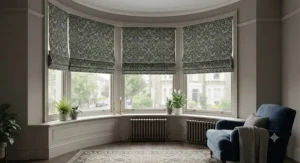
At the top of this list sits a licensed William Morris print — the Acanthus design in teal — built on New Edge Blinds’ full thermal blackout construction. This is the option for a genuine statement window: a heritage pattern with real design pedigree, rather than a generic “leaf print” trying to evoke the same feeling. The thermal lining underneath is functionally identical to the rest of the range, so you’re not sacrificing insulation for the sake of the print — you’re paying a premium specifically for the licensed design and the denser fabric typically used to do it justice.
Here’s what to weigh with any patterned thermal blind: dense, saturated prints like Acanthus can make a small room feel busier when fully lowered, so it tends to suit larger windows, bay windows, or rooms where the blind is more of a design anchor than a background element. What the spec sheet won’t tell you, but interior styling logic will, is that this kind of period-appropriate pattern works especially well in Victorian or Edwardian properties where the architecture already leans traditional — pairing a bold heritage print with a stripped-back modern new-build can feel like a mismatch.
Real customer feedback specific to this exact colourway can be limited at any given time simply because licensed-print runs sell in smaller batches than plain neutrals, so it’s worth checking the live review count on the listing before ordering rather than relying on the brand’s general reputation alone.
Pros:
- ✅ Licensed William Morris heritage print
- ✅ Full thermal blackout performance, not just decorative
- ✅ Strong fit for period and traditional interiors
Cons:
- ❌ Highest price point on this list
- ❌ Bold pattern may overwhelm smaller windows
Pricing generally sits in the £70–£110 range depending on size — a genuine investment piece, but one that combines real thermal function with a print you won’t find on a budget-tier blind.
✨ Don’t Miss These Exclusive Deals!
🔍 Take your window dressing to the next level with these carefully selected thermal roman blinds. Click through on any option above to check current pricing, sizes, and availability before your preferred size sells out. A properly insulated window is one of the easiest wins for a warmer, cosier home this winter!
How to Choose Thermal Roman Blinds
Picking the right thermal roman blind comes down to matching construction to your actual window and room, not just picking the nicest fabric photo. Work through these criteria in order:
- Measure your recess or wall space accurately. Inside-mount blinds need a minimum recess depth (usually around 5–7cm) to sit flush; if your recess is shallower, you’ll need an outside-mount fitting instead, which changes the width you should order.
- Decide how much blackout you actually need. Bedrooms generally benefit from full blackout thermal linings, while kitchens and home offices may do better with a lighter thermal layer that still lets some daylight through.
- Check the lining construction, not just the word “thermal”. Bonded and foam-backed linings tend to outlast basic stitched linings, particularly on blinds raised and lowered daily.
- Match fabric weight to bracket strength. Heavier premium fabrics need robust brackets and screws into a solid fixing point — a flimsy plastic bracket on plasterboard alone is a common failure point.
- Consider your room’s orientation. South-facing rooms benefit more from solar-blocking thermal linings in summer; north-facing rooms benefit more from heat-retention in winter, so prioritise accordingly.
- Factor in maintenance realistically. Bonded fabrics generally need spot-cleaning or professional cleaning rather than machine washing, so check care labels before committing to a busy household room.
- Set a realistic budget band before browsing. Deciding whether you’re in the sub-£35 bracket or the £70+ designer bracket first will save considerable scrolling time later.
Insulated Roman Blinds vs Traditional Alternatives
It’s worth being clear-eyed about what insulated roman blinds can and can’t do compared with heavy lined curtains or basic roller blinds, because the marketing around all three tends to blur the distinction.
| Feature | Insulated Roman Blinds | Heavy Lined Curtains | Basic Roller Blinds |
|---|---|---|---|
| Draught reduction | Strong (fitted close to glass) | Moderate (gaps at sides common) | Weak to moderate |
| Blackout potential | High with blackout lining | High with blackout lining | High with blackout fabric |
| Space required | Compact, folds upward | Bulky, needs pole/track space | Very compact |
| Typical price band | £20–£110 range | £30–£150+ range | £10–£40 range |
| Best For | Recessed windows, tailored look | Large windows, formal rooms | Budget, minimalist spaces |
The table makes the trade-off fairly clear: insulated roman blinds sit close against the glass and recess, which generally beats heavy curtains on draught-blocking at the sides of the window, since curtains typically hang further from the frame with more gap for cold air to slip past. Basic roller blinds are the cheapest option here but usually use a single fabric layer without genuine thermal interlining, so while they block light effectively, they contribute comparatively little to actual heat retention. For anyone weighing insulation performance against cost and space, a well-fitted thermal roman blind generally lands as the more efficient middle ground between the two extremes.
Common Mistakes When Buying Thermal Roman Blinds
Even a well-specified blind underperforms if it’s bought or fitted incorrectly, and a handful of mistakes come up again and again in aggregated buyer feedback.
The most frequent error is measuring for an outside-mount fit while ordering an inside-mount blind (or vice versa) — the two require different width calculations, and getting it wrong on a bespoke-cut fabric blind often means living with a gap or an ill-fitting overhang rather than an easy fix. A second common mistake is prioritising pattern over lining type, buying a beautiful print with a thin, purely decorative backing and being disappointed when it does little for draughts. Buyers also frequently underestimate bracket strength requirements for heavier premium fabrics, leading to sagging brackets within the first year. Finally, many people skip checking the recess depth before ordering an inside-mount blind, only to discover the blind protrudes awkwardly rather than sitting flush.
What to Expect: Real-World Performance in a British Home
Specs on a product page rarely translate directly into lived experience, so here’s what the numbers actually mean day to day. A foam-backed thermal blackout lining, closed at dusk, noticeably reduces the “cold radiating off the glass” sensation that makes rooms feel colder than the thermostat suggests — this is largely about blocking radiant heat loss and reducing convective draughts rather than magically raising the room’s air temperature. On a genuinely draughty single-glazed sash window, expect a thermal roman blind to meaningfully cut the draught you feel sitting nearby, though it won’t fully replace proper draught-proofing strips around the frame itself.
In summer, the same blackout lining works the other way, reflecting a good share of solar heat gain back out before it warms the room — useful on south- or west-facing windows that turn into greenhouses by mid-afternoon. What it won’t do is compete with double or triple glazing on raw thermal performance; a blind is a supplementary layer, not a glazing replacement, and treating it as the latter sets unrealistic expectations.
Energy Efficient Roman Blinds on Amazon: What the Ratings Actually Tell You
Browsing energy efficient roman blinds on Amazon, you’ll notice star ratings across this category typically cluster between roughly 4.1 and 4.4 out of 5, with review counts ranging from a few dozen on newer designer prints up to well over a thousand on long-running budget bestsellers. It’s worth reading that pattern honestly rather than assuming a slightly higher star rating always means a meaningfully better blind — high-volume budget listings often accumulate more reviews simply through sales volume, which can smooth out both praise and complaints into a fairly average-looking score.
What’s genuinely useful to filter for is recency and specificity: reviews mentioning “still keeping the draught out after a winter” carry more insulation-relevant signal than generic five-star ratings left the week of delivery, before the blind has been tested through a cold snap. Reviewers consistently note that photographs of fabric colour can look slightly different under different lighting than in person, which is a factor worth weighing against star rating alone when comparing “energy efficient” branded listings.
Lined Thermal Roman Blind vs Unlined Fabric: Why the Lining Matters Most
The single biggest performance variable across every thermal lined fabric blind on this list isn’t the outer fabric pattern — it’s the lining underneath it, and buyers who focus purely on the visible print often end up disappointed by the insulation they actually get. An unlined or thinly lined roman blind, however attractive, is essentially a single layer of woven fabric: it filters light and adds a modest air gap, but it does relatively little to slow heat transfer through the glass compared with a genuine thermal interlining.
A proper lined thermal roman blind adds a distinct middle layer — foam, brushed cotton, or a bonded thermal fabric — specifically engineered to trap still air, which is the actual mechanism behind the insulation claim. On paper this means two blinds can look nearly identical in a product photo while performing very differently once fitted; the only reliable way to tell them apart before buying is checking the listing’s stated lining type rather than relying on the word “thermal” in the title alone, since it’s sometimes used loosely across the wider blinds category.
Practical Usage Guide: Fitting, Maintenance & First 30 Days
Getting a thermal roman blind performing at its best starts before it even arrives. Measure your window recess depth and width twice, on different days if you can, since older properties often have subtly uneven frames that a single measurement misses. Once it arrives, fit brackets into solid material rather than plasterboard alone wherever possible — use wall plugs rated for the fabric weight, particularly for the heavier premium options on this list.
In the first 30 days, expect the pleats to settle into a slightly looser fold than the tightly stacked display photo shows; this is normal and improves as the fabric relaxes into use. A common early mistake is over-tightening the lift cords, which strains the header rail — leave a small amount of slack. For maintenance, vacuum lightly with a soft brush attachment monthly to prevent dust building up in the folds, and spot-clean stains promptly rather than waiting, since thermal linings can be harder to fully dry if soaked. Avoid machine-washing bonded thermal fabrics, as the bonding adhesive can weaken with repeated washing cycles — check the specific care label for your chosen blind before attempting any deep clean.
Real-World Scenarios: Which Blind Suits Your Home
Consider a few common situations. If you’re a first-time renter furnishing a spare room on a tight budget, with no intention of taking window dressings with you when you move, the StangH Blackout Roman Blind or FURNISHED Thermal Blackout Roman Blind make sense — low cost, decent thermal performance, and no emotional investment if it’s left behind.
If you own a Victorian terrace with draughty sash windows and want a genuine dent in winter heat loss without replacing the glazing, the New Edge Blinds Thermal Blackout Natural Roman Blind is a stronger fit — its foam-backed lining and neutral tone work across most rooms, and the thermal performance justifies the mid-range spend. For a growing family furnishing a living room that doubles as the main evening space, the New Edge Blinds Studio Atlantic Natural Thermal Blackout Roman Blind balances style and function well, since it’s a room used daily where both appearance and draught reduction matter.
Finally, if you’re dressing a bay window in a period property and want the room to feel finished rather than functional, the New Edge Blinds William Morris Acanthus Teal Thermal Blackout Roman Blind delivers a design statement while still doing the insulation job properly.
Draught Reducing Blind Solutions: Problem → Solution Guide
Problem: Cold air creeping in around the sides of the blind. Solution: choose an outside-mount fitting that overlaps the window frame by several centimetres on each side, rather than an inside-mount that sits flush within the recess, which naturally leaves small gaps.
Problem: The room still feels draughty even with the blind closed. Solution: pair the draught reducing blind with basic foam or brush strip draught-proofing around the window frame itself — a blind alone can’t seal a genuinely leaky frame.
Problem: Light still creeps in around the edges despite a “blackout” label. Solution: look for bonded lining construction rather than stitched, since bonded fabrics leave fewer light-leak seams at the edges.
Problem: The blind feels flimsy and doesn’t sit flat against the glass. Solution: upgrade to a heavier, foam-backed or bonded thermal fabric rather than a lightweight budget option, particularly on larger windows where fabric weight helps the blind hang flat.
Problem: Condensation building up on the window behind a closed blind. Solution: leave a small ventilation gap or open the blind briefly each morning, since trapping moist air fully sealed against cold glass overnight can worsen condensation rather than help it.
Winter Window Treatment Decision Framework
Use this simple framework when deciding on a winter window treatment: if your priority is maximum draught reduction on a tight budget, choose a budget thermal blackout roman blind like StangH or FURNISHED and pair it with basic frame draught-proofing. If your priority is balancing daylight with insulation in a working room like a kitchen or office, choose a lighter thermal option such as Maritown. If your priority is a design-led room where the blind is a visual centrepiece as much as a functional one, choose a premium print like the New Edge Blinds William Morris Acanthus Teal Thermal Blackout Roman Blind. And if you simply want the safest, most broadly suitable choice for an average room, the New Edge Blinds Thermal Blackout Natural Roman Blind covers the most bases without over- or under-specifying for your actual need.
Heat Retaining Roman Blind Fabric & Long-Term Cost Analysis
A heat retaining roman blind isn’t a one-off purchase in isolation — it’s worth thinking about total cost of ownership rather than just the upfront price tag. A £25 budget blind that needs replacing within two years due to sagging linings or worn cords may end up costing more over five years than a £70 mid-range option built with bonded construction and reinforced brackets that lasts considerably longer.
Energy savings are harder to isolate precisely, since they depend on your specific window, orientation, and how consistently you close the blind at dusk, but closing a well-fitted, well-lined window covering as part of a wider winter routine is a low-cost habit that compounds over a heating season. The most cost-effective approach for most households is matching lining quality to how often the room is used and how draughty the specific window already is, rather than defaulting to either the cheapest or the most expensive option on principle.
Safety, Regulations & Fabric Compliance in the UK
Any corded roman blind sold in the UK must meet child safety regulations, which require cords and chains to be fitted with safety devices — such as cleats, tensioners, or breakaway connectors — to reduce strangulation risk in homes with young children. Reputable retailers include these fittings as standard, but it’s worth checking the listing explicitly states compliance before ordering, particularly from newer or lesser-known sellers.
On the fabric side, look for certifications like OEKO-TEX Standard 100, which independently verifies that a textile has been tested against a long list of regulated and unregulated chemicals that could pose a health risk — a reasonable baseline reassurance for a blind that will be handled daily in a bedroom or living room. For anyone weighing a wider home energy upgrade alongside window dressings, it’s worth checking your property’s current Energy Performance Certificate rating, which you can look up on the government’s official register before deciding how much further investment beyond blinds makes sense. For broader winter heating guidance beyond window coverings, several UK local authorities publish practical, official home-heating advice worth reading alongside this guide.
Frequently Asked Questions
❓ Do thermal roman blinds actually save money on heating bills?
❓ Are thermal roman blinds better than thermal curtains?
❓ Can I fit a thermal roman blind myself?
❓ Do thermal roman blinds work in summer as well as winter?
❓ How do I clean a thermal roman blind safely?
Conclusion
Thermal roman blinds sit in a genuinely useful middle ground: more thermally effective than a basic roller blind, more compact and often better draught-sealed at the sides than heavy curtains, and available across a wide enough price range that both a first-year renter and someone dressing a period bay window can find something that fits. The seven options compared here span that full spectrum honestly — from the sub-£30 StangH Blackout Roman Blind doing the fundamentals well, through the dependable mid-range New Edge Blinds Thermal Blackout Natural Roman Blind, up to the licensed-print New Edge Blinds William Morris Acanthus Teal Thermal Blackout Roman Blind for anyone treating the window as a design statement as much as an insulation upgrade.
What matters most, based on everything covered above, is matching lining construction and blackout level to the actual room rather than choosing on pattern alone. A beautiful print with a thin lining will look wonderful and do very little for your heating bill; a plain, well-lined blind in the right room will quietly earn its keep every evening through a British winter. Check current prices and sizes before you order, since bespoke-cut fabric stock and popular colourways shift regularly.
✨ Ready to Stop the Draughts?
🔍 Browse the full range of thermal roman blinds compared in this guide and find the size, colour, and price point that fits your window. A warmer, cosier room could be one afternoon of fitting away!
Recommended for You
- Best Blackout Roman Blinds UK 2026: 7 Top Picks
- Easy Fit Roman Blinds UK: 7 Genius No-Drill Picks for 2026
- Best Roman Blinds 2026: 7 Top Picks That Actually Deliver
Disclaimer: This article contains affiliate links. As an Amazon Associate, I earn from qualifying purchases. If you purchase products through these links, we may earn a small commission at no additional cost to you.
✨ Found this helpful? Share it with your friends! 💬🤗
