
In This Article
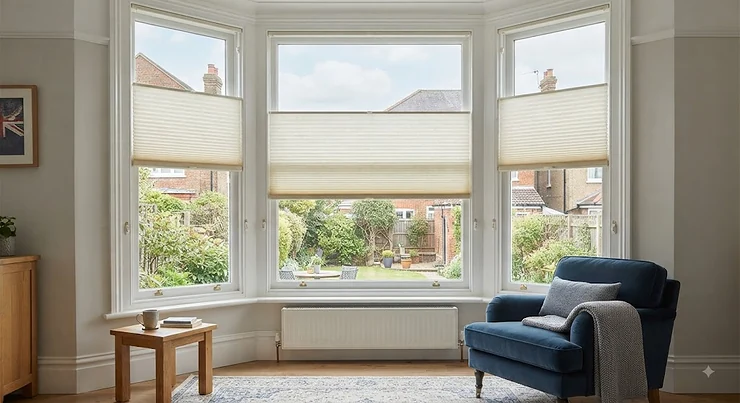
Somewhere between the draughty sash window you keep meaning to fix and the boiler you’re too scared to check the price of sits a much smaller, much cheaper decision: what goes over the glass. If you’ve landed here searching for the best honeycomb blinds, you’ve probably already noticed your energy bill doing something unkind every winter, or you’ve simply had enough of a roller blind that either lets in a strip of streetlight or blocks the whole room like a submarine hatch. Honeycomb blinds — also called cellular blinds — solve both problems at once, and they do it through a genuinely clever bit of low-tech engineering rather than a marketing gimmick.

This guide is built the way we’d want a guide built for ourselves: real products currently sold on amazon.co.uk, honest analysis of what each one actually does well (and where it falls short), and enough context on how cellular fabric works that you’ll be able to spot a good listing from a mediocre one long after you’ve closed this tab. We’ve pulled together seven genuine options spanning budget stick-on shades through to made-to-measure double-cell blinds, compared them head-to-head, and worked through the practical questions — installation, maintenance, child safety, cost over time — that most product pages skip entirely.
Whether you’re kitting out a rental flat with something that won’t upset the deposit, hunting for total blackout in a nursery, or simply after the best honeycomb blinds for a draughty Victorian bay window, there’s a route through this article for you. Let’s get into it.
Quick Comparison Table
| Product | Type | Light Control | Best For |
|---|---|---|---|
| LazBlinds No Drill Cordless Cellular Shades | Single cell, no-drill | Light filtering / blackout options | Renters wanting a fast, damage-free fit |
| Moonice No Drill Honeycomb Shades | Single cell, tension-fit | Light filtering & blackout | Awkward or angled windows |
| Tonature No Drill Cellular Shades | Single cell, free-stop | Blackout | Bedrooms on a tight budget |
| HOTSOON No Drill Blackout Cellular Shades | Single cell, tool-free | Full blackout | Shift workers and nurseries |
| Boolegon Top Down Bottom Up Cellular Shades | Single cell, TDBU | Blackout, adjustable | Privacy without losing light |
| Luxevoir Panoramix Cellular Window Blinds | Single cell, designer frame | Light filtering | Style-conscious living rooms |
| Concept Blinds Made-to-Measure Honeycomb Blinds | Single or double cell, drilled | Semi-transparent to blackout | Long-term, whole-house fitting |
Even at a glance, the split matters more than it looks. The five no-drill, tension-fit options are built for speed and zero commitment — pull them out of the box, cut if needed, and they’re up within the hour, which is exactly why they dominate the budget end of amazon.co.uk. The Luxevoir Panoramix Cellular Window Blinds sit in the middle, trading a little installation simplicity for a noticeably tidier finish. The Concept Blinds Made-to-Measure Honeycomb Blinds are the odd one out on this list — genuinely made-to-measure, requiring drilling, and priced accordingly — but they’re the only entry here that can be specified in double-cell fabric, which is the detail that matters most if insulation is your primary goal.
💬 Found a comparison that actually helps? Bookmark this page before you start measuring your windows.🤗
Top 7 Honeycomb Blinds: Expert Analysis
1. LazBlinds No Drill Cordless Cellular Shades — best no-drill pick for renters
The LazBlinds No Drill Cordless Cellular Shades are built around a simple promise: no holes, no landlord disputes, no drama. The tension-mounted frame wedges into the window recess using spring-loaded end caps, so the fixing is entirely reversible — pull it out at the end of the tenancy and the wall looks exactly as it did before. Available in light-filtering and blackout fabric across a wide range of stock and cut-to-size widths, it covers most standard UK window openings without needing a custom order.
On paper, the cordless push-pull mechanism is what earns this one its keep: there’s no chain to catch on furniture and no looped cord to worry about with toddlers or cats in the room, which matters more than most listings let on. Reviewers consistently flag the tension-fit as snug enough to stay put through normal window use, though a handful note that very uneven or bowed frames can cause the end caps to slip after a few months — worth checking your reveal is reasonably square before ordering. For a first-time renter or anyone furnishing a flat share, this is a sensible default rather than a compromise.
Pros:
- ✅ Genuinely no-drill, fully reversible fitting
- ✅ Cordless operation, safer around kids and pets
- ✅ Wide range of stock sizes, no custom wait
Cons:
- ❌ Tension fit can loosen on uneven frames
- ❌ Fabric choice limited compared with made-to-measure options
Typically priced in the £15-£30 range depending on size, this is one of the cheapest genuine honeycomb options on amazon.co.uk, and for a rental it’s difficult to argue with the value.

2. Moonice No Drill Honeycomb Shades — best fit for awkward or angled windows
Moonice No Drill Honeycomb Shades built their reputation on the Skylight variant, which handles pitched and inclined windows that most cellular blinds simply can’t cover — think loft conversions, dormer windows, and conservatory roof panels. The standard cordless version uses the same free-stop tensioning system on vertical windows, but it’s the flexibility across window shapes that sets Moonice apart from the rest of this list.
The free-stop mechanism lets you hold the blind at any height without a cord lock, which is genuinely convenient day to day — no fiddling to get it to catch at exactly the right point. Custom sizing is handled through width and drop selectors at checkout rather than a full bespoke measure-and-quote process, which keeps turnaround quick. Aggregated customer feedback on Amazon points to strong satisfaction with the fit-to-size accuracy, with the most common complaint being that the honeycomb fabric on the lighter colourways can look slightly translucent in direct midday sun — worth factoring in for west-facing rooms if you want genuine privacy.
Pros:
- ✅ Handles angled and skylight windows well
- ✅ Free-stop tension, no cord lock needed
- ✅ Fast custom-size ordering, no bespoke wait
Cons:
- ❌ Lighter colours can appear translucent in strong sun
- ❌ Not rated for very large or heavy patio-door widths
Expect to pay somewhere in the £20-£45 range depending on size and fabric, putting it a notch above the cheapest options but still firmly in budget territory.
3. Tonature No Drill Cellular Shades — best budget blackout for bedrooms
If your priority is simply “make this room dark,” the Tonature No Drill Cellular Shades are worth a close look. The blackout fabric is genuinely opaque rather than the “light-reducing” grey area some budget listings use loosely, and the free-stop cordless mechanism means you can position it at any drop without a chain trailing near a cot or bed.
What the spec sheet won’t tell you, but the honeycomb structure does in practice, is that a blackout cellular blind does double duty — it blocks light and adds a meaningful layer of insulation, which a blackout curtain alone doesn’t achieve nearly as well against a cold pane of glass. Reviewers commonly mention that the fabric holds its shape well after repeated raising and lowering, a fair test of build quality on a budget product, though a minority report the white colourway showing light staining over time on south-facing sills exposed to condensation.
Pros:
- ✅ True blackout fabric, not just light-reducing
- ✅ Cordless free-stop operation, safe near cots
- ✅ Holds shape well after repeated use
Cons:
- ❌ White fabric can show staining near condensation-prone sills
- ❌ Grey and white are the only colour options
Priced roughly £15-£35 depending on the size selected, this is a strong shout for a nursery or bedroom where budget matters as much as darkness.
4. HOTSOON No Drill Blackout Cellular Shades — best for shift workers and nurseries
The HOTSOON No Drill Blackout Cellular Shades are built around the same tool-free, cut-to-size philosophy as the rest of this budget tier, but the blackout layer here is noticeably denser, which matters if you’re trying to sleep during daylight hours after a night shift. The honeycomb cells trap a layer of still air behind the blackout fabric, so beyond the light-blocking you also get a genuine thermal buffer against the glass — useful in a north-facing bedroom that never quite warms up.
Based on the spec comparison with lighter-fabric cellular blinds on this list, the trade-off is weight: the denser fabric is slightly stiffer to raise and lower by hand, and the tension-fit brackets need a firm, square recess to hold it properly over time. Aggregated review sentiment is positive on the blackout performance specifically, with several buyers noting it as comparable to dedicated blackout roller blinds while adding the insulation benefit roller blinds don’t offer; the main recurring criticism is that installation instructions could be clearer for first-timers.
Pros:
- ✅ Dense blackout fabric, strong for daytime sleepers
- ✅ Adds thermal insulation alongside light blocking
- ✅ No tools needed for a standard install
Cons:
- ❌ Slightly stiffer to operate than lighter fabrics
- ❌ Instructions could be clearer for first-time fitters
Typical pricing sits around £18-£38 depending on size, making it a direct, sensible upgrade over a plain blackout roller for anyone who needs daytime darkness.
5. Boolegon Top Down Bottom Up Cellular Shades — best for privacy without losing light
The Boolegon Top Down Bottom Up Cellular Shades solve a problem that single-direction blinds can’t: privacy at eye level while still letting daylight in from above. The top-down-bottom-up (TDBU) mechanism lets you drop the top rail down to cover the upper half of the window, the bottom rail up to cover the lower half, or any combination in between — genuinely useful for ground-floor rooms facing a street or a neighbour’s window.
What most buyers overlook about TDBU blinds generally is that the mechanism adds a second set of rails and controls, which means slightly more to learn on day one but considerably more flexibility for the rest of the blind’s life. On the Boolegon, the no-drill tension frame keeps installation in line with the rest of this list, so you’re not trading fitting convenience for the extra functionality. Review sentiment aggregated from Amazon buyers is generally strong on the mechanism’s smoothness, with the main criticism being that very tall drops can occasionally need the top and bottom rails re-aligned after a few months of use.
Pros:
- ✅ Top-down-bottom-up control for flexible privacy
- ✅ No-drill fitting despite the dual-rail mechanism
- ✅ Blackout fabric option available
Cons:
- ❌ Slightly more setup complexity than single-direction blinds
- ❌ Tall drops may need occasional rail re-alignment
Expect a price range of roughly £25-£50 depending on size, which is reasonable for the added functionality over a standard single-direction cellular blind.
6. Luxevoir Panoramix Cellular Window Blinds — best for a designer, style-conscious finish
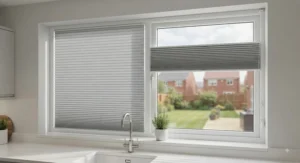
The Luxevoir Panoramix Cellular Window Blinds are aimed squarely at buyers who want a honeycomb blind that doesn’t look like a honeycomb blind — or at least, not an obviously budget one. The valance and headrail are finished in baked-enamel aluminium in a colour-matched tone to the fabric, which removes the visible screw heads and mismatched hardware that can let down cheaper cellular blinds, and it’s explicitly designed to sit well in modern, Scandinavian, and industrial interiors.
Here’s what to weigh: the no-drill mounting method is broadly similar to budget rivals, but the customised consultation service — help with sizing and colour-matching before you commit — is a genuine point of difference for anyone nervous about ordering blinds online for the first time. Reviewers tend to highlight the tidy, “made-to-measure look” of the finished product as the standout, with the recurring caveat being that response times on the custom consultation service can vary, so it’s worth building in a little buffer if you’re working to a deadline.
Pros:
- ✅ Colour-matched aluminium valance, tidy finish
- ✅ Free sizing/colour consultation service
- ✅ Suits modern and Scandinavian interiors well
Cons:
- ❌ Consultation response times can be inconsistent
- ❌ Premium finish comes at a mid-range price jump
Pricing typically runs £40-£75 depending on size and fabric, positioning it as a step up from the pure-budget tier for buyers who care about how the finished blind looks as much as how it performs.
7. Concept Blinds Made-to-Measure Honeycomb Pleated Blinds — best true double-cell option for whole-house fitting
Where the rest of this list is built around cut-to-size convenience, Concept Blinds Made-to-Measure Honeycomb Pleated Blinds flip the approach entirely: genuine bespoke measurement, a drilled fixing, and — critically — the option to specify double-cell fabric rather than the single-cell construction used across every no-drill product on this list. That’s a meaningful distinction if insulation is your main motivation for buying honeycomb blinds at all, because a double-cell structure adds a second row of trapped air pockets rather than one.
Based on the spec comparison with the tension-fit blinds above, the trade-off is obvious: drilling means a permanent fixing, a longer lead time, and a higher price, so this isn’t the right pick for a short-term let. What it does offer is a considerably more precise fit — no visible gap down the sides where warm room air can bypass the blind, which is exactly the failure point that undermines insulation claims on off-the-shelf cellular blinds. Aggregated feedback on made-to-measure honeycomb blinds broadly points to high satisfaction with fit accuracy and long-term durability, with cost being the main deterrent for budget-focused buyers.
Pros:
- ✅ True double-cell fabric option available
- ✅ Bespoke measurement, precise edge-to-edge fit
- ✅ Genuine long-term, whole-house solution
Cons:
- ❌ Requires drilling, not suited to short lets
- ❌ Highest price point and longest lead time on this list
Made-to-measure pricing varies considerably by size and fabric, but expect a range from roughly £60 up to £150+ per blind for larger double-cell windows — a genuine investment rather than an impulse buy.
✨ Don’t Miss These Exclusive Deals!
🔍 Whichever type suits your windows, click through to check current pricing and availability on amazon.co.uk before you commit — cellular blind stock and custom-size options can shift quickly, and comparing a couple of live listings side by side takes two minutes and can save you a reorder.
What Is a Honeycomb Blind? How the Air Pocket Design Works
A honeycomb blind is a pleated window covering made from fabric folded into a row of enclosed hexagonal cells, which trap a column of still air between the room and the glass, insulating the window while still allowing light control…
Look at a cross-section of the fabric and you’ll see exactly where the name comes from: rows of sealed air pocket window blind cells running the full width of the material, each one closed off from its neighbours. That matters because still air is a genuinely poor conductor of heat — it’s the same principle behind double glazing and loft insulation — while moving air carries heat away efficiently, which is why a bare pane of glass or a draughty gap feels so much colder than the air pocket structure sitting a few centimetres in front of it.
Single-cell honeycomb window blinds have one row of these pockets; double cell blinds stack a second row directly behind the first, doubling the insulating air layer at the cost of a bulkier fold when the blind is raised. According to guidance from the Energy Saving Trust, windows are responsible for a meaningful share of heat loss in UK homes, particularly through older single-glazed panes — which is exactly the gap an insulating cellular shade is designed to narrow without the cost of replacing the glazing itself.
How to Choose the Best Honeycomb Blinds for Your Windows
- Measure the recess, not the frame. Get the width at three points (top, middle, bottom) and use the smallest figure — cellular blinds that are even slightly too wide won’t sit flush.
- Decide cordless or corded first. If children or pets use the room, a cordless or free-stop mechanism removes a genuine safety consideration rather than just a preference.
- Pick single or double cell based on the window, not the room. Single-glazed or north-facing windows benefit most from the extra insulating layer a double-cell fabric provides.
- Match opacity to the room’s function. Light-filtering suits living spaces where you want daylight; blackout suits bedrooms and nurseries where darkness genuinely matters.
- Check whether drilling is realistic. Rented properties usually call for a no-drill, tension-fit blind; owned properties with awkward frames often do better with a drilled, made-to-measure fit.
- Factor in the colour against sun exposure. Pale fabrics on south or west-facing windows can appear more translucent in direct midday light than the same fabric on a shaded window.
- Read the aggregated review themes, not just the star rating. A 4.3-star average tells you less than the specific, repeated complaints buyers leave about fit, fabric weight, or mechanism durability.
Practical Usage Guide: Installing and Maintaining Cellular Blinds
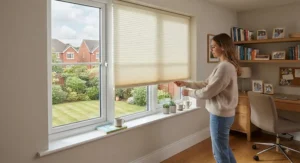
Most no-drill cellular blinds go up in three stages: trim the headrail to width if needed (a sharp utility knife and a straight edge, never scissors, keep the cut clean), compress the tension brackets and slot them into the recess, then release and check the blind sits square before trimming the drop. The most common first-30-days mistake is measuring the recess once rather than at three heights — window frames are rarely perfectly square, and a blind cut to the widest point will bind against the narrower section further down.
For maintenance, honeycomb fabric can’t be machine washed, so a soft brush attachment on a vacuum, used in the direction of the pleats, is the standard approach every few weeks; marks can usually be spot-cleaned with a barely damp cloth rather than anything wetter, since the pleats hold moisture and can lose their crisp fold if soaked. Once a year, check tension brackets on no-drill blinds for any slippage, and on corded or chain-operated blinds, confirm the safety device is still correctly fitted — cord tension and safety fittings both loosen gradually with everyday use, and it’s an easy thing to forget once the blind is up and working.
Real-World Scenarios: Which Honeycomb Blind Suits Your Home?
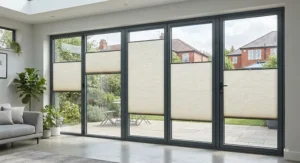
If you’re a tenant in a one-bedroom flat with a six-month tenancy and a landlord who’s twitchy about wall damage, a no-drill, tension-fit option like the LazBlinds No Drill Cordless Cellular Shades covers the brief entirely — no holes, quick to remove, and inexpensive enough that losing part of a deposit was never really the risk.
If you’re a parent kitting out a nursery where both total darkness for naps and warmth through a north-facing single-glazed window matter equally, a dense blackout option such as the HOTSOON No Drill Blackout Cellular Shades or Tonature No Drill Cellular Shades does double duty, and the cordless mechanism removes a safety consideration you’d otherwise have to manage separately.
If you own your home, you’re not moving anytime soon, and you’re trying to shave a genuine percentage off winter heating costs across several rooms, the case for the Concept Blinds Made-to-Measure Honeycomb Pleated Blinds in double-cell fabric is strongest — the higher upfront cost is offset by a precision fit that closes the side gaps a stock-size blind can’t, which is where most of the real insulating value either shows up or leaks away.
Double Cell vs Single Cell Honeycomb Blinds
Single cell blinds use one row of hexagonal air pockets and are the standard construction across nearly every no-drill, cut-to-size product on amazon.co.uk, including six of the seven products reviewed above. Double cell blinds stack a second, independent row of cells behind the first, roughly doubling the trapped air volume between room and glass, and they’re the option specified for products like the Concept Blinds Made-to-Measure Honeycomb Pleated Blinds.
The practical difference shows up mainly in two places: thermal performance and stack height. A double-cell honeycomb blind insulates noticeably better on single-glazed or particularly draughty windows, but it also folds up thicker when fully raised, which can be a genuine consideration on a shallow window recess where a bulky stack blocks part of the glass even at full lift. For most standard double-glazed UK windows, a well-fitted single-cell blind — like the Moonice No Drill Honeycomb Shades or Boolegon Top Down Bottom Up Cellular Shades — delivers a solid balance of insulation and price; double cell earns its premium specifically on colder, older, or larger glazing where every bit of trapped air counts.
Common Mistakes When Buying Cellular Blinds on Amazon
The single most common error is measuring the window opening rather than the recess depth, then discovering the blind’s bracket profile is too deep to sit flush against the glass — always check the stated bracket or mounting depth against your recess before ordering. A close second is choosing fabric colour purely on how it looks in a product photo; pale honeycomb fabric photographs beautifully but can read as noticeably more translucent once it’s hanging against real daylight, particularly on south-facing glass.
Buyers also frequently underestimate how much a “custom size” cellular blinds amazon listing actually costs once width and drop are entered at checkout — stock sizes are often meaningfully cheaper than a custom cut of the same fabric, so it’s worth checking whether your window falls within a standard size band before assuming a bespoke order is necessary. Finally, skipping the aggregated review section in favour of the star rating alone means missing the specific, repeated complaints — tension slipping on uneven frames, fabric showing marks near condensation — that matter far more to your buying decision than an average score.
Honeycomb Blinds vs Roller and Venetian Blinds
| Feature | Honeycomb Blinds | Roller Blinds | Venetian Blinds |
|---|---|---|---|
| Insulation | High — sealed air pockets | Low to moderate | Low — slatted gaps |
| Light Control | Filtering to full blackout | Filtering to full blackout | Adjustable via slat angle |
| Cleaning | Vacuum brush, spot clean | Wipe clean, very easy | Dust each slat individually |
| Typical Price | Mid-range | Budget to mid-range | Budget |
The insulation gap is the whole story here: a roller or Venetian blind hangs a flat sheet or a set of slats in front of the glass, but neither traps a sealed layer of still air the way a cellular structure does, so both lose heat through the window far faster once the sun goes down. Roller blinds win on ease of cleaning and tend to sit cheaper for an equivalent blackout spec, which makes them a reasonable choice for a hallway or utility room where the blind is rarely lowered and thermal performance barely matters. For any room where the blind does real daily work — a bedroom, a home office, a living room window that faces the street — the extra insulation and quieter, gap-free light control of honeycomb window blinds tends to justify the modest price difference over a roller equivalent.
Energy Efficient Honeycomb Blinds: The Insulation Numbers Explained
An energy efficient honeycomb blind works by slowing conductive and convective heat transfer at the glass — the coldest, least insulated surface in most rooms — through a sealed layer of trapped air rather than through any active heating element or reflective coating. Industry testing cited by several UK blind manufacturers puts winter heat-loss reduction from a well-fitted cellular blind in the region of 40-50% at the window itself, though the real-world saving on a whole-house heating bill will always be smaller than that figure, since windows are only one part of a home’s total heat loss.
According to the Energy Saving Trust, reducing heat loss around the home more broadly — insulation, draught-proofing, and window treatments together — is one of the most cost-effective ways to lower a heating bill without major building work. An insulating cellular shade won’t replace loft or wall insulation, but as a low-disruption, no-builder-required upgrade, it’s one of the few thermal improvements a renter can fit in an afternoon and take with them when they move. The gap-free fit matters more than the fabric spec here: a double-cell blind fitted with visible side gaps performs worse than a well-fitted single-cell blind, so precision of fit is arguably the single biggest lever on real-world energy performance.
Honeycomb Window Blinds for Renters, Families and Home Offices
Renters are best served by the no-drill, tension-fit tier of this list — products like the LazBlinds No Drill Cordless Cellular Shades or Moonice No Drill Honeycomb Shades — since the entire appeal is a reversible fit that satisfies most tenancy agreements without a conversation with the landlord.
Families with young children should prioritise cordless or free-stop mechanisms across the board; corded honeycomb blinds are still available and still legal when fitted with the correct safety devices, but a genuinely cordless product like the Tonature No Drill Cellular Shades or HOTSOON No Drill Blackout Cellular Shades removes the ongoing responsibility of checking that a cord retainer stays correctly fitted as children grow.
Home workers who spend all day in a room with a screen tend to care most about glare control and consistent daylight rather than full blackout, which makes light-filtering options like the Luxevoir Panoramix Cellular Window Blinds a sensible pick — enough softened natural light to avoid a gloomy home office, without the harsh glare that undermines a video call on a bright afternoon.
Long-Term Cost & Maintenance: Is a Cellular Blind Worth It?
| Consideration | Budget No-Drill Blind (e.g. LazBlinds, Tonature) | Made-to-Measure Double Cell (e.g. Concept Blinds) |
|---|---|---|
| Upfront Cost | £15-£45 typical range | £60-£150+ typical range |
| Expected Lifespan | 2-4 years with regular use | 7-10+ years, properly fitted |
| Fit Precision | Good, occasional gaps | Excellent, edge-to-edge |
| Best Long-Term Value | Renters, short-term use | Owner-occupiers, permanent windows |
Cost-per-year tells a more useful story than the sticker price alone: a £25 no-drill blind lasting three years works out to roughly £8 a year, while a £100 made-to-measure double-cell blind lasting nine years works out to a very similar annual figure — but with a materially better fit and insulation performance along the way. The calculation tips firmly toward the budget tier for anyone who expects to move within a couple of years, since a made-to-measure blind’s value is tied to the specific window it was cut for and rarely transfers well to a new property.
💬 Worked out which tier fits your situation? Compare live listings now to lock in the size and colour you need.
Safety, Regulations & Child-Safe Cord Compliance
Any internal blind sold or professionally installed in the UK with a corded operating mechanism must comply with the child safety requirements of British Standard BS EN 13120, introduced under the General Product Safety Regulations 2005, which require safety devices to keep looped cords and chains out of reach of young children. Most of the honeycomb blinds featured in this guide sidestep the issue entirely through cordless or free-stop mechanisms, which is one of the reasons cordless designs have become the default across budget cellular blinds rather than a premium feature.
If you do fit a corded honeycomb blind — more common on wider or made-to-measure options — the Royal Society for the Prevention of Accidents (RoSPA) recommends keeping cords short, taut, and fitted with a cleat or tensioning device well out of a child’s reach, and re-checking that fitting periodically as children grow. This isn’t a box-ticking exercise: cord safety fittings loosen gradually with everyday use, and an annual check takes under a minute per blind.
Problem → Solution: Fixing Common Honeycomb Blind Issues
Problem: The blind won’t stay at the height you set it. This usually means a free-stop or tension mechanism has loosened over time; on products like the Moonice No Drill Honeycomb Shades, this is often solvable by re-tensioning the end brackets rather than replacing the whole unit.
Problem: Light leaks around the edges despite a blackout fabric. This is almost always a fit issue rather than a fabric issue — check the bracket depth is seating the blind flush against the recess, and consider a made-to-measure option like Concept Blinds Made-to-Measure Honeycomb Pleated Blinds if a stock size consistently leaves a visible gap.
Problem: Fabric looks dusty and dull after a few months. A soft vacuum brush attachment used gently along the pleats, done every few weeks rather than left for months, prevents the build-up that makes cellular fabric look tired faster than it should.
Problem: The blind feels stiff or sticks partway. Dense blackout fabrics, such as those on the HOTSOON No Drill Blackout Cellular Shades, are naturally heavier to operate — check the tension mechanism is fully engaged, and avoid forcing the blind past a sticking point, which can misalign the pleats permanently.
Frequently Asked Questions
❓ What are the best honeycomb blinds for insulation?
❓ Are honeycomb blinds better than curtains for keeping heat in?
❓ Can you fit honeycomb blinds without drilling?
❓ How do you clean cellular blinds?
❓ Do honeycomb blinds block out light completely?
Conclusion
There isn’t a single best honeycomb blind for every window — there’s a best one for your specific situation, and hopefully this guide has narrowed that down considerably. If you’re renting and want a fast, damage-free fit, the no-drill tier led by the LazBlinds No Drill Cordless Cellular Shades and Moonice No Drill Honeycomb Shades covers most standard windows without fuss. If total darkness is the priority, the Tonature No Drill Cellular Shades and HOTSOON No Drill Blackout Cellular Shades are built specifically for that job, while the Boolegon Top Down Bottom Up Cellular Shades solves the trickier privacy-without-darkness problem that ground-floor windows often present.
For anyone prioritising finish and design, the Luxevoir Panoramix Cellular Window Blinds bring a noticeably tidier look than the pure-budget options, and for owner-occupiers planning to stay put, the Concept Blinds Made-to-Measure Honeycomb Pleated Blinds in double-cell fabric represent the strongest long-term investment on this list, both for insulation and for the precision fit that stock sizes simply can’t match. Whichever you choose, remember that the fit matters as much as the fabric — a cheap blind fitted precisely will often outperform an expensive one hanging with a visible gap.
Recommended for You
- No Drill Pleated Blinds 2026: 7 Brilliant Damage-Free Picks
- Best Pleated Blinds UK 2026: 7 Top Picks Compared
- Thermal Roman Blinds UK: 7 Best Warm ; Cosy Picks for 2026
Disclaimer: This article contains affiliate links. As an Amazon Associate, I earn from qualifying purchases. If you purchase products through these links, we may earn a small commission at no additional cost to you.
✨ Found this helpful? Share it with your friends! 💬🤗
