
In This Article
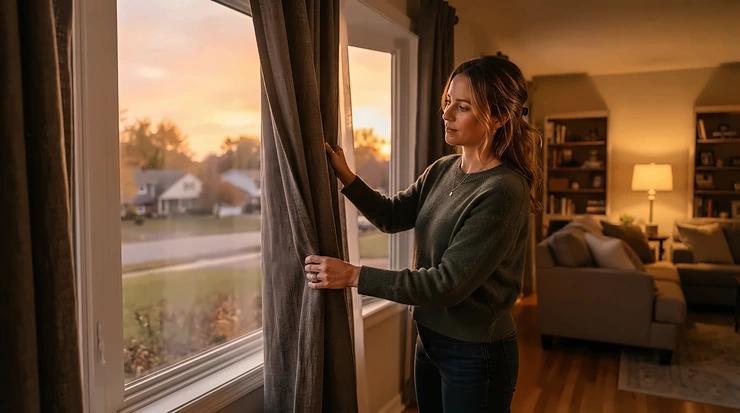
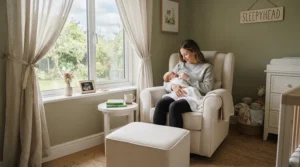
There is a special kind of dread reserved for the parent of a baby who has finally, gloriously, dropped off. Then the sun clears the neighbour’s roof at 4:45am. In Britain that isn’t bad luck, it’s astronomy. Around midsummer the sun is up shortly before 5am in London, and earlier still further north. A nursery window with a flimsy lining offers roughly the same protection as a crisp packet.
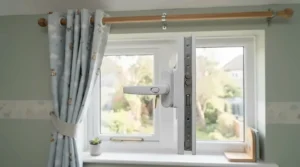
That’s why blackout curtains for nursery use have gone from “nice extra” to near-essential. Light is the body’s main clock-setting signal. A scoping review of infant circadian rhythm research notes that even brief bright light can shift melatonin timing. Much of that evidence comes from neonatal units, so treat it as a strong hint rather than a promise about your spare room. It does line up with the long-standing advice to give babies a calm, dark place to sleep.
The catch is that “blackout” is a marketing word, not a measurement. This guide sorts the hype from the fabric. You’ll find real product comparisons, honest room-darkening percentage maths, and soft blackout curtains for nursery use that won’t feel like tarpaulin. We also cover the safety bit too many round-ups skip, because baby room blackout curtains are as much about cords and poles as cloth. Clocks go back on 25 October 2026, which brings darker evenings and brighter early mornings, so now is a smart moment to sort the window.
Quick Comparison: Blackout Curtains for Nursery at a Glance
| Product | Format | Light-blocking claim (listing/brand) | Best For |
|---|---|---|---|
| Deconovo Thermal Insulated Eyelet Blackout Curtains | Eyelet pair, triple-weave | 95–99% | Standard windows, all-round pick |
| COASTLINE Super Soft Matt Satin Blackout Curtains | Eyelet pair, satin finish | “100%” claimed | Soft feel and gentle look |
| MRTREES Eyelet Thermal Blackout Curtains | Eyelet pair, soft texture | Blackout claimed | Neutral décor that ages well |
| Dreamscene Eyelet Blackout Curtains | Wide 66in eyelet panels | Blackout claimed | Wider windows |
| NICETOWN Kids Blackout Curtains | Eyelet, star cut-out/voile style | Filtered, not full | Toddler rooms, daytime glow |
| Tommee Tippee Sleeptime Portable Blackout Blind | Suction-cup blind | Blocks daylight (brand) | Renters, travel, sealing gaps |
| Moonzzz by Kii Portable Blackout Blind | Suction-cup blind, 200 x 130cm | Blocks light (listing) | Big or awkward windows |
Looking at the table, Deconovo is the only curtain here that publishes a percentage range, so it’s the easiest to judge on paper. The two portable blinds solve a different problem. They seal the edges, which is exactly where curtains leak. If you’re torn, the classic combination is a decent curtain in front with a portable blind behind it.
💬 Just one click — help others make better buying decisions too!😊
Top 7 Blackout Curtains for Nursery: Expert Analysis
Every pick below is a real product on Amazon UK. Specs come from listings and brand pages, and review comments are paraphrased summaries of what real buyers report. Where I couldn’t verify meaningful review evidence, I say so rather than guess.
1. Deconovo Thermal Insulated Eyelet Blackout Curtains — best all-rounder for standard windows
The dense triple-weave fabric is the star, with a proper hand-feel rather than the crackly texture of cheap coated panels.
Deconovo’s Amazon UK listing claims 95–99% light-blocking, 4cm eyelets, a soft-touch finish and gentle-cycle machine washing. The eyelets slide onto a standard pole without a fight. Washability matters more than you’d expect after the first milk-related incident. Those percentages are the brand’s own, and the brand admits darker colours perform better. A cream pair will leak more than charcoal.
Based on the spec comparison, this is the sensible default for a regular window and a parent who wants a known quantity. Reviewers on Deconovo’s UK page describe a clear difference to draughts and warmth. One notes that street lighting still creeps through and that the colour came out greyer than pictured.
Pros:
- ✅ Triple-weave fabric with a strong light-blocking claim
- ✅ Machine washable on a gentle cycle
- ✅ Wide choice of colours and sizes
Cons:
- ❌ Paler colours let more light through
- ❌ Side and top gaps still need managing
Price: typically the £20s to mid-£30s for a pair at the time of research, so check current price. Verdict: excellent darkness per pound.

2. COASTLINE Super Soft Matt Satin Blackout Curtains — satin-soft finish for a gentler look
The matt satin surface is the whole pitch, and it’s the closest thing here to a cushioned feel.
The Amazon UK listing describes a “100% thermal blackout” eyelet pair in blush pink, sized W46 x L54 inches. As soft blackout curtains for nursery use go, a satin finish tends to drape better and feel kinder to touch than stiff coated polyester. The 54-inch drop is sill length on many windows, so measure before you fall for the colour. Treat “100%” as a headline claim, not a lab result. Pale blush also transmits more light than a deep shade, which is worth remembering when you read any room-darkening percentage.
My analytical take is that this suits parents who care about how the room feels as much as how dark it gets, especially with a portable blind behind for the edges. I couldn’t verify a meaningful set of reviews for this listing, so read the recent ones on the page for comments about light leakage and washing.
Pros:
- ✅ Satin-soft hand-feel suits a baby room
- ✅ Eyelet header hangs and glides easily
- ✅ Thermal lining claimed to tame draughts
Cons:
- ❌ Pale blush may pass more light than darker shades
- ❌ Independent review evidence hard to verify
Price: around £20–£35 at the time of research, so check current price. Verdict: good value if softness is your priority.
3. MRTREES Eyelet Thermal Blackout Curtains — neutral grey that grows with your child
A soft-texture light grey is the hook. It won’t scream “baby” and it won’t date.
The listing describes a 46 x 54 inch (117 x 137cm) pair with a 54-inch drop, an eyelet top and thermal insulation, aimed at kids’ rooms and living rooms alike. That dual-purpose design has a real advantage. The curtains can migrate to a toddler bedroom, a playroom or the spare room without looking like leftover nursery kit. A neutral grey also hides the inevitable finger marks.
What the listing won’t tell you is how well the edges are handled, because that depends on your pole placement. Hang the pole wide and high, and these panels should give a sensible darkening effect. Hang them tight to the frame and light will find the gaps. I couldn’t verify enough reviews to summarise buyer sentiment fairly. It’s worth scanning recent comments for complaints about fabric thickness.
Pros:
- ✅ Neutral grey suits any future room
- ✅ Soft-texture fabric with thermal lining claim
- ✅ Standard eyelet header fits most poles
Cons:
- ❌ 54-inch drop may fall short of longer windows
- ❌ Few verifiable reviews to lean on
Price: roughly £20–£35 at the time of research, so check current price. Verdict: a safe, flexible buy.
4. Dreamscene Eyelet Blackout Curtains — wide panels for bigger windows
The 66-inch panel width is the standout, and it solves the most common curtain flaw: not enough fabric.
The listing shows a 66 x 72 inch pair, thermal lined and described as soft and modern. Extra width matters because fuller folds and a bigger side overlap are what stop light leaking around the sides. A 72-inch drop reaches well below most sills, and that’s useful if you want the hem close to the floor. Wider, heavier panels do need a sturdy pole and secure fixings, particularly once a curious toddler starts tugging.
For a bay-ish or wide window, this is the kind of size that makes a nursery feel properly dark rather than “quite dim”. I couldn’t verify a robust review sample, so check the recent reviews for comments on thickness and light-blocking.
Pros:
- ✅ Generous 66in panels for wider windows
- ✅ Longer 72in drop covers the glass fully
- ✅ Thermal lining helps with draughts
Cons:
- ❌ Heavier panels demand a sturdy pole
- ❌ Limited verifiable review evidence
Price: about £25–£40 at the time of research, so check current price. Verdict: worth it if your window is wide.
5. NICETOWN Kids Blackout Curtains — star cut-outs for a gentle glow
The cut-out star design is charming, but read the fine print before you buy.
NICETOWN’s Amazon UK range pairs eyelet-top thermal curtains with a voile layer in kids’ patterns, such as W52 x L54 inch sets in grey and pink. Cut-out designs of this kind typically let filtered light through the shapes. That’s lovely in a toddler room during the day and a poor choice for a newborn’s nap. So this is not your first-choice curtain for total darkness. Check that the exact variant you pick is the solid blackout version.
The listing displays sustainability badges such as OEKO-TEX Standard 100 and Global Recycled Standard on some variants. That’s reassuring, but verify the badge applies to your specific colour and size. I couldn’t verify enough reviews to summarise sentiment.
Pros:
- ✅ Playful star design suits toddler rooms
- ✅ Eyelet header with thermal insulation
- ✅ Certifications shown on some variants
Cons:
- ❌ Cut-out style isn’t total darkness
- ❌ Certification varies by variant
Price: around £20–£35 at the time of research, so check current price. Verdict: charming for older kids, not the best for newborn naps.
6. Tommee Tippee Sleeptime Portable Blackout Blind — suction-cup blind that seals the edges
The suction cups run around all four edges, which is precisely where curtains leak.
The regular size fits windows up to 130 x 99cm and weighs 320g. The large size reaches 130 x 198cm at 680g. It’s machine washable and folds into a travel bag. Velcro fastenings let you shrink it to around a third of its maximum size. As a companion to curtains, that edge seal is genuinely useful, and it’s a rental-friendly way to get darkness without a single drill hole.
Sentiment is mixed but instructive. Argos customer feedback summarised the blind as effective but flagged suction-cup adhesion and sizing issues on some windows. One Trustpilot reviewer reported light still seeping in around the edges despite careful fitting. Another guide notes suction pads can lose stickiness if they get dirty. Keep it off any cot-side window within reach, and follow the maker’s advice about prolonged direct sun.
Pros:
- ✅ No drilling, ideal for renters
- ✅ Machine washable and travel-friendly
- ✅ Two sizes to match window dimensions
Cons:
- ❌ Suction can fail on dirty or non-smooth glass
- ❌ Edges may still leak on awkward windows
Price: around £15–£30 at the time of research, so check current price. Verdict: a clever gap-filler.
7. Moonzzz by Kii Portable Blackout Blind — big 200 x 130cm cover for awkward windows
The 200 x 130cm size is the standout, big enough for tall windows and many roof windows.
At 624g with velcro tabs for resizing, it’s light enough to pack and large enough to overlap the frame. That overlap is the point. A blind that extends beyond the glass leaks less at the edges than one that sits inside it. It’s a temporary-looking solution, so it won’t win style awards. It could rescue a bedroom with an awkward window that ready-made curtains never fit.
Buyer sentiment is positive where I could verify it. Reviewers describe it as easy to stick up, with the edge overlapping so little light escapes at the sides, and one says it stayed put all week on holiday. As with all suction blinds, clean glass is key.
Pros:
- ✅ Large size covers tall or roof windows
- ✅ Edge overlap limits side light
- ✅ Lightweight and easy to pack
Cons:
- ❌ Temporary look
- ❌ Suction depends on clean, smooth glass
Price: around £15–£30 at the time of research, so check current price. Verdict: great for awkward windows.
| Product | Listed size/format | Insulation claim | Indicative price band | Best For |
|---|---|---|---|---|
| Deconovo Thermal Insulated Eyelet Blackout Curtains | 46 x 54in pair, eyelet | Thermal insulated | £20s–mid £30s | Standard windows |
| COASTLINE Super Soft Matt Satin Blackout Curtains | 46 x 54in pair, satin | Thermal blackout | £20–£35 | Softness |
| MRTREES Eyelet Thermal Blackout Curtains | 46 x 54in pair | Thermal | £20–£35 | Neutral décor |
| Dreamscene Eyelet Blackout Curtains | 66 x 72in pair | Thermal lined | £25–£40 | Wide windows |
| NICETOWN Kids Blackout Curtains | 52 x 54in pair | Thermal insulated | £20–£35 | Toddler rooms |
| Tommee Tippee Sleeptime Portable Blackout Blind | 130 x 99cm / 130 x 198cm | None claimed | £15–£30 | Renters, travel |
| Moonzzz by Kii Portable Blackout Blind | 200 x 130cm | None claimed | £15–£30 | Awkward windows |
Price bands are indicative only, so check current prices. Read across the table and Dreamscene and Deconovo are the strongest pure-curtain options for larger or standard windows, while NICETOWN trades darkness for charm. The two blinds cost less than most curtains but they’re a supplement, not a substitute, if you want a finished look. If you buy one curtain and one blind, you’ll usually beat any single product on the list.
✨ Don’t Miss These Deals
🔍 Take your nursery sleep setup to the next level with these carefully selected products. Click on any highlighted item to check current pricing and availability. A dark, calm room is one of the simplest upgrades you can make. 🌙
What Are Blackout Curtains for Nursery?
Blackout curtains for nursery use are heavy, tightly woven or coated curtains designed to block most daylight from a baby’s room, helping create a dark, calm sleep space for naps and early mornings. Many also add thermal lining, reduce draughts and dampen outside noise, though none block light entirely without help at the edges.
Not all “dark” curtains are equal. Dimout or room-darkening curtains typically block around 70–90% of light, while true blackout curtains are credited with 95–100%. The technology matters too. Some use a foam or acrylic coating on the back, some use a dense triple-weave, and others sew in a separate black lining. Coatings tend to darken well but can feel stiff. Triple-weave feels softer and often washes better.
Blackout and thermal are related but not identical. A true blackout curtain can stop light without much insulation, while a thermal curtain actively slows heat flow even if some light bleeds through. Many products do both, which is why they’re often sold together. When you shop, read “blackout” as light control and “thermal” as temperature control, and confirm both are actually claimed.
How to Choose Blackout Curtains for Nursery
- Measure for coverage, not the glass. Curtains should extend roughly 15–38cm beyond each side of the frame. Skimping here is the most common reason new curtains still let light in.
- Check the light claim. Look for a stated percentage and prefer 95% or above for daytime naps. Remember that it’s the manufacturer’s number.
- Prioritise colour and weave. Darker colours generally block more light, and dense triple-weave feels softer than coated fabric.
- Choose a cord-free operating style. Eyelet curtains on a pole have no cords at all, which makes them easy to keep safe.
- Check the care label. Hand-wash-only curtains sound charming until you’re doing it at midnight. Machine washable is worth a few extra pounds.
- Plan for edges. Budget for a pelmet, wraparound pole or portable blind to close top and side gaps.
- Weigh price against use. A mid-range pair that works for years beats a bargain pair you replace twice.
Follow those steps and the search for blackout curtains for nursery use becomes much less bewildering.
Baby Room Blackout Curtains and the Room-Darkening Percentage Explained
The room-darkening percentage on a listing sounds scientific, but it’s a manufacturer’s claim rather than a standard you can compare across brands. I couldn’t find a single consumer-facing test that all sellers use. Treat any number as a guide, then verify with your own window and a midday test.
Here’s how the tiers usually look. Dimout curtains sit around 70–90% and let a soft glow through. Typical blackout curtains from a retailer such as Dunelm are quoted at 85–95%. Ultra-blackout ranges reach around 99%. Deconovo’s triple-weave range quotes 95–99%. Even the best of those aren’t the full story. Dunelm’s own guidance admits that no curtain alone can eliminate light, because it leaks around the edges depending on where the pole sits.
Why does 1% matter? Direct summer sun is commonly quoted in the tens of thousands of lux, against a few hundred for a typical lit living room. Even 1% of that isn’t nothing. So for baby room blackout curtains, the fabric percentage is only half the equation. The other half is the geometry of the fit.
To push a good room-darkening percentage closer to the real thing, choose a dark colour, mount the pole wide and high, and add a pelmet or portable blind. Test on a bright day with the lights off. If you can read a book in the corners, you have leaks to fix.
Soft Blackout Curtains for Nursery: Fabric, Feel and Washability
“Soft” is where many blackout curtains fall down. The cheapest use a rubbery coating on the back that crinkles, holds creases and can smell for a few days. Better ones use a dense woven fabric, a satin finish or a brushed surface, and the difference is easy to feel. Dunelm, for instance, sells brushed blackout eyelet curtains with a coating applied directly on the reverse, plus polycotton blackout options aimed at children’s rooms.
For soft blackout curtains for nursery use, look at three things. First, the hand-feel of the face fabric, since babies and toddlers touch curtains constantly. Second, the care label. Gentle-cycle machine washing is ideal, and the difference between “wash at 30°C” and “hand wash only” will matter around week three. Third, chemical safety labels. OEKO-TEX Standard 100 is a voluntary certification that tests every component, including threads and trims, against a list of more than 1,000 substances. It isn’t a legal requirement, but it’s a reasonable tie-breaker.
New curtains often benefit from airing before you hang them. Wash them if the label allows, and let them dry fully before the nursery gets its first overnight guest. Softer fabrics may also drape better, which improves side overlap and helps darkness.
Blackout Curtains Safe for Children’s Room: The Cord and Pole Checklist
Curtains themselves are rarely the hazard. Cords, loops and things a child can climb are. RoSPA reports that nine children died from blind cord strangulation between April 2019 and March 2022, on top of at least 33 UK deaths in the preceding 20 years. Local-authority guidance summarising earlier RoSPA analysis says most such incidents happen in bedrooms, involving children aged roughly 16 to 36 months. That’s exactly when a nursery stops being a newborn’s room and becomes a toddler’s.
RoSPA also notes that corded curtain tracks can pose the same risks as blinds. So blackout curtains safe for children’s room use come down to a short checklist:
- Choose eyelet or tie-top curtains on a pole, with no pull cords or loops
- Move cots, beds and climbable furniture away from the window
- Skip decorative hanging cords and think twice about tiebacks
- Fix the pole into solid fixings rather than a pressure-fit rod
- Avoid puddled hems a crawling baby can grab and pull
- Keep suction-cup blinds and their fastenings out of reach
If you already have a corded blind, use a cleat, tidy or tensioner so the cord can’t form a loop. Cordless designs are the safest option.
Curtain Safety Standards in the UK: What Actually Applies
Here’s a detail that surprises many parents. The main child-safety standard for window coverings, BS EN 13120, covers internal blinds. According to BSI’s description, it does not apply to draperies. Under the 2014 revision, blinds must carry warning labels and come with safety devices. BBSA guidance says the standard is aimed at premises where children up to 42 months are likely to be present. You can read the BSI summary of BS EN 13120 for the scope.
So what does that mean for curtain safety standards on a real nursery curtain? In my research I found no equivalent cord-focused standard specific to eyelet curtains. That’s less alarming than it sounds, because eyelet curtains have no operating cord, but it does mean safety rests on your setup rather than a label. Follow RoSPA’s guidance, choose cord-free headers and secure fixings, and treat any curtain with a cord, wand or loop as a blind for safety purposes.
Other labels are voluntary. OEKO-TEX Standard 100 addresses chemical content, not strangulation or fire. Manufacturers’ light-blocking percentages aren’t standardised either. When a listing claims something impressive, ask what’s actually been tested, and by whom.
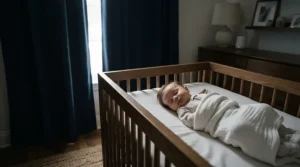
Thermal Insulation for Baby Room Comfort: What Blackout Curtains Can (and Can’t) Do
Thermal insulation for baby room comfort is a genuine bonus of good blackout curtains. According to Energy Saving Trust figures often quoted by charities, around 18% of heat is lost through windows in an uninsulated house. Thermal curtains are thicker and multi-layered, so they reduce draughts and slow that loss. Some brands cite US Department of Energy figures of up to around 25% reduced window heat loss for lined curtains, though savings vary hugely with your windows and how you hang them.
The Lullaby Trust recommends keeping a sleeping baby’s room at 16–20°C, because overheating is linked to a higher risk of sudden infant death syndrome. That’s a useful frame. Thermal curtains help stabilise the room, keeping it a touch warmer on frosty nights and cooler in summer if closed during the day. They are not a safety device. A simple room thermometer is what tells you the truth, and you should still check that your baby isn’t too hot by feeling their chest or the back of the neck.
For best results, close thermal curtains at dusk and open them in the morning to let the room breathe. Don’t let curtains cover radiators. Layering a lined curtain over double glazing gives the best effect. And if you want warmth without full darkness, a thermal-only curtain is a sensible alternative to blackout.
Blackout Curtains for Nursery vs Blackout Blinds and Portable Options
| Option | Light control | Cord risk | Thermal benefit | Look | Best For |
|---|---|---|---|---|---|
| Blackout curtains (eyelet, pole) | Good, gaps at edges | None if cord-free | Good with thermal lining | Soft, decorative | Most nurseries |
| Cordless blackout blinds | Very good, sealed at edges | Lowest if cordless | Moderate | Neat, functional | Tidy windows |
| Portable suction blinds | Good, edge overlap helps | None | Limited | Temporary | Renters, travel |
| Curtain liners | Adds blackout to existing curtains | None | Some | Invisible | Existing curtains |
Reading across, curtains win on look and warmth, while blinds win on edge sealing. Portable blinds like the Tommee Tippee Sleeptime Portable Blackout Blind and the Moonzzz by Kii Portable Blackout Blind are unbeatable for flexibility. The strongest setup for many homes is a curtain over a blind or portable layer.
Corded blinds are the outlier in this table, and not in a good way. In a nursery, I’d avoid corded designs entirely and choose cordless or cord-free alternatives. Curtain liners can rescue existing curtains cheaply, though they rarely match the finish of purpose-made blackout fabric. If you rent, portable blinds are the low-commitment route, and if you own, a proper pole with wide overlap is the lasting one. Neither option is universally best, so match the choice to the window, your lease and your budget.
How to Hang Nursery Blackout Curtains for Maximum Darkness
Getting light out is mostly about geometry, so follow this sequence.
- Measure the window and the wall. Plan for a pole that extends 15–38cm beyond each side of the frame.
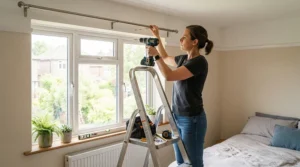
- Mount high. Fix the pole roughly 10–15cm above the frame, or right up to the ceiling if you can, so the top gap is minimal.
- Fix into solid fixings. Use proper wall plugs and screws. Pressure-fit rods are a poor choice in a child’s room.
- Hang and dress the folds. Eyelet curtains hang best with an even fold, so pull the panels closed and check for gaps.
- Test at midday. Close the curtains, switch off the lights and look for leaks in the corners.
- Patch the gaps. A portable blind, a pelmet or a wraparound pole closes the remaining leaks.
Maintenance is simple. Vacuum dust from folds monthly, wash per the care label every few months, and check the pole fixings when you change the seasons. In the first 30 days, the common mistakes are a pole too close to the frame, panels too narrow to overlap, and hanging the hem so long that it puddles. If your cot is near the window, move it. A well-hung pair of baby room blackout curtains does very little if it’s blocked by furniture.
Real-World Scenarios: Which Baby Room Blackout Curtains Suit Which Household?
Scenario 1: newborn in a rented two-bed flat, east-facing window, tight budget. You can’t drill, the sun arrives early and money is tight. A portable blind such as the Tommee Tippee Sleeptime Portable Blackout Blind delivers darkness immediately, then a budget curtain like the MRTREES Eyelet Thermal Blackout Curtains adds a softer look. Keep the cot well away from the window.
Scenario 2: terraced house, wide window, toddler due to move rooms. Extra width matters, so the Dreamscene Eyelet Blackout Curtains fit the brief, and the neutral tones will suit a big-kid room later. Hang the pole wide and high, fix it securely and keep the hem off the floor.
Scenario 3: holidays, grandparents’ spare room and weekend trips. Here portability wins. The Moonzzz by Kii Portable Blackout Blind packs small and overlaps large windows, and it weighs little more than a bag of flour. You get a dark room anywhere without a screwdriver.
If your baby room is a shared space with a light sleeper, combine layers. A soft curtain like COASTLINE Super Soft Matt Satin Blackout Curtains for feel, plus a blind for edge sealing, gives you both the look and the darkness.
Nursery Blackout Curtain Problems and Fixes
Light still leaks at the top and sides. Raise and widen the pole, or add a pelmet. A portable blind behind the curtains seals what the curtains can’t.
The room gets too warm in summer. Keep curtains closed during the day, use lighter bedding, and check with a thermometer. The Lullaby Trust’s hot-weather advice recommends closing curtains in the daytime and aiming for 16–20°C, with a fan pointed away from the baby.
The curtains smell or feel stiff. New coated fabrics can hold a factory smell. Air them, wash them if the care label allows, and consider a softer weave next time.
A toddler keeps tugging the fabric. Raise the hem so it sits just off the floor, check the fixings, and consider moving the cot and any climbable furniture away from the window.
Condensation on cold glass. Thick curtains can trap moisture against a cold pane. Open them in the morning and ventilate briefly, especially in winter.

Frequently Asked Questions
❓ Do blackout curtains for nursery use really help babies sleep?
❓ Can baby room blackout curtains make the room too hot?
❓ What length should soft blackout curtains for nursery windows be?
❓ How do I stop light leaking around blackout curtains for nursery windows?
❓ Can I machine wash blackout curtains safe for children's room use?
Conclusion
The best blackout curtains for nursery use are the ones that fit your window, feel soft, wash easily and, above all, have no cords for little hands to find. For most standard windows, Deconovo Thermal Insulated Eyelet Blackout Curtains are the strongest all-rounder on paper. COASTLINE Super Soft Matt Satin Blackout Curtains suit anyone who wants softness, Dreamscene Eyelet Blackout Curtains cover wide windows, and MRTREES Eyelet Thermal Blackout Curtains are a flexible neutral. NICETOWN Kids Blackout Curtains are better for daytime toddler rooms than for pitch-dark newborn naps. When the edges leak, the Tommee Tippee Sleeptime Portable Blackout Blind and the Moonzzz by Kii Portable Blackout Blind are the quick fix.
Remember the three big lessons. A room-darkening percentage is a claim, not a guarantee, so test it on a bright day. Curtain safety standards focus on blinds, so your own setup is what keeps a nursery safe. And thermal insulation for baby room comfort is a bonus, not a substitute for a thermometer. Get those right and darker mornings, calmer naps and warmer winters follow.
Recommended for You
- Pencil Pleat Curtains: 7 Brilliant UK Picks For 2026
- Best Curtain Poles UK: 7 Top Picks That Won’t Let You Down (2026)
- Curtain Track vs Curtain Pole: 7 Best UK Picks Compared (2026)
Disclaimer: This article contains affiliate links. As an Amazon Associate, I earn from qualifying purchases. If you purchase products through these links, we may earn a small commission at no additional cost to you.
✨ Found this helpful? Share it with your friends! 💬🤗
