
In This Article
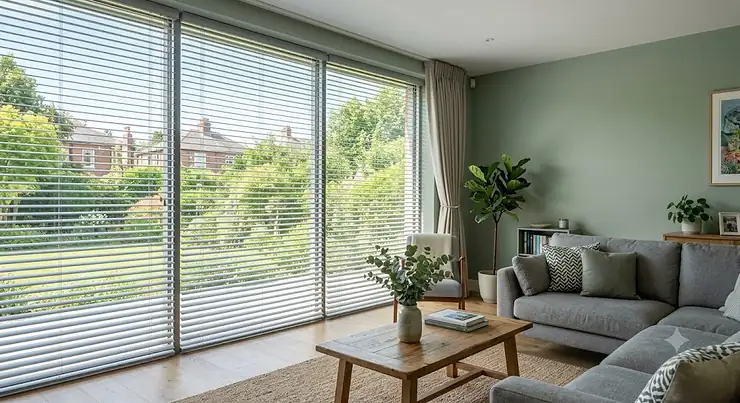
Windows are funny things. Leave them bare and you’re living in a fishbowl; smother them in heavy curtains and the room feels like a Victorian parlour. Aluminium venetian blinds sit in the sweet spot between the two — a tilt of the wand and you go from goldfish-bowl exposed to blackout-adjacent private, all without touching a single fold of fabric. What is aluminium venetian blinds, in the simplest terms? They’re horizontal window coverings made from thin, powder-coated metal slats — typically 25mm wide — strung on cords or tape ladders, that rotate to control light and privacy while staying immune to the steam, splashes and grease that would ruin a wooden or fabric equivalent.
As a category of window covering, venetian blinds have been a staple of British homes for decades, and the aluminium version is simply the toughest, most weather-resistant take on that classic design. That resilience is precisely why they’ve become the default choice for kitchens, bathrooms, home offices and rental properties across Britain. Unlike faux wood, aluminium doesn’t warp in a steamy bathroom. Unlike heavy curtains, it doesn’t trap dust or block a radiator. And unlike vertical blinds, it doesn’t clatter every time someone walks past.
This guide cuts through the marketing fluff. We’ve dug into seven real aluminium venetian blinds sold to UK shoppers, cross-referenced their specs against genuine aggregated review sentiment, and worked out where each one earns its keep — and where it falls short. You’ll also find honest analysis on slat sizes, fitting methods, child safety regulations and whether these blinds actually help with your energy bills. Whether you’re kitting out a new-build flat or replacing a tired blind that’s seen one too many pasta-boiling sessions, you’ll leave this page knowing exactly which aluminium blind suits your window, your budget and your household.
Quick Comparison Table
Before we get into the weeds, here’s the shortlist at a glance. Full breakdowns follow further down the page.
| Product | Slat Size | Fitting | Best For | Price Range |
|---|---|---|---|---|
| Caecus Aluminium Venetian Blind | 25mm | Clamp or drill | Budget trimmable option | Under £25 |
| FURNISHED Silver Venetian Blind | 25mm | Drill (easy fit) | Fast DIY installs | Under £30 |
| Optimal Products Aluminium Metal Blind | 25mm | Drill | Colour matching | £15-£35 |
| iYueMps Aluminium Venetian Blind | 25mm | Clamp or drill | Rental-friendly fitting | Under £25 |
| Taiyuhomes Aluminum Venetian Blind | 25mm | Drill | Bathrooms & kitchens | £15-£30 |
| GARDINIA Aluminium Venetian Blind | 25mm | Wall or ceiling | Build quality | £25-£45 range |
| Homescapes Aluminium Venetian Blind | 25mm | Drill | Brand reliability | £20-£40 range |
Looking at the table, the pattern that jumps out is how narrow the actual functional gap is between these blinds — nearly all use the same 25mm slat width and a similar cord-and-wand mechanism, so the real differentiators are fitting flexibility, colour range and finish quality rather than dramatic feature differences. If your priority is a no-fuss rental fit, the clamp-or-drill options like Caecus and iYueMps edge ahead; if you want the reassurance of an established homeware name, Homescapes and GARDINIA are worth the modest premium.
💬 Found a favourite already? Bookmark this page and come back before you check out — the comparisons below could save you a return trip to the post office.
Top 7 Aluminium Venetian Blinds: Expert Analysis
1. Caecus Aluminium Venetian Blind — best budget trimmable pick
The standout here is flexibility: this blind ships oversized and trimmable, meaning one box realistically fits a whole run of odd-sized windows in an older house. Constructed from 25mm anodised aluminium slats on a silver-finish headrail, it comes with both clamp and drill fitting options, a cord-and-wand control, and the mandatory child-safety cleat baked into the box design rather than bolted on as an afterthought.
Based on the spec comparison, this is a blind built for practicality over polish — the trimming kit lets you cut both the headrail and the slats down to size with basic tools, which matters if you’re fitting a bay window with three slightly different widths. Reviewers consistently note that the trim-to-fit process is genuinely straightforward, though a handful flag that the aluminium gauge feels thinner than pricier alternatives, meaning slats can bow slightly under a firm hand.
Pros:
- ✅ Trims to almost any width without specialist tools
- ✅ Clamp-fit option avoids drilling into uPVC frames
- ✅ Child-safety cleat included as standard
Cons:
- ❌ Slats feel thinner than premium made-to-measure ranges
- ❌ Limited colour choice compared with bigger brands
At under £25, this sits firmly in “why not just try it” territory — the value proposition is strong provided you’re not expecting showroom-grade rigidity.
2. FURNISHED Silver Venetian Blind — best for fast DIY installs
What most buyers overlook about this model is how much thought has gone into the bracket design specifically for speed of fitting. The top-fix brackets click the headrail into place in seconds, and the twist-operated wand plus pull cord combination is about as intuitive as venetian blinds get — no manual required, no fiddling with tension screws.
The 25mm slats come in silver, black and white, giving a reasonable spread for matching kitchen units or bathroom tile schemes. Aggregated customer feedback highlights the ease of the unboxing-to-hanging process as the single most repeated positive, with several buyers specifically mentioning first-time DIY success. On the flip side, the finish is functional rather than luxurious — this isn’t the blind for a period townhouse where every fitting is on show.
Pros:
- ✅ Genuinely quick top-fix bracket installation
- ✅ Three neutral colourways cover most interiors
- ✅ Straightforward twist-wand and cord operation
Cons:
- ❌ Basic aesthetic finish, not a showpiece blind
- ❌ Standard drop lengths only, less flexible for tall windows
For a first flat or a spare room refresh where speed matters more than styling, this earns its place — check current price and sizing before ordering, as available widths vary by listing.
3. Optimal Products Aluminium Metal Venetian Blind — best colour range for matching interiors
Here’s what the spec sheet won’t tell you outright: this range’s real advantage is choice. Available in silver, black and white as standard 25mm trimmable slats, it gives renovators an easy way to colour-match blinds across an entire property without hunting through multiple suppliers. The trimmable design means one product line covers windows from a narrow utility room pane right up to a wide patio door.
Based on the spec comparison with rival budget blinds, the build quality sits mid-pack — sturdier than the thinnest bargain-bin options, but not quite at made-to-measure gauge. Reviewers consistently report that the black colourway in particular photographs and looks noticeably richer in person than typical matt-black budget blinds, which matters if you’re going for a contemporary, industrial-look kitchen.
Pros:
- ✅ Three colourways for consistent whole-house matching
- ✅ Trimmable across a wide range of widths
- ✅ Black finish looks more premium than the price suggests
Cons:
- ❌ Mid-range gauge, not the sturdiest slats tested
- ❌ Fittings described as adequate rather than outstanding
If you’re doing several rooms and want visual consistency without a made-to-measure budget, this is the pragmatic pick — expect to pay in the mid-teens to mid-£30s depending on size.
4. iYueMps Aluminium Venetian Blind — best for drill-free clamp fitting
The clamp-or-drill fitting system is the headline feature, and it’s a genuinely useful one for anyone who doesn’t own their windows outright. Rather than committing to screw holes in a uPVC frame, the clamp brackets grip the frame itself, meaning the blind can be removed and reused when you move house — a detail landlords and tenants alike will appreciate.
The 25mm slats are trimmable and come in a small range of neutral finishes. What most buyers overlook here is that clamp-fit blinds, by design, sit slightly proud of the window recess compared with drilled brackets, which can leave a small light gap at the edges — worth factoring in if total blackout is the goal. Aggregated review sentiment leans positive on ease of fitting, with the most common praise being that no drill was needed at all, though a minority of reviewers in bathrooms report the clamps loosening slightly over time with humidity and vibration from door slams.
Pros:
- ✅ No drilling required — fully removable clamp fit
- ✅ Trimmable 25mm slats suit odd window sizes
- ✅ Genuinely popular with renters and landlords
Cons:
- ❌ Small light gaps possible at the frame edges
- ❌ Clamps can loosen in humid rooms over time
For rented accommodation this is arguably the most sensible of the seven — just budget a few minutes every couple of months to check the clamp tension.
5. Taiyuhomes Aluminum Venetian Blind — best lightweight option for bathrooms and kitchens
Aluminium is already the lightest common blind material, and this range leans into that further with a slim headrail and slat profile that’s noticeably easier to lift one-handed than bulkier alternatives — useful in a small bathroom where you’re often adjusting the blind with wet hands and limited elbow room. The 25mm slats are moisture and grease resistant by nature of the material, making this a sensible match for kitchens positioned near hobs and steam.
Reviewers consistently note that the lightweight build makes raising and lowering noticeably smoother than heavier metal blinds, with less of the jerky, sticking motion that plagues some cheaper mechanisms. Here’s what the spec sheet won’t tell you: lighter-gauge slats are also slightly more prone to denting from an errant elbow or an over-enthusiastic cat, so this suits low-traffic windows better than a hallway door blind that gets brushed past daily.
Pros:
- ✅ Noticeably lighter and smoother to operate
- ✅ Moisture-resistant, well suited to steamy rooms
- ✅ Easy one-handed adjustment
Cons:
- ❌ Lighter gauge more prone to denting
- ❌ Not the best fit for high-traffic entryways
At a genuinely accessible price point, this is a strong pick for anyone prioritising ease of daily use over industrial toughness.
6. GARDINIA Aluminium Venetian Blind — best build quality from an established European brand
GARDINIA brings a level of manufacturing consistency that budget own-brand blinds sometimes lack, reflected in a mounting kit that includes both wall and ceiling fixing options straight out of the box — a small detail that saves a trip to the hardware shop. The 25mm slats have a noticeably flatter, straighter profile when hung, which reduces the faint rippling effect you sometimes see on cheaper aluminium blinds catching the light.
Based on the spec comparison, the tilt mechanism uses a slightly heavier-duty tilt wand than most of the budget alternatives here, translating into a more precise, less “floppy” feel when angling the slats for privacy. Aggregated feedback frequently highlights the neat, tidy appearance once installed, with several buyers specifically contrasting it favourably against a cheaper blind they’d previously owned. The trade-off is a modest price premium over the most basic own-brand listings.
Pros:
- ✅ Flat, ripple-free slat profile once installed
- ✅ Wall and ceiling mounting kit both included
- ✅ Precise, sturdy tilt-wand mechanism
Cons:
- ❌ Costs more than the most basic budget blinds
- ❌ Fewer bold colourways than some UK-specific brands
If you’ve been burned by a flimsy blind before and want reassurance you’re paying for, this is the one to gravitate towards — expect a price in the mid-£20s to mid-£40s range depending on size.
7. Homescapes Aluminium Venetian Blind — best for established-brand reliability
Homescapes has built a long-standing reputation in UK homeware, and that translates here into a wider size range and a colour palette that extends beyond the usual silver-black-white trio into softer neutrals, which is handy if you’re trying to avoid the slightly clinical look budget aluminium blinds can have. The 25mm slats use a standard cord-and-wand configuration with child-safe fittings included as standard, in line with UK regulatory requirements.
What most buyers overlook about buying from an established homeware brand rather than a generic listing is the consistency of quality control between batches — several reviewers note that replacement or second purchases matched their first blind exactly, which isn’t always guaranteed with smaller, less established sellers. On the downside, being a recognised brand name means you’re paying a small premium over the most bargain-basement listings for broadly comparable core functionality.
Pros:
- ✅ Wider colour range than most budget rivals
- ✅ Consistent quality control across repeat purchases
- ✅ Child-safe fittings included as standard
Cons:
- ❌ Slight brand-name premium over generic listings
- ❌ Still uses standard corded mechanism, not cordless
For buyers who value consistency and don’t mind paying a touch more for a recognised name, this rounds out the shortlist nicely.
Practical Usage Guide: Fitting, Cleaning & Maintaining Your Aluminium Venetian Blind
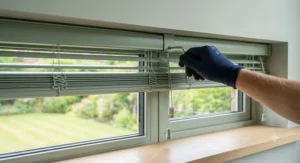
Getting your blind up straight the first time saves a world of frustration later. Measure the recess width in three places — top, middle, bottom — because older window frames are rarely perfectly square, and use the narrowest measurement if you’re fitting inside the recess to avoid a snug-then-jammed situation. For drill-fit brackets, mark your holes with the headrail held level using a spirit level rather than eyeballing it; a millimetre of tilt at the bracket becomes a visibly crooked blind at the bottom rail.
Once it’s up, maintenance is refreshingly low-effort compared with fabric blinds. A weekly once-over with a microfibre duster, angled with the slats tilted almost closed, catches the dust that settles along each slat’s edge. For kitchen grease build-up, a cloth dampened with warm water and a splash of washing-up liquid works better than anything branded “specialist,” and aluminium’s natural resistance to moisture means you don’t need to worry about swelling or warping like you would with faux wood. In the first 30 days, the most common mistake is over-tightening the tilt cord tension screw, which makes the wand stiff and can eventually snap the cord — a light touch is all that’s needed. Every six months or so, check that any drilled brackets haven’t worked loose, particularly on uPVC frames where the plastic can flex slightly over time.
Real-World Scenarios: Who Should Buy Which Aluminium Venetian Blind?
If you’re a tenant in a shared house with a six-month tenancy and a landlord who won’t allow drilling, a clamp-fit option like the iYueMps or Caecus blind makes the most sense — you can take it with you when you move and leave no trace behind. If you’re a parent renovating a family kitchen where steam, splashes and small hands are a daily reality, prioritise the child-safety fittings and moisture resistance of something like the Homescapes or Taiyuhomes blind, paired with a cord cleat fitted well above toddler reach.
For a first-time buyer furnishing a whole flat on a tight budget who needs five or six blinds of consistent colour, the Optimal Products range’s trimmable, multi-colour lineup solves the “does everything match” problem in one order. And if you’re the type of homeowner who’s replaced a flimsy blind once already and wants something that won’t need replacing again in eighteen months, the sturdier build and included mounting kit from GARDINIA is worth the modest extra outlay — cost-per-year of ownership matters more than the upfront price tag in that scenario.
How to Choose Aluminium Venetian Blinds: A 7-Step Guide
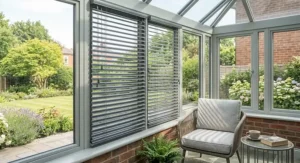
- Measure twice, order once. Take width and drop measurements at three points on the window and always use the smallest for an inside-recess fit, to avoid a blind that won’t sit flush.
- Decide inside-recess or outside-recess. Recess fitting looks neater and lets curtains layer over the top; outside-recess fitting blocks more light and suits uneven or shallow recesses.
- Pick your fitting method. Drilled brackets are more secure long-term; clamp fittings suit rentals but can loosen with heavy daily use.
- Match the slat size to the room. 25mm slats are the versatile default; narrower slim slats suit small windows, wider slats suit large glazing where fewer moving parts mean a cleaner look.
- Check the child-safety fittings. Confirm the listing includes a breakaway device or cleat compliant with current UK safety standards before you buy.
- Consider colour against your finishes. Silver and white read as neutral in most kitchens; black or anthracite works best against darker window frames and modern colour schemes.
- Factor in cleaning frequency. If the room sees a lot of cooking steam or bathroom humidity, prioritise a lightweight, easy-to-wipe aluminium finish over anything with texture or perforation that traps grime.
Metal Venetian Blinds vs Other Window Coverings
Set against faux wood, metal venetian blinds win decisively on moisture resistance — faux wood can warp or discolour in a steamy bathroom over a couple of years, whereas aluminium simply shrugs it off. Against vertical blinds, the horizontal slat design of a venetian blind creates a noticeably tighter seal against light gaps at the edges, since horizontal slats overlap along the whole width rather than leaving a vertical crack between each panel.
Where metal venetian blinds lose ground is against thick, lined curtains for pure thermal performance, and against roller blinds for total blackout — the very design that gives venetian blinds their flexibility, individually tilting slats, means a small amount of light bleed is almost unavoidable even fully closed. If your priority is precise, adjustable light control in a high-moisture room, metal wins; if it’s maximum insulation or a full blackout bedroom, you’ll want to look elsewhere or pair your venetian blind with a curtain.
Slim Slat vs Standard 25mm Slat Venetian Blinds
The UK market’s default is the 25mm slat, and for good reason — it’s the recognised industry standard, striking a balance between compact stack height and effective light control that suits the vast majority of window sizes. Slimmer options, generally 15mm or 16mm, exist for buyers chasing a more delicate, boutique look, particularly on smaller windows or where the stacked blind at the top needs to stay as unobtrusive as possible.
The trade-off with slim slat venetian blinds is largely mechanical: more, thinner slats means more moving parts and, in cheaper ranges, slightly less rigidity per slat. For most family homes, standard 25mm slat blinds remain the sensible default — wider availability, lower cost, and a proven track record. Reserve the slim slat upgrade for statement rooms or narrow windows where the daintier proportions genuinely earn their keep.
Common Mistakes When Buying Aluminium Blinds
The single most repeated error is measuring the window opening rather than the actual space available for the blind — recess depth matters as much as width, and a blind that’s technically the right width can still jam if the recess isn’t deep enough to clear a window handle. A close second is assuming all “trimmable” blinds can be cut on both dimensions; many can only be trimmed in width, not drop length, so check the specific listing rather than the category description.
Buyers also frequently underestimate how different a colour looks under artificial light versus a product photo taken in daylight — silver aluminium in particular can read as noticeably warmer or cooler depending on your room’s bulb temperature. Finally, skipping the child-safety check is a mistake that’s easy to avoid: confirm any corded blind includes a compliant safety device before ordering, not after it’s hanging in a child’s bedroom — the full technical detail on what UK and EU standards require of manufacturers is set out in the underlying safety legislation covering internal blinds and corded window coverings.
Aluminium Blinds Review: What Reviewers Really Say
Pulling the aggregated sentiment across the products above, a consistent pattern emerges. Ease of DIY fitting is the most praised attribute across nearly every budget aluminium blind reviewed, with buyers repeatedly highlighting that no professional installer or specialist tools were needed. The most common criticism, by contrast, centres on slat rigidity at the cheapest price points — a handful of reviewers across multiple brands mention slats bending slightly if pressed too firmly while adjusting.
What’s notable is how few complaints relate to the core mechanism failing outright; most negative reviews describe cosmetic or fitting frustrations rather than functional failure. That’s a genuinely useful signal for anyone weighing up whether to spend more on a premium brand — the fundamental engineering of a 25mm aluminium venetian blind is mature and reliable across the price spectrum, and the money you spend moving up-market buys you rigidity, colour range and finish quality rather than a fundamentally different product.
Lightweight Window Blinds for Rentals, Bathrooms & Awkward Spaces
Weight matters more than most buyers expect, particularly for anyone fitting a blind solo above a bath or in an awkward stairwell window. A lightweight window blind is easier to lift into brackets single-handedly, puts less strain on clamp fittings over time, and — in a rental property — is simpler to remove and repack when moving day arrives. Aluminium is inherently one of the lightest common blind materials, lighter than faux wood and dramatically lighter than real wood slats of an equivalent size, which is a genuine practical advantage rather than just a marketing line.
For awkward or non-standard spaces — box-sash windows, dormer windows, narrow bathroom panes — the trimmable options among the seven products above are particularly useful, since a lightweight blind that can also be cut to a bespoke width solves two problems in one purchase. If you’re renting and expect to move within a couple of years, prioritise a clamp-fit, lightweight, trimmable combination over a heavier, drilled premium option — you’ll get most of the functional benefit without committing hardware to someone else’s window frame.
Long-Term Cost & Maintenance: Are Aluminium Blinds Worth It?
On a pure cost-per-year basis, aluminium venetian blinds compare favourably with almost every alternative window covering. A budget blind at the lower end of the range, kept for three to five years, works out to a modest annual cost — and because aluminium doesn’t fade, warp or absorb odours the way fabric and faux wood can, that lifespan is realistic rather than optimistic. Maintenance costs are close to zero: no dry cleaning, no specialist wood polish, just soap, water and the occasional bracket check.
Where the total cost of ownership calculation shifts is in replacement frequency at the very cheapest end of the market — if a bargain blind’s mechanism fails within a year, you’ve effectively paid twice for a single blind’s worth of use. This is where spending a little more on a mid-range option like GARDINIA or Homescapes can work out cheaper over a five-year window than repeatedly replacing the lowest-cost listing. As a rule of thumb, if you’re fitting a blind you expect to keep for the long haul, treat the extra few pounds for a sturdier gauge as an investment rather than an upsell.
Safety & Regulations Guide: Child-Safe Aluminium Venetian Blinds
This is not an area to cut corners on. Since 2014, all blinds sold in the UK have had to comply with child safety standards, meaning they must not contain cords or chains or, if they do, must be fitted with a compliant safety device. If you’re buying secondhand, inheriting blinds in a rental, or still have pre-2014 blinds anywhere in your home, it’s worth taking this seriously — RoSPA’s safety guidance is a sobering but essential read on why looped cords near cots and beds pose a genuine strangulation risk to young children.
Every product covered in this guide includes a compliant safety device as standard, but the responsibility doesn’t end at the point of purchase. Fit any cord cleat well above the reach of a standing toddler, keep cots, beds and highchairs away from the window itself, and never cut a blind cord to “solve” a loop — doing so can actually create a new hazard.
Energy Efficiency: Do Metal Horizontal Blinds Save on Heating?
It’s tempting to assume any window covering helps with energy bills, but the honest answer for a metal horizontal blind is more nuanced than the marketing for thicker, honeycomb-style products suggests. Energy-efficient windows and doors more broadly help reduce heat loss, lowering energy bills and improving home comfort, and window coverings play a supporting role in that picture — but a single-layer aluminium venetian blind, with gaps between each slat even when fully closed, won’t insulate as effectively as a lined curtain or a cellular blind designed specifically to trap air.
Where aluminium blinds do genuinely help is with solar heat gain in summer: tilting the slats to reflect direct sunlight away from a south-facing room can noticeably reduce daytime heat build-up without sacrificing all natural light, which matters more each year as UK summers trend warmer. For winter heat retention specifically, pairing your aluminium venetian blind with a curtain, or reserving it for rooms where thermal performance is a secondary concern to moisture resistance and light control, is the more realistic strategy than expecting the blind alone to transform your heating bill. You can read more detail on window-related heat loss and the various mitigation options via the Energy Saving Trust’s guide to energy-efficient windows and doors.
Frequently Asked Questions
❓ Are aluminium venetian blinds any good for bathrooms?
❓ Can I cut aluminium venetian blinds to fit my window?
❓ How do I clean aluminium venetian blinds without damaging them?
❓ Are aluminium blinds safe for homes with young children?
❓ What's the difference between 25mm and slim slat venetian blinds?
Conclusion
Aluminium venetian blinds earn their popularity honestly — they’re moisture-proof, lightweight, endlessly trimmable, and (mostly) simple enough to fit on a Sunday afternoon without swearing at a drill. What separates the seven options covered here isn’t some hidden feature war; it’s fitting method, colour range and build consistency, which means the “best” choice genuinely depends on whether you’re a renter who needs a clamp fit, a parent prioritising child safety fittings, or a homeowner who wants a blind that’ll still look sharp in five years.
If you take one thing away from this guide, let it be this: measure carefully, check the safety fittings before you buy rather than after, and don’t assume the most expensive option is automatically the most sensible one for your window. For most UK homes, a well-reviewed 25mm aluminium venetian blind from any of the brands above will do the job reliably — the real decision is matching the fitting method and finish to your specific situation, not chasing a feature you don’t actually need.
Recommended for You
- 7 Best Easy Fit Venetian Blinds UK 2026: No-Drill Buying Guide
- Best Venetian Blinds 2026: 7 Brilliant Picks for UK Homes
- Day and Night Roller Blinds UK: 7 Best Zebra Picks for 2026
Disclaimer: This article contains affiliate links. As an Amazon Associate, I earn from qualifying purchases. If you purchase products through these links, we may earn a small commission at no additional cost to you.
✨ Found this helpful? Share it with your friends! 💬🤗
