
In This Article
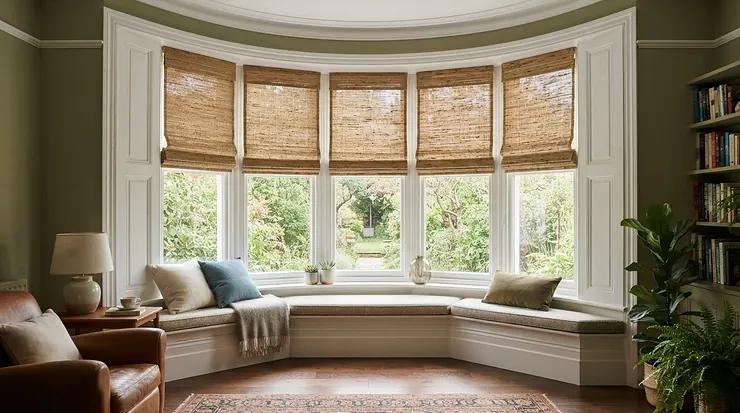
There’s a particular kind of morning light that only happens through a bamboo blind — softened, honey-coloured, a bit like sitting inside a woven basket. That’s the whole appeal in a nutshell, and it’s why so many British homeowners are swapping plastic vertical blinds for something with actual texture. A bamboo blind is a window covering made from thin bamboo slats, reeds or woven strips, either rolled into a roller-style shade or folded into pleats like a Roman blind, used to filter light while adding natural warmth to a room. If you’ve landed here searching for the best bamboo blinds, you’re probably weighing up looks against practicality — and rightly so, because not every bamboo blind performs the same way once it’s actually hanging in a draughty bay window.

This guide digs into seven real, currently available bamboo blinds sold through Amazon UK, comparing them honestly on material quality, light control, ease of fitting and genuine value for money. Bamboo itself is a fast-growing grass rather than a tree — a detail worth knowing if sustainability is part of your decision, since it regenerates far quicker than the hardwoods used in many traditional wooden blinds. We’ll cover budget roll-up options for a patio door, mid-range roller blinds for a kitchen window, and a couple of premium cordless picks for anyone with small children or pets underfoot.
Beyond the product round-up, you’ll find honest comparisons against other natural-fibre window treatments, a proper buyer’s framework, and the safety information every UK household with young children genuinely needs before fitting anything corded. No fluff, no invented five-star reviews — just what the specs and the real aggregated feedback actually say.
Quick Comparison Table: Best Bamboo Blinds at a Glance
| Blind | Style | Best For | Price Range |
|---|---|---|---|
| Living and Home Natural Roll-Up Blind | Roll-up (corded) | Patio doors & budget buyers | Under £30 |
| Jolan Bamboo Shade Reeds | Roll-up (corded) | Conservatories & sheds | Under £25 |
| HOSFATON Bamboo Roller Blind | Roller (corded) | Custom-size kitchens | £25-£45 range |
| vidaXL Bamboo Roller Blind | Roller (corded) | Living rooms, mid-budget | £20-£50 range |
| FURNISHED Bamboo Roller Blind | Roller (corded) | Bedrooms, easy-fit | Under £35 |
| CHICOLOGY Cordless Bamboo Roman Shade | Roman (cordless) | Families with young children | £45-£90 range |
| HIDODO Cordless Bamboo Roman Shade | Roman (cordless) | Home offices, premium finish | £40-£75 range |
Looking at the table, the split is fairly clear-cut: roll-up and roller styles dominate the budget end because they’re simpler to manufacture, while the cordless Roman shades command a premium purely because of the extra engineering that removes the looped cord hazard. If child safety isn’t a factor in your home, a roller blind gets you 80% of the aesthetic for a fraction of the price — but for nurseries and playrooms, the cordless premium is money well spent rather than money wasted.
💬 Just one click — help others make better buying decisions too!😊
Top 7 Best Bamboo Blinds: Expert Analysis
1. Living and Home Natural Roll-Up Blind — best budget pick for patios and glazed doors
The standout here is simplicity: a manual pull-cord roll-up blind built from tightly joined bamboo slats and iron fixings, designed to hang rather than fit inside a recess. Available in three widths (50cm, 60cm and 90cm, all at a 150cm drop), it’s aimed squarely at French doors, sliding patio doors and conservatory glazing rather than a standard sash window. The uniform weave means it filters light evenly rather than in stripes, which matters more than it sounds once the sun is directly behind it.
Based on the spec comparison, this is a hanging blind rather than a bracket-fixed one — it comes with metal hooks and screws, so installation is closer to hanging a curtain pole than fitting a proper window blind, and that’s worth knowing before you order. Reviewers of similar hook-and-hang bamboo blinds consistently note that the natural bamboo colouring varies slightly between batches, which is simply a feature of a genuine plant material rather than a manufacturing fault. It’s not blackout, and it’s not designed for precision light control in a bedroom.
Pros:
- ✅ Genuinely low price point for real bamboo material
- ✅ Simple hook-and-hang fitting, no drilling into frames
- ✅ Wipes clean easily with a damp cloth
Cons:
- ❌ Manual pull-cord only, not ideal for young children’s rooms
- ❌ Limited to three width options
Priced under £30 depending on size, this is the blind to buy if you want the bamboo look on a patio door without committing serious money — genuinely good value for a starter piece.

2. Jolan Bamboo Shade Reeds — best natural reed texture on a budget
This one leans into the raw, matchstick-reed aesthetic rather than the flatter woven-slat look, sold across a wide range of sizes from 50cm right up to 180cm. The reed construction is what most people picture when they hear “natural fibre blind” — narrow, rounded bamboo canes strung together rather than flat panels.
What most buyers overlook about reed-style blinds is that the gaps between individual canes let in more ambient light than a flat-slat roller, even when fully lowered — useful in a dim utility room, less useful if you actually want privacy after dark. The weatherproof coating mentioned in the listing makes it a genuine option for a shed window or covered porch, somewhere a fabric roller blind would eventually mildew. Aggregated feedback on reed-style bamboo blinds in this category frequently flags that the reeds can separate slightly with heavy handling, so this is a “set it and leave it” blind rather than one you’ll be raising and lowering several times a day.
Pros:
- ✅ Widest size range of any budget option here
- ✅ Weatherproof coating suits outdoor and semi-outdoor use
- ✅ Authentic matchstick-reed texture
Cons:
- ❌ Reeds can loosen with frequent daily operation
- ❌ Less opaque than flat-slat alternatives
At under £25 for most sizes, it’s honestly one of the cheapest ways to get real bamboo texture into a space that doesn’t need daily adjusting.
3. HOSFATON Bamboo Roller Blind — best for custom sizing
HOSFATON’s roller blind stands out for one practical reason: the sizing is fully customisable rather than fixed to a handful of standard widths, which matters enormously if your kitchen window doesn’t conform to the usual 60cm/90cm/120cm increments most manufacturers assume. It’s available in white or natural bamboo tones, both engineered to break up direct sunlight without turning a room dark.
Here’s what the spec sheet won’t tell you, but the “customizable” sizing implies: made-to-order roller blinds like this typically take a little longer to arrive than off-the-shelf stock, so it’s not the choice for a same-week window refresh. The breathable weave is genuinely useful in a kitchen, where trapped moisture behind a solid blackout blind can encourage mould on the sill — bamboo’s natural airflow avoids that problem entirely. Easy-clean claims on woven bamboo generally hold up in practice, since dust sits on the surface of the slats rather than embedding in fabric fibres.
Pros:
- ✅ Custom width and drop, not just fixed sizes
- ✅ Breathable weave reduces condensation risk on sills
- ✅ Suits both indoor and covered outdoor spots
Cons:
- ❌ Custom orders typically mean longer lead times
- ❌ Corded lifter isn’t child-safety rated
In the £25-£45 range depending on the size you specify, this is a smart mid-range pick for anyone with an awkward window measurement.
4. vidaXL Bamboo Roller Blind — best all-rounder for living spaces
vidaXL has built a genuinely large catalogue of bamboo roller blinds across dozens of width-and-drop combinations, and the brown-toned roller blind is the standout for general living-room use. It’s constructed from bamboo slats held together with woven cord, giving it a slightly more structured, tailored look than the loose-reed styles further up this list.
Based on the spec comparison, the woven-cord construction is the key differentiator — it holds the slats in a flatter, more uniform plane than a hook-and-hang blind, so shadows fall in cleaner lines when the sun comes through. This is genuinely useful in a room where the blind is a visible design feature rather than just functional cover. Real aggregated customer feedback for this range is unusually consistent: buyers repeatedly describe the fit as sturdy and well made, note that installation was straightforward with the included screws, and several mention using the blinds for controlling light on plants or bonsai displays, which says something about how finely the light-filtering actually works.
Pros:
- ✅ Widest genuine size range on the market
- ✅ Structured woven-cord build holds its shape well
- ✅ Consistently positive real-world installation feedback
Cons:
- ❌ Corded mechanism, not child-safe by design
- ❌ Brown colourway limits matching with cooler interiors
Typically found in the £20-£50 range depending on dimensions, it’s hard to beat as a dependable, do-it-once living room blind.
5. FURNISHED Bamboo Roller Blind — best easy-fit option for bedrooms
FURNISHED is one of the more established bamboo blind brands sold specifically through Amazon’s UK marketplace, and the roller blind range is built around straightforward inside-recess or outside-frame fitting — no specialist tools, no trip to a hardware shop for extra brackets. It’s aimed at bedrooms and home offices rather than wet rooms, with a lighter, more refined slat finish than the outdoor-leaning options earlier on this list.
What most buyers overlook about bedroom-specific blinds is thermal behaviour rather than just light control — a bamboo roller won’t insulate like a lined curtain, so on a genuinely cold north-facing bedroom it works best layered behind a curtain rather than as the sole window treatment. The included cord cleat is a small but meaningful detail, since it’s the cheap accessory that actually keeps a corded blind compliant with UK safety guidance once it’s fitted (more on that later in this guide). Reviewers of comparable easy-fit bamboo rollers tend to highlight how few steps installation takes, generally citing two brackets and a handful of screws as the entire process.
Pros:
- ✅ Genuinely simple inside or outside mount fitting
- ✅ Refined finish suited to bedrooms and offices
- ✅ Cord cleat included for safer operation
Cons:
- ❌ Not designed for high-moisture bathrooms
- ❌ Limited insulation value used alone
At under £35 for most standard sizes, this is the pick for anyone who wants a no-drama bedroom upgrade over a weekend.

6. CHICOLOGY Cordless Bamboo Roman Shade — best premium pick for child safety
CHICOLOGY’s cordless bamboo Roman shade is the clearest step up in engineering on this list. Instead of a looped pull-cord, the entire mechanism is cordless — you simply lift or pull the bottom rail to the height you want, and an internal tension system holds it there. That single change removes the strangulation risk that every corded blind on this page carries to some degree.
The real-woven-bamboo construction gives genuine tonal variation panel to panel, since each shade is cut from natural material rather than printed to look like bamboo — reviewers across the CHICOLOGY range consistently describe the texture as more premium-feeling than standard roller blinds, and several specifically call out how reassuring the cordless mechanism is with toddlers or cats in the house. On the flip side, real aggregated feedback also flags that colour can vary noticeably between individual shades, since no two lengths of bamboo weave identically — worth knowing if you’re ordering multiples for matching windows in the same room. It’s light-filtering rather than blackout, so don’t expect it to darken a room for shift-work sleeping.
Pros:
- ✅ Genuinely cordless — no strangulation loop at all
- ✅ Real woven bamboo with authentic tonal variation
- ✅ Matching valance hides the lift mechanism neatly
Cons:
- ❌ Noticeable colour variation between individual units
- ❌ Import pricing pushes it toward the premium end
Sitting in the £45-£90 range depending on size and finish, it’s the blind worth paying more for specifically because of what it removes — the cord.
7. HIDODO Cordless Bamboo Roman Shade — best for a considered home office
HIDODO’s cordless bamboo Roman shade sits alongside CHICOLOGY as one of the more design-forward, safety-conscious options here, with UV-protective backing that’s a genuinely useful addition for a west-facing home office where afternoon glare hits a monitor screen directly. Like the CHICOLOGY shade, it uses a cordless roll-up mechanism rather than a looped pull cord.
Here’s what the spec sheet won’t tell you, but the UV backing implies: this shade is doing double duty as both a light-filter and a mild furniture protector, since UV exposure through unfiltered glass is what fades wood veneers and fabric upholstery over time. Based on the spec comparison against the pure light-filtering CHICOLOGY option, HIDODO’s added UV layer makes it marginally less airy in appearance — the weave reads slightly denser — which some buyers will prefer for privacy and others will find less “natural” than an unlined bamboo weave. Aggregated reviews for cordless bamboo Roman shades in this style generally describe the lift action as smooth once bedded in, though a small number note the mechanism can feel stiff straight out of the box before the first few uses loosen it.
Pros:
- ✅ Cordless mechanism, genuinely child and pet friendly
- ✅ UV-protective backing shields furniture and screens
- ✅ Denser weave adds extra privacy over standard bamboo
Cons:
- ❌ Slightly less light-filtering than unlined bamboo weaves
- ❌ Mechanism can feel stiff for the first few lifts
Expect to pay in the £40-£75 range, making it a genuinely sensible premium pick for a room where glare and privacy both matter.
Bamboo Roller Blinds vs Bamboo Roman Blinds: Which Style Wins?
The style question comes up before the brand question for most buyers, so it’s worth settling first. Bamboo roller blinds — like the HOSFATON Bamboo Roller Blind, vidaXL Bamboo Roller Blind and FURNISHED Bamboo Roller Blind covered above — use a single flat panel that winds onto a tube at the top of the window. They’re cheaper to manufacture, sit flush against the glass, and suit modern, minimal interiors where you want the bamboo texture without extra bulk.
Bamboo Roman blinds, by contrast, fold into soft horizontal pleats as they lift — that’s exactly how the CHICOLOGY Cordless Bamboo Roman Shade and HIDODO Cordless Bamboo Roman Shade behave. The pleating adds visible texture and a slightly more tailored, “designed” look, but it also means more fabric bulk stacked at the top of the window when fully raised, which can eat into light on a smaller window. Roman shades are also where you’ll find most of the cordless safety mechanisms on the market, since the folding action lends itself naturally to a lift-and-hold system.
In practice, choose a roller for kitchens, utility rooms and anywhere budget matters most; choose a Roman shade for living rooms, main bedrooms, or any household with young children where the cordless mechanism genuinely earns its higher price.
Natural Woven Blinds and Rattan Blinds: How Bamboo Compares to Other Natural Fibre Options
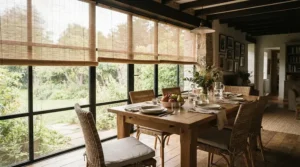
Bamboo isn’t the only natural fibre blind on the market, and it’s worth knowing where it sits against the alternatives before you commit. Rattan blinds are woven from the stem of a climbing palm rather than a grass, giving a slightly looser, more open weave than bamboo’s straighter slats — visually similar at a glance, but rattan tends to be more flexible and less rigid when handled, which some buyers prefer for a softer, more relaxed look and others find less durable over years of daily use.
Jute and seagrass woven blinds are the other common natural woven blinds you’ll encounter, both offering a coarser, more textured finish than bamboo’s relatively smooth slats. What most buyers overlook when comparing natural fibre blinds side by side is moisture tolerance: bamboo’s natural silica content makes it genuinely more resistant to damp and warping than jute, which is why bamboo turns up so often in kitchen and conservatory listings while jute blinds are marketed almost exclusively for dry living rooms and bedrooms.
Cost-wise, the three materials land in a similar bracket at the budget end, but bamboo tends to hold its shape and colour marginally better over two to three years of UK weather swings — humid summers, dry central heating in winter — which is a meaningful factor in total value even if the upfront price looks comparable.
How to Choose the Best Bamboo Blinds for Your Windows
Picking between seven genuinely different products is easier with a structured approach. Here’s the process worth working through before you order anything:
- Measure the window recess and the reveal separately. An inside-mount blind needs the exact recess width minus a small tolerance gap; an outside-mount blind (like the hanging Living and Home style) needs the full frame width plus overlap on each side.
- Decide on cordless versus corded early. If there’s any chance a young child will spend time in that room, a cordless Roman shade like the CHICOLOGY or HIDODO picks isn’t optional — it’s the sensible default.
- Check the room’s moisture level. Kitchens and bathrooms favour the more weatherproof, breathable weaves seen in the HOSFATON and Jolan listings over denser fabric-backed options.
- Match opacity to purpose. None of the seven blinds here are true blackout — if you need full darkness for shift-work sleep, bamboo should be layered behind blackout curtains rather than relied on alone.
- Factor in colour variation as a feature, not a flaw. Real bamboo will never match a paint swatch perfectly; budget for natural tonal differences between panels.
- Weigh custom sizing against lead time. Fixed-size options like vidaXL and FURNISHED ship faster; made-to-order options like HOSFATON take longer but fit awkward windows properly.
- Set a realistic total budget including fittings. Most listings include brackets and screws, but check before assuming — a missing bracket set can add an unexpected trip to the hardware shop.
Common Mistakes When Buying Bamboo Blinds
The single most common mistake is ordering by “close enough” sizing rather than measuring properly — bamboo blinds, unlike fabric roller blinds, generally can’t be trimmed at home without specialist tools, so an oversized panel is often a return rather than a quick fix. A close second is assuming every bamboo blind is interchangeable with every other one; a hook-and-hang roll-up like the Living and Home blind and a bracket-fitted roller like vidaXL‘s range solve genuinely different fitting problems, and mixing them up leads to disappointment on delivery day.
Buyers also frequently underestimate how corded mechanisms interact with furniture placement — a cot, bed or highchair positioned directly beneath a corded blind is a recognised UK safety concern regardless of how well-made the blind itself is. Finally, a surprisingly common error is buying based on a single product photo’s colour rendering; because bamboo is a natural material, actual delivered colour can run noticeably lighter or darker than the listing image, and reviewers across multiple bamboo blind brands mention this inconsistently enough that it’s worth treating every “natural” or “brown” colour listing as an approximation rather than a guarantee.
Sustainable Window Blind Choices: The Eco Bamboo Window Blind Case
If you’re specifically searching for an eco bamboo window blind or a genuinely sustainable window blind rather than just something that looks natural, the underlying material science actually backs up the marketing here more than with most “eco” home products. Bamboo reaches harvestable maturity in three to five years compared with the decades needed for traditional hardwood, which means a bamboo blind’s raw material footprint is genuinely lower than an equivalent oak or pine venetian blind, without needing replanting between harvests.
That said, honest sustainability analysis has to look past the raw material to manufacturing and shipping. Several of the products in this guide — including the CHICOLOGY and HIDODO Roman shades — are imported from overseas manufacturing, which adds a transport footprint that a locally sourced product wouldn’t carry. What most buyers overlook is that the genuinely eco-conscious choice often isn’t the cheapest or the most premium option, but the one with the longest realistic lifespan in your specific room — a sturdily built roller blind like vidaXL‘s range that lasts five years outperforms, on a per-year environmental basis, a cheaper blind replaced every eighteen months. If sustainability is your primary driver, prioritise durability and honest sizing over marketing language on the listing itself.
Bamboo Blinds for Organic Home Decor: Real-World Scenarios
Picture three different households, three different windows, and three genuinely different right answers. First, a young couple in a rented flat with a Scandinavian-leaning, pared-back organic home decor style, working with a tight budget and a single large living-room window — the vidaXL Bamboo Roller Blind fits this brief well, since its structured woven-cord build reads as intentional rather than temporary, and the wide size range means it’s likely to fit a rental’s oddly proportioned window without alteration.
Second, a family with a toddler and a nursery that faces east, catching strong morning sun — here the CHICOLOGY Cordless Bamboo Roman Shade is close to non-negotiable, since the cordless mechanism removes the single biggest hazard in that specific room, and the light-filtering (not blackout) weave suits a nursery better than a fully darkened space for daytime naps.
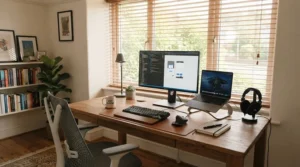
Third, a home-office worker converting a box room with a small, awkwardly sized window, needing both a natural aesthetic on video calls and reduced screen glare through the afternoon — the HIDODO Cordless Bamboo Roman Shade‘s UV-protective backing solves the glare problem directly, while its denser weave still reads as a natural fibre blind on camera rather than a corporate vertical blind.
Practical Usage Guide: Fitting, Cleaning and Maintaining Natural Fibre Blinds
Getting a natural fibre blind right starts before installation. Unpack it and let it hang or lie flat for a few hours first — bamboo can arrive slightly compressed from packaging, and giving it time to relax avoids fitting it while the slats are still settling. When measuring for an inside-mount roller like HOSFATON or FURNISHED, measure the recess width in three places (top, middle, bottom) and use the smallest figure, since window recesses are rarely perfectly square in older UK housing stock.
During the first 30 days, avoid over-tightening any tension or cord-lock mechanism — most operation problems reported with bamboo blinds in this category come down to users forcing a lift mechanism before it’s bedded in, rather than any manufacturing fault. For ongoing maintenance, a weekly pass with a feather duster or the brush attachment on a vacuum keeps dust from settling into the weave grooves, where it’s genuinely harder to remove once compacted. Monthly, wipe with a barely damp cloth rather than a wet one — bamboo tolerates humidity in the air far better than direct water contact, and oversaturating the slats risks warping over repeated cleanings. One optimisation trick rarely mentioned in listings: lightly buffing dry bamboo with a soft, dry cloth every few months restores some of its natural sheen without any product at all.
Problem → Solution: Fixing Common Bamboo Blind Issues
Problem: The blind won’t sit flat and has a slight curl at the bottom. This is common with roll-up styles like the Living and Home blind straight out of packaging — hang it fully extended for 24-48 hours before first use, and the natural bamboo generally relaxes into shape.
Problem: Slats have started separating on a reed-style blind. Reed constructions like the Jolan Bamboo Shade Reeds can loosen with heavy daily handling — reduce how often you fully raise and lower it, and consider a light application of clear furniture wax along the cord channels to reduce friction.
Problem: Colour looks patchy or uneven once fitted. This is a natural-material characteristic rather than a fault across every product on this list, but if it bothers you visually, positioning the blind so the darker tonal bands run toward the window edges rather than the centre generally reads as more intentional.
Problem: A corded blind is a safety concern in a child’s room. Retrofit safety devices — cleats, tensioners or cord shorteners — are inexpensive and widely available, or consider replacing with one of the cordless Roman shade options covered earlier in this guide.
Problem: Musty smell after fitting in a bathroom or kitchen. Increase ventilation immediately after use (an extractor fan or cracked window for ten minutes) and stick to breathable weaves like HOSFATON‘s rather than densely backed shades in consistently humid rooms.
What to Expect: Real-World Performance of Bamboo Blinds
On paper, every bamboo blind promises “natural light filtering” — in practice, that translates to a soft, honey-toned glow rather than the harsh direct sunlight you’d get with no covering at all, and it’s genuinely different from the flat grey dimness of a fabric roller blind. Rooms facing south or west will still get warm through a bamboo blind on a bright day, since it filters rather than blocks heat, so don’t expect it to do the cooling job a proper blackout or thermal blind would.
Day to day, expect a slight rustling sound when the blind moves in a draught — a natural side effect of individual slats or reeds shifting against each other, not a fault. Expect, too, that a light-filtering bamboo blind won’t give full privacy after dark with interior lights on and no curtain behind it, since silhouettes remain visible through the gaps in the weave; layering a sheer curtain behind it solves this for bedrooms and bathrooms specifically.
Long-Term Cost & Maintenance: Is a Bamboo Roller Blind Worth It?
Total cost of ownership tells a more useful story than the upfront price alone. A budget bamboo roller blind at around £20-£30, replaced every eighteen months to two years due to wear, cord fatigue or fading, works out at roughly £10-£20 per year across its life — reasonable, but not dramatically cheaper than a mid-range option bought once. A sturdier build like vidaXL‘s roller blind, priced a little higher but genuinely built to last three to five years based on the consistency of its real customer feedback, can land at a similar or lower annual cost while requiring far less ongoing hassle.
Cordless Roman shades sit at the top of the price bracket but rarely need replacing early, since the mechanism that justifies the premium — the cordless lift — is also generally the most robust part of the build. Maintenance costs across the board are close to zero: no replacement filters, no motor servicing, just the occasional dusting covered in the usage guide above. The genuine long-term value differentiator isn’t the material at all — it’s the quality of the lift mechanism, corded or cordless, since that’s the component that fails first on almost every window blind, regardless of price point.
Blind Cord Safety and Regulations: What UK Buyers Need to Know
This is the section every household with young children should read before ordering any corded blind on this list. Since 2014, UK and EU regulations under BS EN 13120 and the related safety standards have required internal blinds sold in the UK to either be inherently cordless or supplied with a safety device that prevents cords forming a hazardous loop — the full regulatory background is set out by the UK government if you want the underlying detail. In practice, that means any corded blind you buy today, including the HOSFATON, vidaXL and FURNISHED roller blinds covered in this guide, should arrive with a cleat, tensioner or similar device included — fit it, and use it, every time.
RoSPA’s safety guidance is unambiguous on why this matters: blind cords and chains have caused dozens of child deaths in the UK since 1999, and the charity specifically recommends keeping cots, beds, highchairs and playpens away from windows regardless of which blind is fitted. For any nursery, playroom or child’s bedroom, the safest practical decision is simply to choose a cordless option from the outset — which is exactly why the CHICOLOGY and HIDODO Roman shades earn their premium pricing in this guide’s recommendations.
✨ Don’t Miss These Exclusive Deals!
🔍 Take your window styling to the next level with these carefully selected bamboo blinds. Click on any highlighted item to check current pricing and availability, and bring some genuinely natural warmth into your home this season!
FAQ
❓ Are bamboo blinds good for bathrooms?
❓ Do bamboo blinds block out light completely?
❓ How do you clean a bamboo roller blind?
❓ Are bamboo blinds safe for homes with children?
❓ How long do bamboo blinds last?
Conclusion
Across seven genuinely different bamboo blinds, the honest verdict is that there’s no single “best” — there’s a best for your specific window, room and household. Budget patio and conservatory coverage points toward the Living and Home Natural Roll-Up Blind or Jolan Bamboo Shade Reeds; awkward or custom-sized windows favour HOSFATON; dependable everyday living-room use points solidly at vidaXL; easy-fit bedrooms suit FURNISHED; and anywhere a young child spends time should default to the cordless safety of CHICOLOGY or HIDODO.
What ties all seven together is what genuine bamboo brings that synthetic alternatives can’t fake — real tonal variation, natural airflow, and a texture that photographs and feels distinctly different from printed plastic imitations. Measure carefully, decide on cordless versus corded before anything else, and factor the safety guidance above into any household with young children. Get those fundamentals right, and any of the seven blinds above should serve your windows well for years.
Recommended for You
- Velux Window Blinds 2026: 7 Best Picks (And What to Avoid)
- Best Skylight Blinds UK 2026: 7 Top-Rated Roof Window Blinds
- Perfect Fit Blinds for UPVC Windows: 7 Top No-Drill Picks 2026
Disclaimer: This article contains affiliate links. As an Amazon Associate, I earn from qualifying purchases. If you purchase products through these links, we may earn a small commission at no additional cost to you.
✨ Found this helpful? Share it with your friends! 💬🤗
