
In This Article
There’s a particular kind of homeowner despair that only strikes at 11pm on a Sunday, standing in your pyjamas, glaring at a bare window while a streetlamp does its best impression of the midday sun. Cheap roller blinds solve that problem without the four-to-six-week wait (and the eye-watering invoice) that comes with made-to-measure window dressings. They’re trimmable fabric shades on a spring or chain-operated tube, sold ready-made in standard widths, designed to be cut down at home with scissors and a steady hand.
The “cheap” part isn’t a euphemism for flimsy, either — though it can be, which is exactly why this guide exists. The roller blind market on Amazon.co.uk is stuffed with near-identical-looking listings, and the difference between a blind that lasts three winters and one that sags by March is often buried three bullet points down in the product description, where nobody reads. I went looking for what’s actually being bought right now, what the fabric and fittings tell you in practice, and which of the genuinely available options are worth your money rather than just your click.
A quick note on context: this is firmly a British-weather problem. Where a Californian buyer worries about UV bleaching a blind into oblivion by August, a buyer in Manchester is more concerned with February condensation creeping up a single-glazed bay window and turning a budget blind mouldy at the hem. That distinction matters more than the spec sheets let on, and I’ll come back to it.
Quick Comparison: Cheap Roller Blinds at a Glance
| Blind | Type | Sample Size | Fitting | Best For | Price Range |
|---|---|---|---|---|---|
| Funky Gadgets Thermal Blackout | Blackout, trimmable | 120cm × 165cm | Recess or exact | Bedrooms wanting proper darkness | £12–£22 |
| FURNISHED Thermal Blackout | Blackout, trimmable | 115cm × 165cm | Recess or exact | Home offices, glare-prone desks | £10–£20 |
| New Edge Blinds Thermal Blackout | Blackout, multi-size range | 130cm × 165cm | Recess & exact | Renters matching odd window sizes | £14–£26 |
| Emma Barclay Scalloped Edge | Light-filtering, decorative | 90cm × 165cm | Recess or exact | Living rooms, kitchens with character | £16–£26 |
| A.Unique Home Premium Trimmable | Premium blackout fabric | 120cm × 170cm | Recess or exact | Nurseries, light-sensitive sleepers | £18–£30 |
| Caecus Zebra Day & Night | Dual-layer light filtering | 110cm × 160cm | Recess or exact, alloy rail | Living rooms wanting flexible light | £28–£42 |
| Apex Furnishings White Blackout | Blackout, narrow widths | 60cm × 165cm | Recess or exact | Bathrooms, narrow utility windows | £8–£16 |
A few things jump out from that table before you’ve even read a single review. First, there’s a clean split between true blackout fabric and light-filtering options — and that split matters more for a south-facing bedroom in summer than any colour choice will. Second, the Apex Furnishings option sits at a noticeably narrower default width, which makes it the obvious shout for bathroom or downstairs-loo windows that standard ranges otherwise ignore. And third, the Caecus zebra-style blind costs roughly double the cheapest blackout option here — that’s the day/night mechanism doing the work, not a fancy brand name, and whether it’s worth the jump depends entirely on how you use the room (more on that below).
💬 Just one click — help others make better buying decisions too! 😊
✨ Don’t Miss These Exclusive Deals!
🔍 Take your window dressing budget further with these carefully selected roller blinds. Click through to check current pricing and availability on Amazon.co.uk — stock and prices shift fairly often in this category.
Top 7 Cheap Roller Blinds — Expert Analysis
1. Funky Gadgets Thermal Blackout Roller Blind
The Funky Gadgets Thermal Blackout Roller Blind turns up near the top of Amazon’s bestseller list for good reason — it’s the no-nonsense entry point into the category. Sold in a grey finish at 120cm wide by 165cm drop, it’s trimmable, meaning the roller tube itself can be cut to size at home, so an odd 87cm window isn’t a dealbreaker.
What the “thermal” claim means in practice: the fabric has a reflective or foam-backed layer that bounces heat back into the room in winter and blocks a fair chunk of solar gain in summer. It won’t replace decent glazing, but on a single-glazed Victorian terrace window, it noticeably softens that early-morning chill radiating off the glass. Reviewers of this style of budget blackout blind commonly mention easy fitting with the supplied brackets and a satisfying total-darkness result, alongside the occasional note that very wide drops can develop a slight bow if the tube isn’t fully supported.
Pros: Genuinely blackout; trimmable for awkward widths; tool-free bracket fitting. Cons: Limited colour range; thinner roller tube can flex on extra-wide windows.
Price sits in the Funky Gadgets blind’s wheelhouse of roughly £12–£22 — at that level, it’s hard to argue with as a first blackout blind for a UK bedroom.
2. FURNISHED Thermal Blackout Roller Blind
The FURNISHED Thermal Blackout Roller Blind is the black-finish sibling to the grey option above, at a slightly narrower 115cm by 165cm sample size, and it leans into home-office and study use rather than bedrooms specifically. Black blackout fabric does double duty here: it kills glare on a laptop screen at 4pm in November when the sun sits low and directly in your eyeline, something lighter fabrics handle less convincingly.
The trimmable design is the same story as above — cut the tube, not just the fabric, and you avoid the classic mistake of a blind that fits the width but rattles loosely in its brackets. What most buyers overlook is that darker fabrics show dust and pet hair more visibly than mid-tone greys, so it’s a slightly higher-maintenance choice for a household with cats prone to windowsill loafing.
Pros: Strong glare control for screens; thermal lining; easy DIY trim. Cons: Shows dust more than lighter colours; black can read quite stark in small rooms.
At roughly £10–£20, this is squarely a budget pick rather than a statement piece, and it does its one job — blocking light and glare — without fuss.
3. New Edge Blinds Thermal Blackout Blinds
New Edge Blinds Thermal Blackout Blinds stand out from the rest of this list because they’re sold across a genuinely wide spread of sizes and colours rather than one or two fixed dimensions, with the 130cm × 165cm black option being a popular configuration. That breadth matters in British housing stock, where bay windows, dormer windows, and the bizarre half-sizes found in 1930s semis make “one size fits most” a bit of a lie.
The “for inside and outside recess fitting” framing in the listing is worth dwelling on: it means the same blind can sit flush inside a deep Victorian recess or mount externally on a shallow modern window frame, which saves you guessing wrong and reordering. In practice, that flexibility is the main selling point over the narrower-range competitors above — you’re paying a small premium for choice, not for better fabric.
Pros: Wide size and colour range; works for both recess and exact fitting; consistent thermal blackout performance. Cons: More size options can mean more chance of ordering the wrong one if you skip remeasuring; finish is fairly plain.
Expect a price range of roughly £14–£26 depending on the size selected — larger drops naturally creep toward the top of that band.
4. Emma Barclay Roller Child Safe Blind with Scalloped Edge
If the first three options feel a touch utilitarian, Emma Barclay’s Roller Child Safe Blind with Adjustable Cord and Scalloped Edge Detailing is the one aimed squarely at people who still want their kitchen to look like a kitchen rather than a stationery cupboard. Made from 100% polyester at a 90cm × 165cm size, the scalloped bottom edge gives it a softer, almost curtain-adjacent finish that suits cottage-style or period homes better than a flat-cut blind.
It’s a light-filtering rather than full blackout design, which is the right call for a kitchen or living room where you want privacy and a softened glare without plunging the room into a cave at 3pm. The “child safe” naming refers to its adjustable cord mechanism, which is worth taking seriously rather than skimming past — UK regulations on this are genuinely strict, and I’ll get into exactly what they require further down.
Pros: Distinctive decorative edge; light-filtering rather than gloomy; child-safe cord design. Cons: Not blackout, so unsuitable for shift-worker bedrooms; narrower 90cm width limits where it fits without joining two.
This one tends to sit a little higher than the plain blackout options, in the region of £16–£26, reflecting the extra fabric detailing.
5. A.Unique Home Premium Trimmable Thermal Blackout Roller Blind
A.Unique Home’s Premium Trimmable Thermal Blackout Roller Window Blind, available in a sage finish at 120cm × 170cm among other colourways, positions itself as the step-up option within this list — “premium” doing some marketing heavy lifting, but not entirely without basis. The fabric reads thicker and more matte than the entry-level blackout blinds above, which in practice means less light bleed around the edges of the roller tube itself, a small but genuinely annoying flaw on cheaper blinds.
For a nursery or a light-sensitive sleeper’s bedroom, that edge-sealing difference is the whole point — a blind that’s “blackout” on paper but leaks a centimetre of light down each side defeats the purpose for anyone trying to get a toddler down for a 6pm nap in midsummer, when the British sky is still blazing at 9pm. The sage colourway also slots more easily into a neutral or Scandi-leaning room than the grey-or-black-only options further up this list.
Pros: Noticeably tighter light seal at the edges; wider colour choice than budget rivals; trimmable. Cons: Sits at the upper end of “cheap”; sage and similar shades show fading faster in south-facing rooms than darker neutrals.
Budget around £18–£30, with the premium really earning its keep in rooms where total darkness, not just dimness, is the actual goal.
6. Caecus Day and Night Zebra Roller Blind
The Caecus Taupe Day and Night Zebra Roller Blind is the odd one out on this list, and deliberately so. Rather than a single fabric layer, it uses a dual-layer construction — alternating sheer and opaque stripes on two layers that slide independently — mounted on an aluminium cassette rail rather than the plastic tube found on the cheaper entries. Shift the layers into alignment and you get soft, filtered daylight; shift them out of alignment and the opaque stripes overlap for near-total privacy, all without raising or lowering the blind itself.
That mechanism is genuinely useful in a ground-floor London terrace living room facing a pavement, where you want light during the day but don’t fancy being on display to every passing dog walker once the lamps go on. It’s also, frankly, the reason this blind costs noticeably more than its neighbours on this list — the dual-fabric system and metal rail aren’t free to manufacture, and that cost is passed straight through.
Pros: Adjustable privacy without fully closing the blind; sturdier aluminium rail; modern look. Cons: More moving parts means more that can eventually misalign or jam; priced well above the rest of this list’s budget brackets.
At roughly £28–£42, it’s the priciest pick here, and worth it specifically for street-facing rooms rather than as a blanket bedroom upgrade.
7. Apex Furnishings White Blackout Roller Blind
Last but genuinely useful: Apex Furnishings’ White Blackout Roller Blind for Windows is available down to a 60cm width, which solves a problem the rest of this list quietly ignores — narrow windows. Bathrooms, utility rooms, and the small top-hung windows common above kitchen sinks in UK new-builds rarely match the 110–130cm widths most “cheap” blinds default to, and ordering a wide blind just to trim two-thirds of it off the roller is wasteful in every sense.
Thermal blackout performance and UV protection are present here too, in the same broad family as the other budget entries, but the headline is genuinely the width range. For a small en-suite window where steam and condensation are a daily reality, a quick-fit, no-fuss white blind that won’t show watermarks the way a darker fabric eventually will is a sensibly boring choice — and sometimes boring is exactly the brief.
Pros: Genuinely narrow widths available; white resists visible watermarking from condensation; trimmable and easy-fit. Cons: White can yellow slightly over time in steamy rooms; limited to blackout finish only, no light-filtering variant in this range.
This is the cheapest entry on the list at roughly £8–£16, and for a small window, that’s about as low-stakes a purchase as window dressing gets.
How to Choose Cheap Roller Blinds in the UK
Picking the right cheap roller blind comes down to answering a handful of questions before you scroll any further:
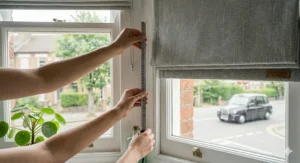
- Measure the recess properly, three times. Take width measurements at the top, middle, and bottom of the recess — older British windows warp slightly over decades, and the narrowest measurement is the one you should order to.
- Decide recess or exact fit. Recess-fit sits inside the window opening for a neat, flush look; exact (or “outside”) fit overlaps the frame and blocks more light bleed but takes up more wall space.
- Blackout or light-filtering — match it to the room’s job. Bedrooms and shift-worker rooms want blackout; kitchens and living rooms usually benefit more from filtered light.
- Check the trim instructions before you buy scissors. Some “trimmable” blinds only allow width trimming, not drop, which catches people out on tall, narrow windows.
- Factor in condensation-prone rooms. Bathrooms and kitchens do better with wipeable, lighter-coloured fabrics that won’t show watermarks or develop mildew at the hem.
- Confirm the cord or chain mechanism is child-safe. Anywhere a child under 42 months might have access, this isn’t optional — it’s a legal requirement, covered properly below.
- Budget for the bracket fixings, not just the blind. Cheap blinds usually include basic brackets, but masonry walls may need extra wall plugs not supplied in the box.
Real-World Scenarios: Matching a Blind to Your Home
Picture three very different UK households, because the “best” blind genuinely depends on who’s buying it. A young family in a semi-detached house in Sheffield with a toddler underfoot needs the child-safe cord mechanism non-negotiably, and a proper blackout fabric — the A.Unique Home or Funky Gadgets options — for a bedroom that needs to stay dark through a British double-summer-time evening when the sky won’t fully darken until gone 9.30pm.
A single professional in a ground-floor flat conversion in Bristol, working from home and facing a busy street, is the textbook case for the Caecus zebra blind in a living-room-cum-office — daylight when you want it, instant privacy from passers-by when you don’t, no fiddling with a second set of curtains.
Then there’s the retired couple in a 1970s bungalow in the Cotswolds, less worried about privacy from a quiet country lane and more concerned with keeping heating bills sane through a damp winter. For them, the thermal lining on the budget New Edge Blinds or FURNISHED options across multiple windows does more practical good per pound spent than any single premium feature.
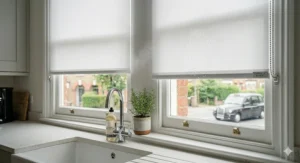
Fitting & Living With Roller Blinds: A Practical UK Guide
Fitting a cheap roller blind is genuinely a twenty-minute job, but a few British-specific snags trip people up repeatedly. If you’re drilling into an older masonry wall rather than a modern plasterboard-and-timber frame, the supplied screws are often too short for proper wall plugs — keep a small bag of suitable fixings on hand rather than assuming the box has everything covered.
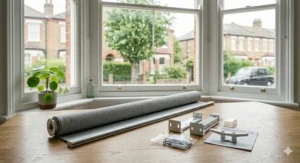
Damp is the other recurring issue. In a bathroom or north-facing bedroom prone to condensation, fit the blind with at least a small gap from the glass itself rather than pressed right up against it, and wipe down the bottom rail occasionally through winter — fabric that sits in standing moisture for weeks at a time is what eventually causes the mildew spotting that ruins an otherwise perfectly good blind. For trimming, always cut the roller tube with a hacksaw rather than attempting to trim through the metal with scissors meant for fabric, and replace the end caps snugly afterwards or the fabric will run off-true within weeks.
One mistake worth flagging specifically: don’t tie a long blind cord into a knot to shorten it “temporarily.” It’s exactly the kind of makeshift fix that UK safety guidance explicitly warns against, because a knotted cord can still form a dangerous loop.
UK Safety Standards You Genuinely Need to Know
This is the section that affiliate buying guides skip past, and it shouldn’t be skipped. Since 28 February 2014, all internal blinds sold in the UK have had to comply with BS EN 13120, the British Standard covering child safety on blind cords and chains, following a string of strangulation fatalities that prompted the change. Under the standard, any home or building where a child aged 0–42 months might have access must use blinds with no accessible looped cord, or with an appropriate safety device — a breakaway connector, cleat, or tensioner — fitted to keep cords out of reach. A South Tyneside Council safety notice lays out the requirement clearly: warning labels and safety instructions must now accompany every blind sold, and businesses are obliged to inform customers of the risk.
In practical terms for a cheap roller blind buyer: every legitimate listing should mention a child-safe cord mechanism, breakaway device, or chain-operated control with a wall-mounted cleat. If a budget blind arrives with nothing more than a bare dangling cord and no fitted safety device, that’s a red flag worth returning over, not a minor inconvenience to work around. The BBSA’s “Make It Safe” campaign is the industry’s own awareness drive on exactly this point, and it’s worth a five-minute read if you’ve got young children or grandchildren visiting regularly.
Separately, anything bought online from a UK retailer — including via Amazon.co.uk — falls under the Consumer Rights Act 2015, meaning goods must be of satisfactory quality and as described, plus the Consumer Contracts Regulations’ 14-day cooling-off period for most online purchases, a notably stronger protection than equivalent US consumer law.
Roller Blinds vs Curtains vs Vertical Blinds
A roller blind isn’t automatically the right answer for every window, so it’s worth a fair comparison rather than assuming. Against curtains, roller blinds win on cost, on blocking light edge-to-edge without gaps, and on suiting small or boxy rooms where fabric pooling on the floor just eats space. Curtains win on insulation in genuinely cold rooms (a heavy lined curtain outperforms a thin roller blind for heat retention) and on softening a room’s acoustics and aesthetics. Against vertical blinds — once the default for UK patio doors — roller blinds win comprehensively on looks and on not collecting dust along dozens of individual slats, though verticals still edge ahead for very wide sliding doors where a single roller fabric would be unwieldy to roll and unroll.
The general rule that holds up: bedrooms and home offices favour roller blinds for clean light control on a budget; living rooms with large glazed doors often do better with a layered approach — sheer or light-filtering roller blind plus curtains for warmth and a finished look.
Common Mistakes When Buying Cheap Roller Blinds
The single most repeated error is ordering by guesswork rather than measurement, and specifically forgetting that “trimmable” blinds need the tube cut, not just the fabric — trim only the fabric and you’re left with an awkward, off-balance roll. The second is buying a light-filtering blind for a bedroom where blackout was actually needed, discovering the mistake only on the first 4.30am sunrise of British summer. The third, and arguably the most serious, is treating the child-safety cord mechanism as an afterthought rather than a non-negotiable safety feature — it genuinely isn’t optional under UK law where children may be present. Finally, people regularly underestimate condensation-prone rooms, fitting a dark, absorbent fabric in a steamy bathroom and finding mildew spots within a season.
Long-Term Value: Are Cheap Roller Blinds Actually Cheap?
A £12 blind that needs replacing every eighteen months because the fabric has stretched, faded, or developed mildew isn’t actually cheaper than a £25 blind that lasts five years — simple arithmetic that’s easy to forget mid-scroll on Amazon. The thermal-lined options across this list earn their keep twice over: once on the purchase price, and again, modestly, on heating bills through a UK winter where a poorly insulated single-glazed window can lose a noticeable amount of warmth overnight. None of these are going to rival proper double glazing, but a thermal blackout blind across several bedroom windows is a low-effort, low-cost addition to a wider draught-proofing effort, and it pays for itself faster than most people expect.
FAQ
❓ Are cheap roller blinds from Amazon any good?
❓ How do I measure a window for a roller blind?
❓ Can I trim a roller blind myself?
❓ Are corded roller blinds legal in UK homes with children?
❓ Do roller blinds help with energy bills in the UK?
Conclusion
Cheap roller blinds occupy a strange but useful corner of UK home shopping — genuinely inexpensive, genuinely functional, and genuinely easy to get wrong if you skip the measuring tape or ignore the cord safety small print. Of the seven covered here, the Funky Gadgets and FURNISHED blinds are the sensible default for anyone wanting straightforward blackout on a tight budget, New Edge Blinds earns its place through sheer size flexibility, the Emma Barclay scalloped option suits anyone who wants a window dressing that doesn’t look purely functional, A.Unique Home justifies its slightly higher price with a genuinely tighter light seal, the Caecus zebra blind is worth the splurge specifically for street-facing rooms, and Apex Furnishings quietly solves the narrow-window problem nobody else on this list addresses. None of them will replace a proper made-to-measure blind for a tricky bay window, but for the vast majority of standard UK windows, any of these will do the job without draining the home-improvement budget.
Recommended for You
- 7 Best Cordless Roller Blinds UK 2026: Child-Safe & Loop-Free Picks
- Easy Fit Roller Blinds UK: 7 Best No-Drill Picks for 2026
- Best Roller Blinds UK 2026: Top 7 Picks for Every Window
Disclaimer: This article contains affiliate links. As an Amazon Associate, I earn from qualifying purchases. If you purchase products through these links, we may earn a small commission at no additional cost to you.
✨ Found this helpful? Share it with your mates! 💬🤗
