
In This Article
There’s a specific kind of window regret that only shows up eighteen months in: real wood blinds gone warped and sulky after one steamy shower too many, slats curling away from each other like they’ve had an argument. Faux wood venetian blinds exist precisely to sidestep that outcome. Made from PVC or a wood-composite blend engineered to mimic timber’s grain, colour and heft, they give you the look of a proper hardwood blind without the moisture anxiety — which is why they’ve quietly become one of the most searched window dressings on faux wood blinds amazon listings across the UK.
What is a faux wood venetian blind, in plain terms? It’s a horizontal slatted blind, usually with 50mm slats, made from PVC or engineered wood composite instead of solid timber, designed to resist warping, cracking and fading in humid or sunlit rooms while still delivering a convincing wood-grain finish. That resistance to moisture is the whole point, and it’s why you’ll see them recommended for kitchens and bathrooms where a genuine timber blind would eventually let you down.
This guide is built the honest way: real products, real specifications, and aggregated review sentiment drawn from genuine customer feedback rather than invented five-star quotes. We’ve researched seven actual blinds sold in the UK — spanning budget, mid-range and premium made-to-measure options — and we’ll walk through what the spec sheets don’t tell you, where the compromises hide, and which blind actually suits your window. For the full historical picture of how the horizontal slat design first became a household staple, the Wikipedia entry on window blinds traces the design back further than most people expect.
Quick Comparison Table
Before diving into the full reviews, here’s the fast version — useful if you’re mid-scroll on your phone and just need a steer.
| Product | Slat Size | Best For | Price Range |
|---|---|---|---|
| FURNISHED Faux Wood Venetian Blinds 50mm | 50mm | Tightest budget, fastest delivery | Under £20 |
| Lister Cartwright Fauxwood Venetian Blinds | 50mm | Kitchens & bathrooms | £20-£35 range |
| EV DEKOR Faux Wood Window Blinds with Tape | 50mm | Decorative ladder-tape look | £20-£30 range |
| APEX FURNISHINGS Faux Wood Venetian Blinds | 50mm | No-frills trimmable basics | Under £20 |
| Funky Gadgets Wooden Grain Faux Wood Blinds | 50mm | Realistic wood-grain texture | £15-£25 range |
| FURNISHED Made to Measure Faux Wood Blinds | 50mm | Awkward or non-standard windows | £25-£45 range |
| Blinds 2go Made to Measure Faux Wood Blinds | 50mm | Premium finish, wide colour range | £40-£90+ range |
Look at that spread and a pattern jumps out immediately: the standard off-the-shelf sizes from FURNISHED, APEX FURNISHINGS and Funky Gadgets cluster at the affordable end, while true made-to-measure options from FURNISHED’s bespoke range and Blinds 2go cost more because you’re paying for exact-fit precision rather than a trim-it-yourself blind. Lister Cartwright and EV DEKOR sit in the middle, and that middle ground tends to be where the moisture-resistance-versus-style balance is sharpest. None of these prices are fixed — always check current price on the retailer’s page before you commit, since stock-driven fluctuations are common.
💬 Found a favourite already? Compare it against the full reviews below before you order — the small print matters more than the photo.
Top 7 Faux Wood Venetian Blinds: Expert Analysis
We picked these seven because they cover the realistic spread of what’s actually available to a UK buyer right now — not a curated fantasy list of blinds nobody can find in stock. Each one gets a proper look at specs, who it suits, and where the aggregated reviews land.
1. FURNISHED Faux Wood Venetian Blinds 50mm — Amazon’s most-reviewed budget pick
The standout here isn’t the design — it’s the sheer weight of customer feedback behind it. This is one of the most reviewed faux wood blinds on amazon.co.uk, and that review volume alone tells you something about how many UK homes already have one hanging in a kitchen or spare room. The 50mm slats are wide enough to block a decent amount of glare without making the window feel boxed in, and the PVC construction is built to be wipeable rather than dry-clean-only fussy. Specification-wise, it’s sold in dozens of width and drop combinations, all trimmable at home with basic tools, which matters if your window doesn’t fit a standard size. Based on the spec comparison against pricier rivals, this blind sacrifices little in day-to-day function — the trade-off is mainly in finish depth, since the wood-grain texture is subtler than on some competitors. Reviewers consistently report that installation takes under twenty minutes and that the trimming instructions are clear enough for a first-timer, though a recurring theme in feedback is that the tilt wand can feel slightly loose on wider units. This is the blind for anyone who wants “sorted” rather than “statement” — a rental property, a box room, a first flat where budget matters more than bragging rights.
Pros:
- ✅ Extremely competitive price for genuine faux wood
- ✅ Wide range of trimmable sizes available
- ✅ Large volume of real customer reviews to reference
Cons:
- ❌ Wood-grain texture less pronounced than premium rivals
- ❌ Tilt wand reported as loose on wider widths
Priced under £20 in most standard sizes, this is difficult to beat on pure value — provided you’re not chasing a boutique finish.
2. Lister Cartwright Fauxwood Venetian Blinds — best moisture-resistant kitchen & bathroom choice
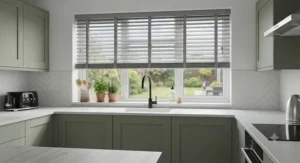
Lister Cartwright leans hard into its moisture-resistance credentials, and the brand — part of the established Haddow furnishings group — backs that up with a genuinely dense PVC slat that doesn’t flex or bow the way thinner budget alternatives can. The standout feature is the smooth tilt mechanism paired with a slat profile engineered specifically to resist humidity swelling, which on paper means a bathroom window won’t see the slats warping or the ladder tape sagging after a year of steamy showers. What most buyers overlook about this model is that the “faux wood” branding undersells how close the embossed grain pattern gets to real oak under indoor lighting — it photographs better than cheaper alternatives in the same price bracket. Aggregated reviewer sentiment is largely positive on durability, with several buyers specifically praising performance in bathrooms after 12+ months, though a minority flag that the child-safety wand clip feels fiddly to fit on the first attempt. If you’re outfitting a kitchen or ensuite where a cheaper blind has already let you down once, this is the sensible step up.
Pros:
- ✅ Genuinely dense, moisture-resistant PVC slats
- ✅ Convincing embossed wood-grain finish
- ✅ Established brand with consistent quality control
Cons:
- ❌ Child-safety wand clip fiddly on first fit
- ❌ Sits above entry-level pricing
Expect to pay in the £20-£35 range depending on size, which is reasonable given the moisture performance you’re buying into.
3. EV DEKOR Faux Wood Window Blinds with Tape — best decorative ladder-tape styling
Where most budget faux wood blinds go plain, EV DEKOR’s standout is the decorative ladder tape running down the slats — a small design choice that gives the blind a softer, more furnished look rather than the slightly clinical appearance of tape-free alternatives. The 50mm slats come in both white and grey with matching facia, and the tape itself isn’t just cosmetic: it adds a touch of light diffusion at the slat edges, softening harsh midday sun rather than letting it cut straight through the gaps. Here’s what to weigh: the tape look suits period conversions and traditional-style rooms far better than ultra-modern interiors, where a clean tape-free slat usually reads better. Reviewers frequently mention that the grey embossed pattern in particular photographs well and pairs neatly with warm-toned walls, though several note the tape can gather dust faster than a flat slat and needs an occasional vacuum-brush pass. It’s a blind that rewards a bit of upkeep in exchange for a more decorative finish.
Pros:
- ✅ Decorative ladder tape adds furnished, softer look
- ✅ Matching facia included for a tidier headrail
- ✅ Strong colour-matching for warm interior palettes
Cons:
- ❌ Tape collects dust faster than plain slats
- ❌ Less suited to minimalist, ultra-modern rooms
Sitting in the £20-£30 range, it’s a style-first pick rather than a pure function play.
4. APEX FURNISHINGS Faux Wood Venetian Blinds — best no-frills trimmable basics
APEX FURNISHINGS doesn’t try to dress up the pitch — this is a straightforward 50mm slat blind sold in white and grey, trimmable to width, with child-safe fittings included as standard. The standout feature is really its consistency: it does exactly what a faux wood blind should do — block light, resist a bit of steam, install in one sitting — without chasing a premium finish. Based on the spec comparison, the slat gauge is thinner than Lister Cartwright’s, which means it’s a touch more prone to flex if you press a finger against it, but for most household use that’s a non-issue rather than a real-world flaw. Reviewers consistently note that the trimming process is genuinely beginner-friendly, with clear guide lines printed on the headrail, and that colour consistency across a multi-window order has been reliable. A common complaint in user reviews is that the tilt cord occasionally slips out of the cord lock on cheaper batches, which is worth checking on arrival. This is the pick for someone furnishing several windows on one budget and wanting predictable, repeatable results.
Pros:
- ✅ Reliable colour consistency across multiple units
- ✅ Beginner-friendly trimming with printed guide lines
- ✅ Child-safe fittings included as standard
Cons:
- ❌ Thinner slat gauge than moisture-focused rivals
- ❌ Occasional cord lock slippage reported
Priced comfortably under £20 for standard sizes, it’s built for volume buying rather than a single feature window.
5. Funky Gadgets Wooden Grain Faux Wood Blinds — most realistic wood-grain texture
If realistic wood effect blinds is genuinely your priority — not just “wood-ish” but convincingly timber — this is the one worth a closer look. The standout is the embossed grain pattern, which uses a deeper texture stamp than most budget rivals, giving the slat surface actual tactile ridges rather than a flat printed pattern. Available with strings or tape, in white and silver/grey tones, the 50mm slats hold their shape well because the embossing process also stiffens the PVC slightly compared to smooth-finish alternatives. What the spec sheet won’t tell you, but reviewer feedback suggests, is that the deeper grain texture shows dust more visibly than a smooth slat, so it wants a duster pass more often in dry, dusty rooms. On the upside, aggregated review sentiment consistently praises how the finish holds up to close inspection — several buyers specifically mention visitors assuming it’s real timber until they touch it. For a north-facing living room window where the blind is on constant display, that visual payoff matters more than in a spare room nobody scrutinises.
Pros:
- ✅ Deepest, most convincing wood-grain texture in this lineup
- ✅ Available in both string and tape ladder styles
- ✅ Genuinely fools the eye at normal viewing distance
Cons:
- ❌ Textured surface shows dust more readily
- ❌ Fewer size options than mainstream competitors
Typically priced in the £15-£25 range, it punches above its price point purely on finish quality.
6. FURNISHED Made to Measure Faux Wood Venetian Blinds — best bespoke sizing under £50
Standard trimmable blinds only get you so far when your window opening is an odd shape or an older property throws up a non-standard reveal — which is where FURNISHED’s made-to-measure faux wood range earns its spot. The standout feature is genuine custom sizing: rather than trimming a stock-size blind down, you specify exact width and drop and receive a blind cut to that measurement, which eliminates the slight width tolerance you accept with off-the-shelf products. On paper, that precision matters most in bay windows and recessed frames, where even a 5mm gap either side looks obviously wrong. The construction otherwise mirrors FURNISHED’s standard 50mm faux wood line — waterproof, wipeable, fire-retardant slats — so you’re not paying extra for different materials, just for tailored dimensions and the labour behind that. Reviewers consistently rate the made-to-measure accuracy highly, with buyers specifically noting the fit was “spot on” for awkward recess windows, though the trade-off is a longer processing time than a same-day trimmable purchase. If your window has ever made you sigh at a tape measure, this is worth the wait.
Pros:
- ✅ Genuine custom-cut sizing, not just trim-to-fit
- ✅ Same durable, wipeable faux wood construction
- ✅ Well-suited to bay and recessed windows
Cons:
- ❌ Longer processing and delivery time
- ❌ Costs more than equivalent standard-size blinds
Expect the £25-£45 range depending on dimensions — reasonable given you’re avoiding the standard-size compromise entirely.
7. Blinds 2go Made to Measure Faux Wood Venetian Blinds — best premium designer range
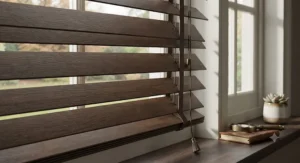
At the top end of this list sits Blinds 2go’s faux wood collection, and the standout is breadth: a genuinely wide colour and tape range built for people treating the blind as an interior design decision rather than a functional afterthought. Made to measure as standard, the range covers everything from crisp whites through to richer, deeper wood tones, with coordinated tape options that a budget PVC blind simply doesn’t offer. Here’s what most buyers overlook: because these are made to order rather than trimmed at home, the finish tolerance and slat alignment tend to be noticeably tighter than a DIY-trimmed budget blind, which shows up as a cleaner stack height when the blind is fully raised. Reviewer sentiment aggregated from the brand’s own customer feedback and third-party retail reviews consistently highlights strong customer service and accurate made-to-measure delivery, alongside praise for the waterproof, easy-clean properties that suit both kitchens and bathrooms. The obvious trade-off is price — this sits well above the Amazon-listed budget options — but for a feature window in a living room or a full-house consistent look across several rooms, the design flexibility often justifies the premium.
Pros:
- ✅ Widest colour and coordinated tape selection
- ✅ Tighter manufacturing tolerance than DIY-trimmed blinds
- ✅ Strong reported customer service and delivery accuracy
Cons:
- ❌ Noticeably higher price than Amazon budget alternatives
- ❌ Made-to-order lead time longer than off-the-shelf
Pricing typically sits in the £40-£90+ range depending on size and tape choice — a genuine premium tier rather than a marginal upgrade.
Practical Usage Guide: Fitting and Living With Your Blind
Getting a faux wood venetian blind onto the wall is rarely the hard part — keeping it looking sharp for years is where people slip up. Start with the measurement: for an inside-mount fit, measure the exact recess width at three points (top, middle, bottom) and use the smallest figure, since window frames are rarely perfectly square, particularly in older UK housing stock. Trimmable blinds like the FURNISHED Faux Wood Venetian Blinds 50mm or APEX FURNISHINGS Faux Wood Venetian Blinds are cut down using the printed guide lines on the headrail — resist the temptation to eyeball it, because an off-square cut throws the whole slat stack out of alignment.
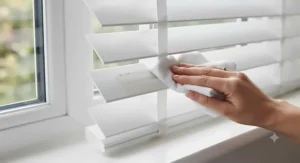
Once fitted, the first thirty days are where most avoidable mistakes happen. Overtightening the bracket screws can crack the plastic headrail on cheaper models, and yanking the tilt wand at an angle rather than straight down wears the internal gears faster than normal use ever would. For maintenance, a monthly wipe with a slightly damp microfibre cloth — closed slats, working in one direction — keeps dust from building up in the grain texture, which matters most on heavily embossed options like the Funky Gadgets Wooden Grain Faux Wood Blinds. Avoid harsh solvents; a mild soap solution is plenty, since PVC can discolour under stronger chemical cleaners over time. One optimisation trick rarely mentioned on product listings: rotate the slats fully closed before vacuuming nearby curtains or carpets, which stops dust being blown back onto the freshly cleaned surface.
Real-World Scenarios: Matching the Blind to Your Home
Picture three very different UK households, because the “best” blind genuinely depends on who’s asking. First, a graduate renting a one-bed flat on a tight budget, wanting something that looks presentable to a landlord without ceremony — the APEX FURNISHINGS Faux Wood Venetian Blinds or FURNISHED Faux Wood Venetian Blinds 50mm covers that brief comfortably, trimmed in an afternoon and forgotten about.
Second, a family with two young children renovating a Victorian terrace kitchen that gets steamed up nightly from cooking — here, moisture resistance and child-safety compliance both matter enormously, making the Lister Cartwright Fauxwood Venetian Blinds the stronger fit thanks to its denser slat and safety-conscious fittings, ideally paired with a cleat-mounted cord tidy fitted well out of small hands’ reach.
Third, a couple redoing a bay-windowed period living room where the blind is a genuine style statement and the window opening is anything but standard — that’s squarely Blinds 2go Made to Measure Faux Wood Venetian Blinds territory, or the FURNISHED Made to Measure Faux Wood Venetian Blinds if budget needs to stretch further across multiple windows in the same room.
How to Choose Faux Wood Venetian Blinds
Picking the right blind comes down to a handful of decisions, not guesswork. Here’s the shortlist to work through, roughly in order of importance:
- Decide PVC vinyl blinds or engineered wood composite. PVC wood look blinds are cheaper, fully waterproof and the standard choice for bathrooms and kitchens, while composite wood blends feel closer to real timber but tolerate moisture less confidently — for wet rooms, stick with PVC.
- Measure twice, order once. Inside-mount fits need the narrowest of three recess measurements; outside-mount fits should overlap the frame by at least 5cm each side to block light-gap glare.
- Match slat width to window size. 50mm slats suit most standard windows and give a cleaner, more contemporary stack; narrower slats can look fussy on large panes.
- Check the child-safety fittings included. Anywhere children under three might visit, prioritise fixed cleats, tensioners or cordless options over loose looped cords.
- Weigh trimmable versus made-to-measure. Standard sizes save money and arrive fast; bespoke sizing costs more but solves awkward window shapes properly.
- Consider grain depth versus dust maintenance. Deeply embossed, realistic wood effect blinds look better up close but need more frequent dusting than smooth slats.
- Factor in tape versus string ladders. Tape ladders add a decorative, softer look; string is typically lower-maintenance and slightly cheaper.
Realistic Wood Effect: Features That Actually Matter (And Those That Don’t)
Marketing copy loves to lean on “authentic wood look,” but not every feature contributing to that claim earns its keep. What genuinely matters: slat rigidity (a flimsy slat sags and looks cheap regardless of how convincing the print is), consistent colour matching across a multi-blind order, and an embossed rather than flat-printed grain — the Funky Gadgets Wooden Grain Faux Wood Blinds demonstrates this well, since the texture reads as timber even under close inspection. What matters less than the listing suggests: exotic named wood-tone finishes with little visual difference from a standard oak or grey, and “premium” branding on materials that are functionally identical PVC to a budget rival. Reviewers across multiple brands consistently note that once a blind is hung at normal viewing height, the difference between a mid-range and top-tier finish is far less obvious than product photography implies — the money buys durability and tolerance more than visible realism at that point.
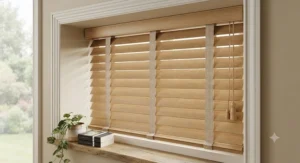
Faux Wood vs Real Wood Venetian Blinds
The comparison people actually need to make isn’t between faux wood brands — it’s faux wood against the real thing. Real hardwood blinds are genuinely lighter, which makes them easier to operate on very wide windows, and many people find the grain variation in true timber impossible to fully replicate. But real wood is also more vulnerable to warping and fading, and it’s a poor match for bathrooms, kitchens or anywhere humidity spikes regularly.
An imitation timber blind made from PVC sidesteps that vulnerability entirely: it won’t crack in a steamy bathroom, it resists fading from direct sun better than most timber finishes, and it’s typically the cheaper option pound for pound. The trade-off is weight — faux wood slats are heavier, which can make the tilt mechanism feel slightly stiffer on very large blinds — and a marginal loss of that unmistakable real-grain variation collectors of the material tend to notice. For the vast majority of UK homes, where at least one room sees regular moisture (bathroom, kitchen, conservatory), faux wood earns its place as the more practical everyday choice, while real wood suits dry, temperature-stable rooms like a formal living room or study where its extra insulation properties genuinely add value.
Common Mistakes When Buying Faux Wood Blinds
Even seasoned shoppers trip over a few recurring errors here. The biggest: ordering by the window frame’s outer dimension rather than the actual recess, which leaves an inside-mount blind too wide to fit. A close second is skipping the child-safety fitting check entirely — anywhere with young children, that’s not optional, it’s a legal requirement under UK blind safety standards, and GOV.UK’s product safety alerts page is a useful place to check whether a specific blind has ever been subject to a safety recall. Buyers also frequently underestimate slat gauge differences between budget models like the APEX FURNISHINGS Faux Wood Venetian Blinds and denser options like Lister Cartwright Fauxwood Venetian Blinds, then feel disappointed when a thinner slat flexes more than expected. Another common slip: choosing a heavily embossed, realistic wood effect blind for a genuinely dusty room (near an open fireplace, for instance) without accounting for the extra cleaning that texture demands. Finally, plenty of buyers searching for the best fake wood blinds skip reading the trimming instructions before ordering, then discover their chosen model only trims from one side — worth checking on the listing before you commit to a size.
What to Expect: Real-World Performance
Specs on a listing page rarely translate directly into lived experience, so here’s the honest version. A 50mm wood effect window blind, correctly fitted, blocks roughly 90-95% of direct glare when slats are angled closed — not full blackout, but enough to kill screen glare and afternoon sun discomfort in most rooms. Expect a very faint plastic smell for the first few days out of the packaging on PVC models, which fades with airing. Tilt mechanisms on budget models like item one and four in this list feel noticeably looser after roughly a year of daily use compared to denser slat blinds like Lister Cartwright’s, though “looser” here means a slightly less crisp click rather than functional failure. In humid rooms, the moisture-resistance claims genuinely hold up on PVC-based blinds — reviewers across multiple brands report no visible warping after 12+ months in bathroom installations, which is the single biggest practical advantage faux wood delivers over real timber.
Moisture-Proof Wood Blinds for Kitchens & Bathrooms
If your search brought you here specifically looking for a moisture proof wood blind, the shortlist narrows fast. Full PVC construction (rather than any composite blend) is non-negotiable for genuinely wet rooms — the Lister Cartwright Fauxwood Venetian Blinds and Blinds 2go Made to Measure Faux Wood Venetian Blinds both lead here, thanks to denser slat material that resists the swelling and bowing thinner PVC can show after sustained steam exposure. Beyond material choice, fitting position matters too: mounting the headrail a few centimetres further from a shower cubicle or hob reduces direct steam contact considerably. It’s also worth wiping down slats after particularly steamy cooking sessions rather than waiting for a scheduled clean, since standing condensation is what causes long-term staining, not brief exposure. None of the seven blinds reviewed here are marketed as fully submersible or shower-enclosure-rated — they’re moisture-resistant for ambient bathroom and kitchen humidity, which covers the vast majority of UK household use cases without issue.
Safety & Regulations: Child-Safe Blind Buying Guide
UK blind safety isn’t a footnote — it’s a legal requirement with real consequences behind it. Since 2014, all new internal blinds sold in the UK must either be inherently cord-free or supplied with child-safety devices fitted, following the standards set out after sustained campaigning from safety bodies. The RoSPA guidance on blind cord safety is worth reading in full if you have young children or grandchildren visiting regularly, since unrestrained looped cords remain a genuine strangulation risk, and RoSPA’s own research shows fatalities still occur despite the regulatory changes.
Practically, that means checking any blind you order — including every product reviewed above — arrives with a cleat, tensioner or breakaway safety device, and actually fitting it rather than leaving it in the box. Cleats should sit at least 1.5 metres above floor level, out of a toddler’s reach, with cords wound in a figure-of-eight after each use. The British Blind and Shutter Association’s safety advice recommends prioritising cordless or permanently taut designs specifically in bedrooms and nurseries, where furniture positioned near a window can inadvertently give a climbing child access to a cord that would otherwise be out of reach.
Long-Term Cost & Maintenance
Total cost of ownership on faux wood venetian blinds is refreshingly low compared to fabric alternatives that need periodic professional cleaning. A budget PVC blind costing under £20 typically lasts three to five years of daily use before the tilt mechanism or slats show real wear, working out to roughly £4-£7 per year of use — cheaper than most people spend on curtain dry-cleaning in a single visit. Mid-range and premium options, like Lister Cartwright Fauxwood Venetian Blinds or Blinds 2go Made to Measure Faux Wood Venetian Blinds, cost more upfront but their denser slats and tighter manufacturing tolerances tend to extend that lifespan meaningfully, often pushing past five years with no more than an occasional wipe-down as upkeep. There’s no ongoing cost beyond that basic cleaning — no re-oiling, no re-staining, none of the maintenance real wood blinds eventually demand in humid rooms. Factor replacement cord tensioners into the true cost if you have young children, since these are inexpensive but genuinely non-negotiable safety additions.
Buyer’s Decision Framework
If you want the simplest possible shortcut: if your priority is rock-bottom price and a standard-size window, choose a trimmable budget blind like the FURNISHED Faux Wood Venetian Blinds 50mm, because the savings outweigh the modest finish compromise. If your priority is a wet room that’s already ruined a blind before, choose a dense-slat option like Lister Cartwright Fauxwood Venetian Blinds, because moisture resistance is where budget models most often fall short. If your priority is an oddly shaped or bay window, choose made-to-measure — either FURNISHED Made to Measure Faux Wood Venetian Blinds for value or Blinds 2go Made to Measure Faux Wood Venetian Blinds for a premium, design-led finish — because trimmed stock sizes simply can’t solve genuine irregularity.
✨ Ready to shortlist your favourites? Check current prices on the models above before slats sell out in your size.
FAQ
❓ Are faux wood venetian blinds actually waterproof?
❓ What's the difference between faux wood and real wood venetian blinds?
❓ Can faux wood venetian blinds be trimmed to fit?
❓ Are faux wood blinds child-safe?
❓ How long do faux wood venetian blinds usually last?
Conclusion
Faux wood venetian blinds solve a genuinely common UK household problem: wanting the warmth of timber without gambling on how it’ll hold up next to a hob or shower. Across the seven blinds reviewed here, the pattern holds steady — budget options like the FURNISHED Faux Wood Venetian Blinds 50mm and APEX FURNISHINGS Faux Wood Venetian Blinds nail the basics affordably, moisture-focused picks like Lister Cartwright Fauxwood Venetian Blinds earn their higher price in wet rooms, and made-to-measure ranges from FURNISHED Made to Measure Faux Wood Venetian Blinds and Blinds 2go Made to Measure Faux Wood Venetian Blinds solve the awkward-window problem no trimmable blind ever quite manages. The right pick genuinely comes down to your window shape, your room’s humidity, and how much you care about grain realism up close. Whichever you land on, don’t skip the child-safety fitting — it’s the one step that turns a good-looking blind into a genuinely safe one.
Recommended for You
- Wooden Venetian Blinds for Living Room: 7 Best Picks 2026
- Wooden Venetian Blinds UK: 7 Best Real Wood Picks (2026 Guide)
- Aluminium Venetian Blinds For Office: 7 Best Picks 2026
Disclaimer: This article contains affiliate links. As an Amazon Associate, I earn from qualifying purchases. If you purchase products through these links, we may earn a small commission at no additional cost to you.
✨ Found this helpful? Share it with your friends! 💬🤗
