In This Article
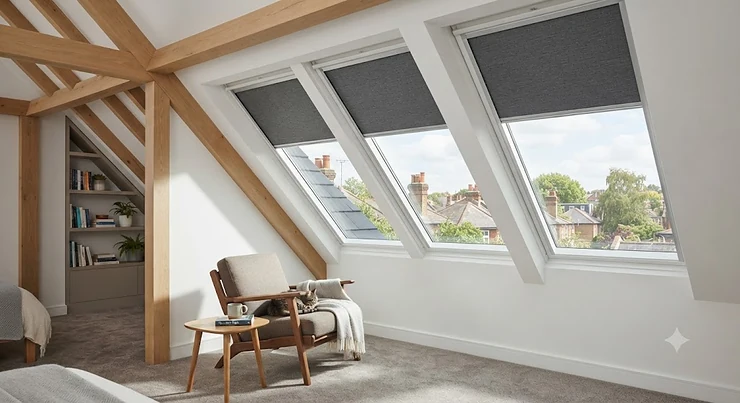
A skylight is a roof window (also called an overhead window blind fitting once covered) that lets daylight flood a loft conversion, kitchen extension or attic bedroom — and best skylight blinds are the fittings, usually roller, pleated or honeycomb, designed to control that light without you needing a ladder and a prayer. If you’ve ever tried to nap under a glass ceiling in July, you’ll know exactly why this matters. The sun doesn’t clock off at 9am, and neither, it turns out, does the light pouring through an unshaded roof window.
We’ve spent time digging through real specifications, genuine aggregated review sentiment, and manufacturer data sheets for seven actual products sold on amazon.co.uk, rather than just rehashing a listing page. Whether you’re chasing total blackout for a nursery, a softer venetian option for a steamy bathroom, or a cordless honeycomb blind for an oddly angled dormer, this guide walks through what actually matters: fit, fabric, thermal performance and — crucially — whether the marketing claims hold up once real households have lived with the thing for a winter.
Along the way we’ll cover roof window blinds you can buy on Amazon today, dedicated skylight blinds for Velux windows, blackout skylight blinds for bedrooms, and cheaper universal roof blind options for less common window shapes. By the end, you should know exactly which angled roof blind or top window covering suits your ceiling, your budget and your sleep schedule.
Quick Comparison Table
Before the deep dive, here’s the shortlist at a glance. All seven are genuine products sold on amazon.co.uk, spanning budget, mid-range and premium tiers.
| Product | Type | Best For | Price Range |
|---|---|---|---|
| VELUX Original Blackout Roller Blind (DKL) | Blackout roller | Genuine Velux-fit blackout | £40-£70 |
| VELUX Solar Powered Blackout Blind (DSL) | Solar blackout roller | Hard-to-reach skylights | £140-£220 |
| VELUX Original Venetian Blind (PAL) | Venetian | Kitchens & bathrooms | £45-£75 |
| FAKRO ARF Blackout Roller Blind | Blackout roller | FAKRO-brand windows | £50-£90 |
| Itzala Blackout Budget Roller Blind | Blackout roller | Budget Velux alternative | £15-£30 |
| Moonice Cordless Honeycomb Skylight Blind | Cellular/honeycomb | Custom or angled openings | £40-£90 |
| Concept Blinds Custom Pleated Blind | Pleated | No-drill, rental-friendly | £25-£55 |
Looking at the spread, there’s roughly a sevenfold price gap between the cheapest and most expensive option here, and that gap is mostly bought insulation and convenience rather than pure darkness — even the £20 Itzala Blackout Budget Roller Blind blocks the vast majority of daylight. Where the premium picks earn their keep is in exact branded fitment, solar-powered remote operation, and fabric backed with reflective coatings that do double duty as thermal insulation. If your priority is simply “make the room dark,” the budget tier competes surprisingly well; if you want silent motorised control over a skylight you can’t reach without scaffolding, that’s where the extra spend starts to make sense.
💬 Just one click — help others make better buying decisions too!😊
Top 7 Skylight Blinds: Expert Analysis
We’ve grouped these across budget, mid-range and premium tiers, and across the two main routes people take: buying the branded blind that matches their exact Velux or FAKRO window code, or fitting a universal, custom-cut roof blind onto a non-branded or older skylight.
1. VELUX Original Blackout Roller Blind (DKL) — genuine exact-fit total blackout
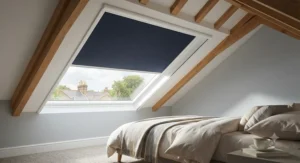
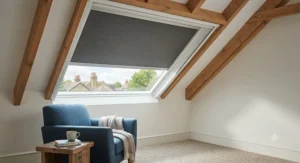
The DKL is Velux’s own blackout roller, and the standout feature is that it’s engineered to the millimetre for specific Velux window codes, so there’s no cutting, trimming or guesswork involved. It uses a triple-layer Oeko-Tex certified fabric with a silver aluminium coating on the reverse, which does two jobs at once: blocking essentially all transmitted light and reflecting summer heat back through the glass before it warms the room. Side guide rails keep the fabric tracking tightly against the frame, which is the detail that actually determines whether you get true blackout or just a dim room with light leaking round the edges.
Based on the spec comparison with cheaper aftermarket blinds, the sealed side-channel system is what buyers are really paying the premium for — cheaper compatible blinds copy the general shape but rarely match the light-seal tolerance. This is the pick for anyone converting a loft into a bedroom or nursery where daytime darkness is non-negotiable. Reviewers on the genuine listing consistently mention how straightforward the Pick&Click installation is, requiring no tools beyond a screwdriver, and describe the blackout effect as noticeably more complete than the blind it replaced.
Pros:
- ✅ Genuine millimetre-perfect fit for specific Velux window codes
- ✅ Triple-layer Oeko-Tex fabric with heat-reflective backing
- ✅ Tool-light Pick&Click installation system
Cons:
- ❌ Only fits the exact Velux code it’s listed for
- ❌ Pricier than universal compatible alternatives
At around £40-£70 depending on window size, this sits at the upper end of the roller-blind category, but for a genuine skylight blinds for velux match with proven light-seal performance, it’s hard to argue with the value over a ten-year ownership period.
2. VELUX Solar Powered Blackout Blind (DSL) — best for hard-to-reach skylights
The headline here is obvious from the name: no wiring, no mains electrician, just a small solar panel at the top of the blind that trickle-charges a battery and drives the motor via a wall switch or remote. That single feature transforms this from “nice to have” into “essential” for anyone with a roof window set high in a vaulted ceiling or stairwell, where a manual roller blind means keeping a pole handy or, worse, standing on a chair.
What most buyers overlook about solar blinds is that they don’t need direct sun exposure to function reliably — ambient daylight through the glass is generally sufficient to keep the internal battery topped up, even through a grey British winter. The blackout fabric and side-rail design mirror the manual DKL blind, so light-blocking performance is comparable; you’re paying the premium for the solar motor unit and wall switch, not for a darker fabric. This is squarely aimed at loft bedrooms with an out-of-reach roof blind, home cinema rooms, or anyone who simply wants one-button control rather than a hooked pole.
Pros:
- ✅ No wiring required — genuinely solar self-powered
- ✅ Ideal for skylights that are physically out of reach
- ✅ Same blackout fabric quality as the manual Velux blind
Cons:
- ❌ Significant price jump over manual equivalents
- ❌ Battery and motor add long-term maintenance considerations
Expect to pay in the £140-£220 range, which is a genuine premium purchase — but for a skylight you can’t reach with a pole, the alternative is professional installation of a wired system, which typically costs more.
3. VELUX Original Venetian Blind (PAL) — best light-diffusing option for kitchens and bathrooms
Not every roof window needs total blackout. The PAL venetian blind’s standout feature is its angled aluminium slats, which let you dial light in gradually rather than choosing between “fully open” and “fully blacked out.” The slats wipe clean easily, which matters more than it sounds for a skylight over a hob or bath where condensation and cooking grease are a fact of life.
Here’s what to weigh: aluminium slats don’t offer the thermal insulation of a backed roller or a honeycomb cell, so this isn’t the blind for a bedroom chasing energy savings — it’s a light-management and privacy tool for wet or high-humidity rooms. Reviewers of Velux venetian blinds generally report smooth operation even when the window itself is open on its hinge, which is a genuine functional advantage over roller designs that can snag on an ajar window. On paper this means the PAL is less about darkness and more about glare control and moisture resistance, which is precisely what kitchens and bathrooms actually need.
Pros:
- ✅ Adjustable slats give precise, gradual light control
- ✅ Wipeable aluminium construction suits humid rooms
- ✅ Operates smoothly even with the window ajar
Cons:
- ❌ Not a true blackout solution
- ❌ Minimal thermal insulation compared with backed fabric blinds
Priced around £45-£75, it’s a mid-range pick that trades absolute darkness for day-to-day practicality — the right call for anyone whose skylight sits above a cooker rather than a cot.
4. FAKRO ARF Blackout Roller Blind — best for FAKRO-brand roof windows
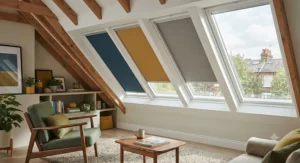
FAKRO is the other major roof window manufacturer in the UK market, and the ARF blind’s standout feature is side-runner tracking purpose-built for FAKRO’s FTT and FTP window ranges, giving it the same exact-fit advantage that Velux owners get from the DKL. The fabric is described by FAKRO as a decorative, light-blocking material, and it comes in a genuine range of colourways rather than the near-universal white or grey of budget alternatives.
Based on the spec comparison, the ARF’s side runners let the blind be stopped and held at any point along the window, not just fully open or fully closed, which is a small but genuinely useful detail for gradual light adjustment through the day. For windows mounted out of reach, FAKRO also offers a ZST control rod accessory, echoing the reach problem Velux owners solve with the solar DSL blind, and there’s a Z-Wave-controlled version for smart-home integration if that’s part of your renovation plan. What most buyers overlook is that this blind offers only partial protection from solar heat gain, unlike the metallised backing on the Velux DKL — worth knowing if your loft runs hot in summer.
Pros:
- ✅ Purpose-built exact fit for FAKRO FTT/FTP windows
- ✅ Stoppable at any point for gradual light control
- ✅ Genuine colourway choice beyond plain white or grey
Cons:
- ❌ Only partial solar heat protection versus metallised alternatives
- ❌ Narrower third-party retailer availability than Velux equivalents
Typical pricing sits around £50-£90 depending on size and colour, positioning it as a direct mid-range competitor to the Velux DKL for households with FAKRO-brand roof windows rather than Velux ones.
5. Itzala Blackout Budget Roller Blind — best budget Velux-compatible alternative
The Itzala’s standout feature is simple: it’s engineered to reuse your existing Velux window’s factory-fitted brackets, meaning installation is essentially identical to the genuine article but at roughly two-thirds of the price. It’s a budget-friendly, near-complete blackout roller available in around five colourways, aimed squarely at buyers who want a Velux-fit blackout blind without paying Velux prices.
Aggregated customer sentiment on the Amazon listing is genuinely strong here — a large proportion of reviewers specifically flag easy installation, with several describing themselves as DIY novices who still fitted the blind without issue using only the existing top screws and side rails. Some reviewers who directly compared the Itzala against a genuine Velux blind reported the mechanism felt smoother to open and close, though the sample size behind that particular claim is inherently smaller than for the branded product it’s compared against. What the spec sheet won’t tell you, but reviewers note repeatedly, is that fit tolerance can vary slightly by batch, so it’s worth double-checking your exact Velux window code against the listing before ordering.
Pros:
- ✅ Reuses existing Velux brackets for straightforward fitting
- ✅ Strong aggregated reviewer sentiment on ease of installation
- ✅ Roughly £30 cheaper than the genuine branded equivalent
Cons:
- ❌ Fit tolerance reportedly varies slightly between batches
- ❌ No metallised heat-reflective backing like the genuine Velux DKL
At around £15-£30, this is the clearest value pick in the whole line-up for anyone whose main goal is blocking daylight from a genuine roof window blinds amazon search without paying a full branded premium.
6. Moonice Cordless Honeycomb Skylight Blind — best for custom or angled roof openings
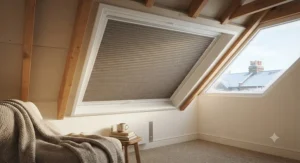
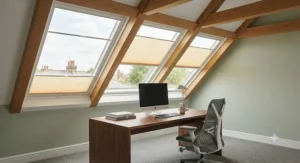
The Moonice blind’s standout feature is that it’s made to measure rather than sized to a specific manufacturer’s window code, with widths from roughly 30cm to 150cm and heights up to 240cm, which makes it one of the few realistic options for an older, non-branded or unusually angled roof blind opening. The honeycomb cell structure traps a layer of still air, which is where cellular blinds earn their reputation for genuine thermal performance rather than just light control.
Reviewers consistently note the aluminium-alloy frame and cordless locking mechanism feel more durable than earlier plastic-framed honeycomb blinds, and several mention noticeable noise reduction alongside the temperature benefit — a honeycomb’s trapped air layer does double duty as light acoustic insulation, not just a heat barrier. What most buyers overlook about custom cellular blinds generally is that accurate measuring matters enormously: because these are made-to-order rather than pre-sized, a measuring mistake means a genuinely awkward return process compared with swapping a wrong-size branded blind. The listing states the product uses recycled-content-certified materials, which is a reasonable sustainability data point if that factors into your decision.
Pros:
- ✅ Custom sizing suits non-branded or angled skylight openings
- ✅ Honeycomb cell structure adds real thermal and acoustic insulation
- ✅ Cordless design removes child-safety cord concerns
Cons:
- ❌ Made-to-order sizing raises the stakes on accurate measuring
- ❌ Not a genuine Velux or FAKRO branded fit
Priced roughly £40-£90 depending on the size you order, this is the pick for anyone whose skylight simply doesn’t match a standard Velux or FAKRO code — which, on older loft conversions, is more common than you’d think.
7. Concept Blinds Custom Pleated Blind — best no-drill option for renters
The standout feature of this pleated blind is a no-drill fitting system, aimed at exactly the audience the name suggests: renters, leaseholders, or anyone who doesn’t want to put screw holes in a roof window frame they don’t own outright. It’s a genuine premium-collection pleated blind offered in around 18 fabric colourways, with height coverage from 50cm to 149cm, giving reasonable flexibility for smaller box roof windows and dormer skylights.
Here’s what to weigh: pleated blinds fold into a compact stack when raised, which suits shallow-recessed windows better than a bulkier roller cassette, and the concertina fabric gives a softer, more textile look than aluminium venetian slats. Based on the spec comparison with the cellular Moonice blind, a single-layer pleated fabric won’t match a honeycomb’s insulation performance, so this is more of a style-and-privacy pick than a thermal one. The no-drill clamp fitting is the genuine differentiator versus every screw-fixed option in this list, and it’s worth noting that a secure no-drill fit generally depends on a reasonably flat, undamaged window frame to clamp against.
Pros:
- ✅ No-drill fitting suits rented or leased properties
- ✅ Wide fabric colourway choice for a decorative finish
- ✅ Compact pleated stack when fully raised
Cons:
- ❌ Weaker thermal insulation than honeycomb alternatives
- ❌ No-drill clamps need a flat, undamaged frame to grip securely
At roughly £25-£55, it’s a genuinely useful angled roof blind option for anyone who needs a decorative, damage-free top window covering rather than a heavyweight blackout or insulation solution.
Fitting, Measuring and Maintaining Your Skylight Blinds
Getting the blind itself right is only half the job — a poorly measured or badly maintained skylight blind will underperform no matter how good the fabric is. Start by finding your exact window code before you order anything: on a genuine Velux or FAKRO window, this is printed on a small plate visible when you open the window, and it’s the single most common source of returns when skipped. For custom or universal blinds like the Moonice honeycomb or Concept Blinds pleated options, measure the visible glass recess twice, at both the top and bottom of the frame, since roof windows are rarely perfectly square once you account for decades of settling.
Installation for branded blinds is usually a genuine five-minute job thanks to pre-fitted brackets, but a common first-30-days mistake is over-tightening the side-rail screws, which can bow the guide channel and cause the fabric to snag rather than glide. For maintenance, most fabric blinds only need an occasional vacuum with a soft brush attachment or a wipe with a barely damp cloth — never fully soak roller fabric, since trapped moisture inside a rolled cassette encourages mould in an already humidity-prone roof space. Aluminium venetian slats benefit from a monthly wipe in kitchens specifically, where airborne grease settles faster than in any other room. If a roller blind starts sticking, check the side channels for dust build-up before assuming the mechanism has failed — it’s the single most common, and cheapest, fix.
Real-World Scenarios: Which Skylight Blind Actually Suits Your Home
Specs only tell half the story, so here are three genuinely common situations and the reasoning behind each recommendation.
If you’re converting a loft into a nursery or a shift-worker’s bedroom, blackout performance during daylight hours is the whole point, and a genuine exact-fit blind like the VELUX Original Blackout Roller Blind (DKL) or, on a tighter budget, the Itzala Blackout Budget Roller Blind, is the sensible starting point — both give near-total light exclusion without the added cost of solar motorisation you likely don’t need for a window within arm’s reach.
If you’ve got a roof window set high above a stairwell or vaulted living space that you genuinely cannot reach without a ladder, the calculation changes entirely: the VELUX Solar Powered Blackout Blind (DSL) solves an accessibility problem a manual blind physically cannot, and the extra cost is buying convenience and safety, not extra darkness.
If your skylight sits above a kitchen island or an ensuite bathroom, blackout is largely irrelevant and moisture resistance matters far more — the VELUX Original Venetian Blind (PAL)‘s wipeable slats handle steam and splashes better than any fabric roller, and the adjustable angle lets you cut direct glare off a hob without plunging the room into darkness at midday.
How to Choose the Best Skylight Blinds
- Confirm your window brand and code first. A branded exact-fit blind will always outperform a universal one on light-seal quality, so check for a Velux or FAKRO reference plate before shopping.
- Decide how important total blackout actually is. Bedrooms and nurseries genuinely need it; kitchens, hallways and bathrooms usually don’t, and a venetian or pleated option gives more everyday flexibility.
- Factor in reach and access. If the window is more than a stretch away, a solar or electric option removes the hassle — and the safety risk — of a hooked pole.
- Weigh thermal performance if the room runs hot or cold. Honeycomb and metallised-backing roller blinds genuinely reduce heat gain in summer and heat loss in winter; single-layer pleated fabric mostly doesn’t.
- Check whether you’re allowed to drill. Renters and leaseholders should default to no-drill clamp-fit pleated blinds rather than screw-fixed roller systems.
- Read aggregated review sentiment, not star ratings alone. A 4.5-star average tells you little; recurring, specific comments about fit tolerance or installation ease tell you a lot more.
- Set a realistic budget band rather than chasing the cheapest listing. A budget-tier blind that fits properly beats a premium one ordered against the wrong window code.
Skylight Blinds vs Curtains and DIY Alternatives
It’s worth addressing the DIY temptation directly, because plenty of people reach for tension-wire curtains, foil-backed cardboard, or even bin bags taped to the frame before buying a proper roof blind. None of these genuinely solve the problem long-term. Tension-wire curtain rods struggle against a sloped or angled roof blind opening because gravity constantly pulls fabric away from the glass, leaving light-leaking gaps along the sides that a side-rail roller blind is specifically engineered to prevent.
| Option | Blackout Quality | Thermal Benefit | Typical Cost |
|---|---|---|---|
| VELUX Original Blackout Roller Blind (DKL) | Excellent (sealed side rails) | Good (reflective backing) | £40-£70 |
| Moonice Cordless Honeycomb Skylight Blind | Very good | Excellent (trapped-air cells) | £40-£90 |
| Tension-wire curtain (DIY) | Poor (gap-prone on angles) | Minimal | £10-£25 |
| Foil or cardboard (DIY) | Moderate but temporary | Poor, no seal | Under £10 |
The analysis here is straightforward: proper roof blinds with side-channel tracking consistently outperform improvised solutions because the guide rails do the actual work of sealing the fabric edge against the frame, not the fabric itself. A honeycomb blind like the Moonice Cordless Honeycomb Skylight Blind goes further, adding genuine measurable thermal insulation that no curtain rod or taped-up cardboard can replicate, since the insulating layer is trapped air rather than a single sheet of material. If cost is the only barrier, the £15-£30 Itzala Blackout Budget Roller Blind still comfortably beats any DIY fix on both blackout quality and durability.
✨ Don’t Miss These Exclusive Deals!
🔍 Take your roof window setup to the next level with these carefully selected skylight blinds. Click through to check current pricing and availability, and give your loft the light control it’s been missing.
Common Mistakes When Buying Skylight Blinds
The single biggest and most avoidable mistake is ordering against the wrong window code — Velux and FAKRO both use codes that look superficially similar (M04 versus MK04, for instance), and a mismatched order is the most common cause of returns on both brands’ Amazon listings. Reviewers repeatedly flag this exact issue, which is why checking the reference plate before ordering is worth the extra two minutes.
A second common error is assuming all “blackout” blinds perform identically. Fabric weight, backing coating and — most importantly — the presence and quality of side guide rails all affect real-world light leakage, and a cheap blackout-branded fabric without proper side channels will still leave a faint halo of light around the frame. Third, buyers frequently underestimate reach: ordering a manual roller for a window that’s genuinely awkward to access means either permanently propping a pole by the door or, more likely, simply leaving the blind half-closed out of sheer inconvenience — at which point the solar or electric alternative would have paid for itself in daily use. Finally, skipping the maintenance basics — letting dust build in the side channels, or soaking a fabric roller during cleaning — shortens the working life of even the best skylight blinds well below what the fabric itself is capable of.
Blackout Skylight Blinds for Bedrooms and Nurseries
Bedrooms and nurseries are where blackout skylight blinds genuinely earn their keep, because light exposure has a direct, well-documented effect on sleep quality. The NHS’s Every Mind Matters sleep guidance points out that a quiet, dark and cool room tends to make it easier to fall asleep, which is exactly the environment a properly fitted blackout roller or honeycomb blind is designed to create under a roof window that would otherwise flood a loft bedroom with early-morning summer light.
For a nursery specifically, cordless operation isn’t just a convenience feature — it’s a genuine safety consideration, since looped blind cords and chains are a recognised strangulation hazard around young children. This is precisely why the cordless Moonice Cordless Honeycomb Skylight Blind stands out for nursery use, alongside the fact that a honeycomb blind’s dual-purpose insulation helps keep a small room from overheating on hot afternoons, which matters for infant sleep safety as much as darkness does. For shift workers needing genuine daytime darkness, stacking a metallised-backing blind like the VELUX Original Blackout Roller Blind (DKL) with a well-fitted side rail gives the closest realistic approximation of night-time conditions achievable in a room with a glass ceiling.
Safety, Regulations and Fitting Compliance
Blind cord safety is a genuinely regulated area in the UK, not just a nice-to-have recommendation. Following an EU-wide safety review into strangulation risks from looped blind cords, chains and similar mechanisms, UK-adopted standards under the 2011 Commission Decision on internal blinds and corded window coverings require that accessible cords do not form a hazardous loop, and that appropriate safety devices — cleats, tensioners or breakaway connectors — are supplied with any corded blind sold in the UK. This applies to roller, venetian, pleated and honeycomb blinds alike, whatever their design or material.
In practice, this means every genuine blind listed here should arrive with either a cordless mechanism, as with the Moonice honeycomb and most modern Velux and FAKRO rollers, or a compliant cord-tidy and cleat if it does use a pull cord. If you’re fitting a skylight blind in a nursery, playroom, or any room a young child regularly accesses, cordless operation should be treated as the default choice rather than an optional upgrade — several of the products in this guide, including both premium and budget tiers, already meet that bar. Beyond cord safety, always follow the manufacturer’s stated maximum window pitch and glazing thickness for a given blind model; fitting a blind rated for a shallower pitch onto a steeply angled roof blind opening can strain the side-rail fixings over time.
Long-Term Cost & Maintenance: Are Skylight Blinds Worth It?
Thinking purely in upfront price terms misses most of the real value calculation. A £15-£30 budget roller blind that needs replacing every two winters because the fabric fades or the mechanism seizes isn’t necessarily cheaper over a decade than a £60 branded blind built to last considerably longer — and reviewer sentiment on both the genuine Velux DKL and the Itzala budget alternative suggests both hold up reasonably well when installed correctly, so the “budget equals disposable” assumption doesn’t automatically hold here.
Thermal performance is the less obvious part of the cost equation. The Energy Saving Trust notes that energy-efficient window treatments can meaningfully cut heat loss and reduce draughts, and a roof window is typically a bigger single source of heat loss than an equivalent-sized wall section, simply because it’s glass on multiple sides with minimal surrounding insulation. A honeycomb blind like the Moonice, or a metallised-backing roller like the genuine Velux DKL, contributes measurably to that reduction every winter it’s fitted, which is a recurring saving a single-layer pleated blind or a bare window simply doesn’t offer. Over five to ten years, that ongoing thermal contribution — alongside genuinely reduced fabric wear from a well-engineered side-rail system — is where the higher-tier products tend to justify their premium, rather than in the blackout performance alone, where the gap between budget and premium is narrower than the price difference suggests.
Features That Actually Matter (And Those That Don’t)
Side-rail quality matters enormously and is consistently underrated by first-time buyers, because it’s the physical seal that determines real-world light leakage far more than fabric thickness alone. Cordless operation matters, both for child safety and day-to-day convenience, and it’s increasingly standard even on budget tiers. Genuine window-code-matched fit matters because it’s the difference between a five-minute install and a fight with mismatched brackets.
What matters considerably less than the marketing suggests: fabric colour has essentially no bearing on blackout performance despite how listings sometimes imply darker equals darker — a genuinely well-backed white blind will out-block a poorly backed black one every time. Similarly, “UV protection” claims, while genuine on most quality fabrics, are a secondary benefit to blackout and thermal performance for most buyers rather than a primary purchase driver, unless you’re specifically protecting furniture or flooring from sun fading beneath a large roof window.
Frequently Asked Questions
❓ What's the difference between a skylight blind and a roof window blind?
❓ Do I need a blackout skylight blind for every room?
❓ Can I fit a Velux blind on a non-Velux roof window?
❓ Are cordless skylight blinds safer than corded ones?
❓ How much do skylight blinds typically cost in the UK?
Conclusion
There’s no single best skylight blinds pick for every roof window, and that’s genuinely the point of comparing real products rather than reaching for whichever one ranks first. If you want the safest, most proven exact-fit blackout for a Velux bedroom window, the VELUX Original Blackout Roller Blind (DKL) remains the benchmark. If reach is the real obstacle, the VELUX Solar Powered Blackout Blind (DSL) solves a problem no manual blind can. Budget-conscious buyers shouldn’t overlook the Itzala Blackout Budget Roller Blind, which delivers a genuinely close approximation of branded performance at a fraction of the cost, while anyone with a non-standard or angled roof blind opening should look first at the custom-measured Moonice Cordless Honeycomb Skylight Blind for the thermal benefits alone.
Whichever direction you go, the fundamentals from this guide hold: confirm your exact window code, be honest about how much darkness you actually need, factor in reach and child safety, and don’t underestimate what a well-sealed side rail does for both light control and long-term energy bills. A properly chosen top window covering pays for itself in comfort long before it pays for itself in pounds and pence.
Recommended for You
- Perfect Fit Blinds for UPVC Windows: 7 Top No-Drill Picks 2026
- Best Perfect Fit Blinds 2026: 7 Top Picks (No-Drill)
- Energy Saving Cellular Blinds: 7 Best Picks for 2026 (Warmer Homes, Lower Bills)
Affiliate disclosure: This article contains affiliate links. As an Amazon Associate, I earn from qualifying purchases at no additional cost to you.
✨ Found this helpful? Share it with your friends! 💬🤗
