
In This Article
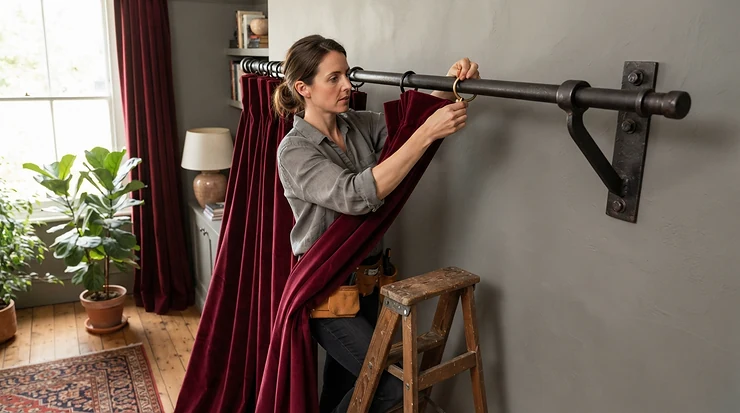
There’s a particular kind of heartbreak reserved for anyone who has ever heard a soft, ominous creak from above their window at 2am. It’s the sound of a pole giving up. A heavy duty curtain pole for thick curtains isn’t just a bit of metal or wood spanning your window — it’s the only thing standing between your beautiful new blackout drapes and a pile of fabric on the floor come Tuesday. So what actually counts as “heavy duty” here? In short: a heavy duty curtain pole is a curtain pole built with a thicker bar diameter (typically 28mm or above), reinforced brackets, and a manufacturer-stated weight rating high enough to carry lined, interlined, velvet, or blackout curtains without bowing or sagging over time.
Most people only discover their pole was never up to the job after the damage is done — a bent bar, a bracket ripped clean out of plasterboard, or curtains that hang at a permanent, slightly drunken angle. At its simplest, a curtain is just cloth hung to block light, air, or prying eyes, so it sounds like a straightforward job. But heavy fabric changes the physics entirely, and buying “any old pole” for velvet, chenille, or double-lined thermal curtains is a classic false economy.
This guide walks through seven genuinely tough curtain poles on the UK market for 2026, spanning budget metal options through to reinforced eyelet and 50mm wooden systems, plus the honest engineering detail — diameter, bracket type, and weight rating — that actually determines whether your curtains stay up or come crashing down.
Quick Comparison Table
| Pole | Diameter | Material | Best For |
|---|---|---|---|
| Rothley Klick-Fit Curtain Pole | 25mm (1″) | Iron/metal | Budget pencil pleat, medium curtains |
| Amazon Basics Curtain Rod | ~19-22mm | Steel | Light-medium curtains, spare rooms |
| Swish Elements Metal Pole | 28mm | Metal | Everyday heavy curtains, mid-budget |
| Umbra Cappa Adjustable Rod | 32mm (1¼”) | Steel | Design-led rooms, medium-heavy loads |
| Rolls Neo 35mm Stud Eyelet Pole | 35mm | Metal | Eyelet curtains, medium-heavy fabric |
| Rolls Neo 50mm Heavyweight System | 50mm | Metal | Velvet, blackout, wide windows |
| Swish Cambridge 50mm Wooden Pole | 50mm | Solid wood | Traditional heavy drapes, statement windows |
Looking at the spread above, diameter does most of the heavy lifting (pun very much intended) — the jump from 25mm to 50mm roughly doubles the bar’s resistance to bending under load. Budget doesn’t always predict strength either: the Umbra Cappa Adjustable Rod costs more than the Rothley Klick-Fit Curtain Pole but is rated for a lighter curtain, which is exactly the kind of gap in “heavy duty” marketing worth knowing before you buy. It’s also worth noting that thick, properly supported curtains do double duty beyond looks — several UK local authorities advise that thicker curtains meaningfully cut draughts and heat loss once darkness falls, which is one more reason to get the hardware behind them right.
💬 Just one click — help others make better buying decisions too!😊
Top 7 Heavy Duty Curtain Poles: Expert Analysis
1. Rothley Klick-Fit Curtain Pole — no-drill brackets at a genuinely low price
Rothley has been supplying decorative hardware since the 1800s, and this is its no-fuss answer to “I just need a pole that works.” The standout here is the Klick-Fit bracket system, which lets the pole snap into a moulded insert rather than being drilled through — expanding on that in a second.
The 25mm iron bar comes in three extendable ranges (roughly 71-122cm, 122-213cm, and beyond), with matt black or antique copper finishes and a choice of orb or stud finials. Manufacturer figures put its load capacity at around 18kg (40lb) across the full extended length, which is respectable for a 25mm bar but not in the same league as the 50mm options further down this list. Based on the spec comparison, this pole suits pencil pleat curtains in a medium-weight cotton or poly-cotton mix rather than full-length velvet or double-interlined drapes.
Reviewers on Amazon and retailer sites consistently mention how quick the Klick-Fit brackets are to fit, though several also note the extendable sections can develop a slight wobble at maximum length if the curtain is on the heavier side — worth bearing in mind if your window is wide.
Pros:
- ✅ No-drill Klick-Fit bracket system speeds up installation
- ✅ Genuinely low price point for a metal pole
- ✅ Two finish and finial choices for basic styling flexibility
Cons:
- ❌ 25mm diameter is modest for true heavyweight fabric
- ❌ Extendable joint can flex slightly at maximum length
Typically found in the under-£30 range, the Rothley Klick-Fit Curtain Pole is solid value if your curtains are on the moderate end of “thick” rather than full blackout velvet — check current pricing before buying, as with any pole here.

2. Amazon Basics Curtain Rod — the honest budget entry point
Amazon’s own-brand rod turns up constantly in “heavy duty curtain pole” searches, and it’s worth including precisely because it illustrates where budget hardware starts to fall short. The extendable steel tube (commonly sold in 91-183cm ranges) uses simple cap or round finials and basic bracket cups.
There’s no published high-capacity weight rating for the standard range, and the tube itself is narrower than the specialist poles on this list — what most buyers overlook is that “extendable curtain rod” and “heavy duty curtain pole” are not the same product category, even when they’re filed under similar search terms on Amazon. This rod is genuinely useful for net curtains, voiles, or lightweight lined curtains in a spare room, but it isn’t the pole to reach for if you’ve just bought a pair of thick, interlined blackout curtains for a bay window.
Aggregated feedback across Amazon Basics home products tends to praise the low price and easy assembly, while a recurring theme in reviews of extendable rods generally is sagging in the middle over long spans — a problem this guide addresses properly in the sag-prevention section below.
Pros:
- ✅ Very low cost, easy to find, fast delivery
- ✅ Simple twist-to-extend assembly, no tools needed
- ✅ Fine for lightweight to medium curtains
Cons:
- ❌ No published heavy-duty weight rating
- ❌ Narrower tube more prone to mid-span sag
Usually priced under £20, this is best treated as a stopgap rather than a long-term home for thick curtains — check current price and read the specific listing’s weight guidance carefully.
3. Swish Elements Metal Curtain Pole — Britain’s longest-running pole brand
Swish has been making curtain hardware since 1946 (the brand is now transitioning under Hallis ownership, with specifications unchanged), and the Elements range is its core 28mm metal offering. The standout feature is the 28mm bar diameter itself — a genuine step up from the two budget options above, and the point at which most industry buying guides start describing a pole as suitable for “medium to heavy” curtains.
Available in brass, silver, chrome, and graphite finishes, the pole pairs with matching rings, finials, and centre brackets sold separately — which matters more than it sounds, because a longer window genuinely needs that extra support point. Here’s what to weigh: 28mm is a solid mid-tier choice for lined curtains and moderate velvet, but if you’re hanging a heavy double-interlined blackout curtain across a 3-metre bay, you’ll likely want to jump to the 35mm or 50mm options later in this list.
Reviewers on retailer sites frequently mention the finish quality holding up well over years of daily opening and closing, which tracks with Swish’s reputation for commercial and contract-grade hardware sold to hotels as well as homes.
Pros:
- ✅ 28mm diameter comfortably handles medium-heavy curtains
- ✅ Long-established brand with proven commercial-grade hardware
- ✅ Four finish options plus matching accessories available
Cons:
- ❌ Rings and centre brackets often sold separately, adding cost
- ❌ Not rated for the very heaviest interlined or triple-weight fabrics
Expect a price in the £35-£60 range depending on length and finish — genuinely good value for a pole built to outlast most people’s decorating cycles.
4. Umbra Cappa Adjustable Curtain Rod — stylish, but check the weight rating first
Umbra’s Cappa rod is a design-forward pick, created by designer Mauricio Affonso and sold in nickel, gold, black, and matte finishes with a 1¼-inch (roughly 32mm) steel bar. The standout advantage is aesthetic — it’s genuinely one of the better-looking rods on this list, and it works with grommet, back-tab, pocket, and eyelet-style curtains alike.
Here’s the number that matters, though: Umbra states a maximum load of 22lb (10kg) per bar. On paper this means the Cappa sits closer to “medium-heavy” than the true heavy-duty end of this list, despite the 32mm diameter suggesting more capacity. What most buyers overlook is that a wider bar doesn’t automatically mean a higher weight rating — bracket strength and wall-fixing type matter just as much, and Umbra’s own figure is refreshingly specific compared with vaguer “heavy duty” marketing elsewhere.
Reviewer sentiment for the Cappa consistently praises the modern look and simple three-bracket installation, with occasional mentions that very long, fully lined curtains can pull the middle of the rod down slightly over time — a straightforward argument for adding the centre support bracket discussed later in this guide.
Pros:
- ✅ Genuinely stylish design that suits contemporary rooms
- ✅ Clearly published 10kg weight rating (no guesswork)
- ✅ Works across multiple curtain heading types
Cons:
- ❌ 10kg rating is lower than several cheaper 35-50mm poles
- ❌ Long spans benefit from an extra centre bracket not always included
Typically priced in the £40-£90 range depending on length and finish, the Umbra Cappa Adjustable Curtain Rod is best suited to medium-weight lined curtains rather than full blackout velvet, unless you reinforce the middle of the span yourself.
5. Rolls Neo 35mm Stud Metal Eyelet Pole — purpose-built for eyelet curtains
Designed specifically for eyelet headings, this 35mm pole from the well-regarded Rolls Neo range skips curtain rings entirely — the eyelets glide directly along the polished bar. The standout feature is the heavyweight bracket configuration available at checkout, which swaps the standard cylinder brackets for die-cast end brackets rated for genuinely heavy eyelet curtains.
Key spec interpretation: a 35mm bar is generally recommended for eyelet curtains using a 50mm eyelet ring (most ready-made options use 40mm, which still fits but glides slightly more snugly). Poles of 240cm and above ship with three brackets rather than two, and anything 300cm or longer arrives in two sections joined by an internal sleeve — a smart bit of engineering that avoids the visible seam sitting mid-window. Based on the spec comparison, this is one of the more thoughtfully designed poles here specifically because it scales its own hardware to the length ordered, rather than assuming one bracket count fits all.
Owner feedback on curtain pole specialist sites tends to highlight the smooth glide action and the availability of five finishes (including stainless steel and matt black) as strong points, with the main caveat being that rings aren’t included — a detail some first-time eyelet-curtain buyers miss.
Pros:
- ✅ Purpose-built for eyelet curtains with genuine heavyweight bracket option
- ✅ Extra centre bracket automatically included on longer poles
- ✅ Five finishes to match most interior styles
Cons:
- ❌ No rings included — only suitable if your curtains already have eyelets
- ❌ Heavyweight bracket upgrade adds to the base price
Prices generally sit in the £45-£110 range depending on length and bracket spec — worth the upgrade fee if your eyelet curtains are genuinely heavy, chenille, or double-lined.
6. Rolls Neo 50mm Heavyweight Pole & Bracket System — built for velvet and blackout
This is the pole for anyone who has already had a bar bend under a set of lined blackout curtains. The 50mm diameter is the thickest metal option on this list, paired with reinforced die-cast end brackets and an optional heavyweight centre bracket for spans over roughly 2.4 metres. The standout feature is straightforward: this system is explicitly engineered around curtains in the 11kg-and-above bracket, the weight class where most “heavy duty” poles quietly start to struggle.
What the spec sheet won’t necessarily spell out, but is worth stating plainly, is that a 50mm bar resists both bending and long-term “creep” (the gradual, permanent bow that develops in a loaded bar over months) far better than anything in the 25-35mm range. For genuinely heavy interlined curtains, thick chenille, or double-width velvet across a large window, this is the category you want to be shopping in — the centre support bracket specifically exists to stop the middle of a long pole from dropping under sustained weight, and it’s a five-minute addition that solves a problem some buyers only notice a year in.
Specialist retailer reviews consistently flag the heavyweight bracket projection and finish quality as the standout, with the trade-off being a noticeably higher price and a slightly more visible bracket footprint on the wall.
Pros:
- ✅ 50mm bar built specifically for velvet, chenille, and blackout curtains
- ✅ Reinforced die-cast brackets plus optional centre support bracket
- ✅ Explicitly rated for curtains around 11kg and heavier
Cons:
- ❌ Premium price compared with 25-35mm alternatives
- ❌ Bulkier brackets are more visually prominent on the wall
Expect to pay in the £70-£160 range depending on length, finish, and whether you add the centre bracket — for genuinely heavy curtains, this is the pole that removes the guesswork.
7. Swish Cambridge 50mm Wooden Curtain Pole — the thickest wooden option for statement windows
If metal isn’t the look you’re after, this is the wooden equivalent argument for going thick. The 50mm solid wood bar (available in antique white and other finishes, with lengths up to around 420cm) is explicitly marketed for heavyweight curtains, and the standout feature is simply the sheer mass and rigidity of a full 50mm timber bar compared with the more common 28-35mm wooden poles most shops stock as standard.
Wood behaves differently to metal under load — it doesn’t flex and spring back the way steel does, so a thick, well-supported wooden pole tends to hold its shape well over years, provided the brackets are correctly spaced (typically every 1.2-1.5 metres for genuinely heavy fabric). Here’s what to weigh: solid wood is heavier to handle during installation, and very long single-piece lengths need at least one extra person to hang safely, but the payoff is a warmer, more traditional look that many period properties suit better than polished metal.
Reviewer sentiment for chunky wooden poles in this category regularly mentions the “furniture-grade” feel and colour-matching to skirting boards or existing wood trim as a deciding factor, alongside occasional notes that fixings are needed at every bracket point — skipping one on a long span is a common early mistake.
Pros:
- ✅ Full 50mm solid wood bar for maximum rigidity
- ✅ Traditional look that suits period and heritage interiors
- ✅ Doesn’t develop the same long-term “creep” bow as thinner metal
Cons:
- ❌ Heavier to lift and install, often a two-person job
- ❌ Fewer finish options than the metal poles on this list
Typically priced from £60 up to £150+ for longer lengths, the Swish Cambridge 50mm Wooden Curtain Pole is the pick for anyone prioritising a solid, traditional look over the widest finish range.
How Curtain Poles Compare on Real-World Performance
| Feature | 25-28mm Metal | 35mm Eyelet | 50mm Metal/Wood |
|---|---|---|---|
| Typical curtain weight suited | Light-medium | Medium-heavy | Heavy-very heavy |
| Sag risk over 2m span | Moderate-high | Low-moderate | Low |
| Centre bracket usually needed? | Sometimes | Recommended over 2.4m | Recommended over 2.4m |
| Typical price range | £15-£60 | £45-£110 | £60-£160 |
The pattern across the table is consistent with what fitters have said for decades: diameter and bracket count matter more than brand name once you’re past the budget tier. Where the Rothley Klick-Fit Curtain Pole and Amazon Basics Curtain Rod genuinely shine is upfront cost for lighter jobs, while the Rolls Neo 50mm Heavyweight Pole & Bracket System and Swish Cambridge 50mm Wooden Curtain Pole justify their higher price the moment you’re dealing with anything double-lined or velvet.
Practical Installation Guide: Getting It Right the First Time
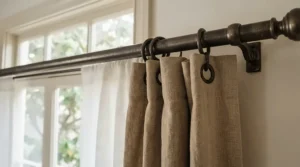
Fitting any heavy duty curtain pole for thick curtains properly makes far more difference than most people expect — a good pole badly fitted can fail just as fast as a cheap one. Start by finding your wall studs or solid masonry rather than relying on plasterboard alone; the University of Salford’s Energy House research into window coverings confirms that thicker, heavier curtains do meaningfully more work reducing heat loss than lightweight ones — which is exactly why the fixing needs to match the extra fabric weight.
Mount brackets 10-15cm above the window frame and 10-15cm beyond each side, so curtains stack back fully off the glass when open. For any pole spanning more than around 2.4 metres, fit a centre support bracket — most heavy duty ranges sell one as an accessory, and skipping it is the single most common cause of mid-pole sag reported by owners. Once installed, don’t overload one end with a heavy tieback or holdback until the pole has “settled” for a few days, and recheck bracket screws after the first month, since new curtains often stretch slightly under their own weight as they bed in.
Real-World Scenarios: Matching the Pole to the Curtain
The renovated Victorian terrace, full-length velvet curtains, 2.8m bay window: here the 50mm heavyweight system earns its price. Bay windows put extra strain on brackets due to the angled sections, so the Rolls Neo 50mm Heavyweight Pole & Bracket System with its heavyweight die-cast brackets and centre support option is the sensible choice over anything under 35mm.
The first-flat renter, medium lined curtains, single 1.4m window: budget and reversibility matter more than raw capacity here. The Rothley Klick-Fit Curtain Pole or Amazon Basics Curtain Rod cover this comfortably without over-spending on hardware that will outlive the tenancy.
The design-conscious couple, eyelet blackout curtains in the bedroom, 2m window: style matters, but so does sleep. The Rolls Neo 35mm Stud Metal Eyelet Pole with the heavyweight bracket upgrade threads this needle nicely, while the Umbra Cappa Adjustable Curtain Rod suits the same room if the curtains are genuinely medium-weight rather than full blackout interlined.
Common Problems With Curtain Poles (And How to Fix Them)
Problem: the pole visibly bows in the middle after a few months. This is almost always a diameter or bracket-spacing issue. Solution: add a centre support bracket, or if the bow is already permanent, step up to a 35mm or 50mm pole — thinner bars rarely recover their shape once bent.
Problem: brackets pull out of the wall. Nine times out of ten this traces back to fixing into plasterboard alone rather than a stud or solid masonry. Solution: relocate to the stud, or use a specified heavy-duty cavity fixing rated to at least double your curtain’s actual weight.
Problem: curtains won’t glide smoothly along the pole. Usually a diameter mismatch between eyelet size and pole, or dust build-up on a wooden bar. Solution: check the eyelet-to-pole ratio recommended by the manufacturer, and wipe wooden poles periodically with a dry cloth.
Problem: the extendable joint on a telescopic pole flexes under load. Common on budget metal rods carrying curtains heavier than they’re rated for. Solution: this is a genuine curtain pole sag prevention issue — either add a centre bracket at the joint or move up to a single-piece heavier pole for that window.
How to Choose a Heavy Duty Curtain Pole for Thick Curtains
- Weigh your curtains, don’t guess. A folded curtain on kitchen scales tells you more than any online description.
- Match diameter to that weight. As a rough guide, 25-28mm suits light-medium curtains, 35mm suits medium-heavy, and 50mm suits heavy or double-lined fabric.
- Check the manufacturer’s stated weight rating, not just the marketing phrase “heavy duty” — as the Umbra Cappa example above shows, the two don’t always align.
- Plan bracket spacing before you buy, especially for spans over 2.4 metres where a centre bracket becomes close to essential.
- Confirm your wall type — stud, dot-and-dab, or solid masonry — since the pole is only as strong as what it’s screwed into.
- Pick material based on room style, not just strength; both metal and thick wood can handle heavy curtains when properly specified.
- Buy slightly longer than your window, allowing curtains to stack back fully and let more daylight through when open.
Thick Curtain Pole Diameter: Why Size Matters More Than You Think
Diameter is the single most misunderstood spec on any curtain pole listing. A thicker bar isn’t just about looking chunkier on the wall — it directly resists bending under load, in the same way a thicker scaffold pole sags less than a thin one across the same span. Industry buying guides generally class anything below 19mm as suitable only for voiles and lightweight nets, 19-28mm for light-to-medium curtains, and 35mm and above as the genuine heavy-duty tier for lined, interlined, or velvet curtains.
What most buyers overlook is that diameter and weight rating don’t always scale together across brands — always check the manufacturer’s actual kilogram figure rather than assuming a bigger-looking bar automatically means a stronger one, as the mixed results across this list’s 32mm and 35mm entries demonstrate.
Metal Pole for Heavy Curtains vs Wooden Poles: Which Wins?
The metal-versus-wood debate for heavy curtains comes down to how each material fails under stress. A metal pole for heavy curtains typically flexes elastically at first, meaning it can spring back from moderate overload — until it reaches its limit, at which point it bends permanently and often suddenly. Solid wood, by contrast, doesn’t flex the same way; it holds its shape reliably right up until genuine structural failure, which in practice makes a well-supported thick wooden pole feel more “set and forget” over years of daily use.
Metal wins on finish variety, eyelet compatibility, and typically lower cost at a given diameter — the Rolls Neo 35mm Stud Metal Eyelet Pole and Rolls Neo 50mm Heavyweight Pole & Bracket System both illustrate this well. Wood wins on long-term rigidity and a warmer aesthetic that suits period properties, as seen in the Swish Cambridge 50mm Wooden Curtain Pole — a point echoed in Historic England’s own research into window coverings on traditional properties, which found heavier curtains a genuinely effective, low-intervention upgrade for older homes. Neither material is objectively better; the right choice depends on your curtain heading, room style, and how the window is fixed.
Reinforced Curtain Pole Brackets & Centre Support Brackets Explained
Reinforced curtain pole brackets are the part of the system doing the least glamorous but most important job — they’re the difference between a pole that holds for a decade and one that fails within a year. Standard brackets on lighter poles are usually stamped or moulded from thinner metal or plastic composite, while reinforced brackets on heavy duty ranges are typically die-cast, thicker-gauge metal, designed to resist both the downward pull of curtain weight and the sideways stress of daily opening and closing.
A centre support bracket is simply an additional fixing point placed midway along a long pole, and it solves a very specific problem: even a correctly rated pole can sag in the middle over a wide span, because the two end brackets alone are carrying load across a longer unsupported distance. Most heavy duty ranges, including the Rolls Neo 35mm Stud Metal Eyelet Pole and Rolls Neo 50mm Heavyweight Pole & Bracket System, sell a matching centre bracket as an accessory — and for anything over roughly 2.4 metres carrying thick curtains, it’s genuinely not optional if you want to avoid a visible dip within the first year.
Pole Weight Rating Explained: What the Numbers Actually Mean
A pole weight rating is the manufacturer’s stated maximum curtain weight the pole and its standard brackets are designed to carry, usually expressed in kilograms per curtain or per bar. It sounds simple, but the number can be misleading if you don’t check the small print: some ratings assume correct bracket spacing and stud-wall fixing, meaning the real-world capacity can be considerably lower if fitted into plasterboard alone with hollow-wall anchors.
The Umbra Cappa Adjustable Curtain Rod‘s clearly published 10kg (22lb) limit is a useful benchmark precisely because it’s specific — compare that against a folded pair of interlined velvet curtains on kitchen scales before assuming any “heavy duty” pole will automatically cope. As a rule of thumb, always fix to a stud or solid wall where possible, and treat any published weight rating as a maximum under ideal conditions, not an average expectation.
Common Mistakes When Buying a Heavy Duty Curtain Pole
The most frequent mistake is assuming the word “heavy duty” on a listing title guarantees a specific weight capacity — as this guide has shown, it can mean very different things between brands. A close second is buying a pole to fit the window opening exactly, rather than allowing extra length either side so curtains stack back properly and let light through when drawn. Many buyers also skip weighing their actual curtains before ordering, guessing at “medium” or “heavy” rather than checking, and a surprising number forget to check their wall type at all — a pole rated for 15kg is only as strong as the fixing behind it, and drilling into plasterboard without proper anchors undermines even the best hardware on this list.
Long-Term Cost & Maintenance of Heavy Duty Curtain Poles
| Pole Type | Typical Lifespan | Maintenance Needed | Total Cost of Ownership |
|---|---|---|---|
| Budget metal (25-28mm) | 3-6 years under heavy load | Occasional bracket tightening | Lower upfront, possible early replacement |
| 35mm eyelet metal | 8-12 years | Wipe clean, check bracket screws yearly | Moderate upfront, strong durability |
| 50mm metal/wood heavyweight | 12+ years | Minimal — occasional dusting/polish | Higher upfront, best long-term value |
Viewed as total cost of ownership rather than sticker price, the 50mm heavyweight options frequently work out cheaper over a decade than replacing a budget pole two or three times after it bows or a bracket fails. Maintenance across all three tiers is genuinely low — this isn’t a product category with ongoing running costs — but the gap in expected lifespan under real heavy-curtain loads is significant enough to influence which tier makes sense for your specific window and fabric weight.
✨ Don’t Miss These Exclusive Deals!
🔍 Take your window dressing to the next level with these carefully selected picks. Click on any highlighted product to check current pricing and availability. The right pole will help your thick curtains hang beautifully — and stay that way — for years to come!
Frequently Asked Questions
❓ What is the strongest type of curtain pole for heavy curtains?
❓ How do I know if my curtain pole is heavy duty enough?
❓ Do I need a centre support bracket for a wide window?
❓ Can I fit a heavy duty curtain pole into plasterboard?
❓ What diameter curtain pole is best for thick curtains?
Conclusion
Picking a heavy duty curtain pole for thick curtains really comes down to one honest question: how heavy are your curtains, actually, once folded on the scales? Once you know that number, everything else in this guide slots into place — diameter, bracket type, and whether a centre support bracket is worth the extra ten minutes of fitting time. Budget metal poles like the Rothley Klick-Fit Curtain Pole and Amazon Basics Curtain Rod genuinely earn their place for lighter jobs, while the Rolls Neo 50mm Heavyweight Pole & Bracket System and Swish Cambridge 50mm Wooden Curtain Pole are the ones to trust with velvet, blackout, or double-lined drapes across a wide window.
Whichever you choose, the fixing matters as much as the pole itself — a brilliant 50mm bar screwed into unsupported plasterboard will still fail eventually. Get the wall, the bracket spacing, and the diameter right together, and there’s no reason a well-chosen pole shouldn’t quietly do its job, uncomplained, for a decade or more.
✨ Ready to stop worrying about sagging poles? Check current prices on today’s picks and give your thick curtains the support they actually deserve! 🛠️🪟
Recommended for You
- Bendable Curtain Pole For Bay Window: 7 Best Flexible Picks (2026)
- Extendable Curtain Pole for Large Windows: 7 Best UK Picks (2026)
- Curtain Poles for Bay Windows: 7 Best UK Picks (2026)
Disclaimer: This article contains affiliate links. As an Amazon Associate, I earn from qualifying purchases. If you purchase products through these links, we may earn a small commission at no additional cost to you.
✨ Found this helpful? Share it with your friends! 💬🤗
