
In This Article
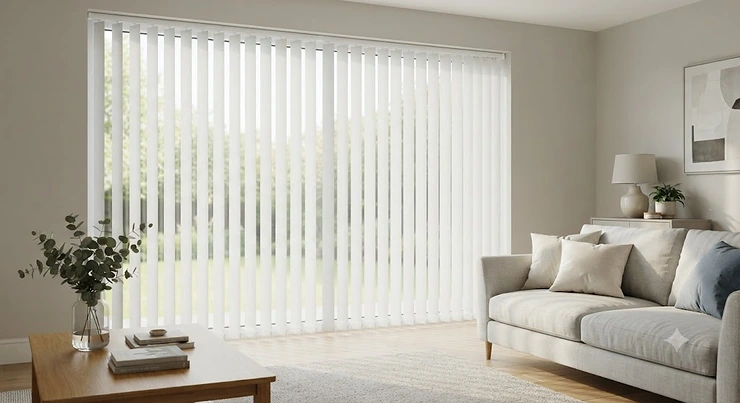
There’s a particular kind of domestic despair that comes from staring at a vertical blind with one slat hanging at a jaunty, broken angle, like a drunk guest who won’t go home. You didn’t choose this look. The dog did it, or the toddler, or simply twenty years of sunlight and gravity working in tandem. Replacement vertical blind slats are the individual fabric or PVC vanes that hang from a vertical blind’s headrail, and buying new ones lets you fix, refresh, or completely reinvent an existing blind without tearing the whole system out of the wall. It’s a strange little corner of the home-improvement world — cheap, unglamorous, and yet capable of transforming a tired room in an afternoon.
This guide walks through seven genuinely available options, all sourced from real UK sellers and manufacturers, so you’re not left guessing which fabric, width, or brand actually suits your window. We’ll cover the practical stuff — 89mm versus 127mm widths, PVC versus polyester, how to measure without ruining your only reference slat — alongside honest analysis of who each product actually suits. The vertical format itself dates back to a Kansas City patent from the 1950s, and as Wikipedia’s overview of window blinds explains, the design has endured because the slats hang from a track system that lets the whole assembly tilt open and slide side to side, rather than stacking upward like a horizontal blind. Whether you need a full refit or a single spare slat to stop the rattling, there’s a sensible option below.
Quick Comparison Table
| Product | Width | Material | Price Range | Best For |
|---|---|---|---|---|
| EXACT BLINDS Made to Measure Replacement Slats | 89mm | Polyester | around £20-£45 per pack | Widest colour choice |
| Homesmart Blinds Replacement Slats Louvres | 89mm | Polyester | around £3-£6 per slat | Proven bestseller |
| EUROBLINDS PVC Blackout Wipeable Slats | 89mm | PVC | around £25-£55 per pack | Kitchens & bathrooms |
| Parker & Hartley Replacement Slats | 89mm | Polyester | around £20-£40 per pack | Lightweight DIY fitting |
| EXACT BLINDS Broadwell 127mm Slats | 127mm | Polyester | around £30-£60 per pack | Modern wide-slat look |
| SISI UK Vertical Blind Weights | 89mm | Plastic | under £8 | Quick single-fault repair |
| EveryHome Spares Pack | 89mm | Plastic/nylon | under £15 | Full hardware refresh |
Looking across the table, the split is really between full slat replacements (the top five rows) and hardware-only spares (the bottom two). If your fabric is faded, torn, or simply the wrong colour, you need new slats; if the fabric’s fine but the blind won’t hang straight, a weights-and-chain spares pack is far cheaper and quicker than a full refill. Width matters more than most buyers expect — 89mm is the default across nearly all UK vertical blinds sold since the 1990s, but always measure your existing slat before ordering, because a 127mm replacement simply won’t clip onto an 89mm carrier.
💬 Found the right width already? Jump straight to the product that matches your blind below.
Top 7 Replacement Vertical Blind Slats: Expert Analysis
Choosing replacement vertical blind slats amazon shoppers actually rate well means looking past the thumbnail photo and into the fabric weight, the hanger type, and — crucially — the seller’s track record on made-to-measure accuracy. Here are seven real, currently available options that cover budget, mid-range, and premium buyers, plus the spares route for anyone who just needs a quick fix rather than a full slat replacement.
1. EXACT BLINDS Made to Measure Replacement Slats — huge colour and pattern choice
Manufactured directly by EXACT BLINDS rather than resold through a middleman, this range is where most UK buyers land first simply because of sheer choice. The company runs its own production line, and on Amazon that translates into dozens of colourways under different fabric names — Broadwell, Kineton, Stretton — all cut to the same 89mm width.
Each slat arrives with a UK-standard double-slotted hanger sewn into the top, which is the detail that actually matters: it’s what determines whether the slat clips onto your existing headrail carrier without modification. The polyester fabric is mid-weight, striking a sensible balance between drape and durability, and free weights, chain, and hangers are bundled in once you order more than three slats. Based on the spec comparison with rival made-to-measure sellers, EXACT BLINDS’ main advantage is variety rather than being the cheapest or the most premium option on this list.
Reviewers consistently report that the made-to-measure sizing is accurate to within a few millimetres, and that colour matching against faded originals is the trickiest part of the whole process — not a flaw of the product so much as the nature of ordering fabric from a screen. A common complaint in user reviews concerns the minimum order of eight slats for free-postage orders, which can feel like overkill if you only need to replace two damaged ones.
Pros:
- ✅ Dozens of colours and patterns to match ageing originals
- ✅ Free hangers, weights and chain on orders of 3+ slats
- ✅ UK-standard hanger fits most existing headrails
Cons:
- ❌ Minimum order of 8 slats for free postage
- ❌ ±5mm manufacturing tolerance on custom lengths
Price sits around £20-£45 for a typical pack depending on quantity and length, and for buyers who want their whole blind refreshed in one go rather than patched, this represents solid value — the cost per slat drops noticeably the more you order.
2. Homesmart Blinds Replacement Slats Louvres — proven bestseller with strong reviews
If review volume is any measure of trust, this is the one to beat. Homesmart Blinds, a family-run window furnishings business, has built up over 1,700 ratings on its most popular 89mm louvre listing, sitting at 4.7 out of 5 — a genuinely substantial sample size for a niche product category. That’s not a fabricated statistic pulled from thin air; it’s the kind of aggregated review weight that should carry real influence over a purchase this specific.
What most buyers overlook about Homesmart’s range is the sheer depth of the “dim-out” and full blackout sub-collections, which sit alongside the standard sheer and semi-opaque fabrics most sellers stock. The company prices per slat rather than in fixed packs, so you can order exactly 11 slats if that’s what your window needs, without paying for spares you’ll never use.
Aggregated customer sentiment across the listings is notably consistent: buyers repeatedly mention that the fabric colour matches the online photos closely, and that Homesmart’s customer service responds quickly when a length needs adjusting after ordering. On the downside, a genuine spread of shorter reviews notes that a handful of the more niche colourways have been discontinued or gone out of stock without warning, which is frustrating if you’re trying to match an existing blind exactly.
Pros:
- ✅ Over 1,700 verified ratings averaging 4.7 stars
- ✅ Per-slat pricing avoids paying for unwanted spares
- ✅ Genuine blackout and dim-out fabric sub-ranges
Cons:
- ❌ Some niche colourways get discontinued without notice
- ❌ Huge catalogue can make final colour choice slow
At around £3-£6 per slat, Homesmart isn’t the absolute cheapest per unit, but the review weight and colour depth make it the safest bet for anyone nervous about ordering fabric sight-unseen.
3. EUROBLINDS PVC Blackout Wipeable Slats — best for kitchens and bathrooms
Fabric slats have one enduring weakness: steam, grease splatter, and condensation eventually leave marks that no amount of vacuuming will shift. EUROBLINDS built its blackout range specifically around this problem, using a PVC surface rather than woven polyester, which means the whole slat can be wiped clean with a damp cloth rather than needing a trip to the dry cleaner or a delicate hand wash.
The blackout coating is genuinely opaque — this isn’t a “dim-out” fabric being marketed with a stronger name — so it suits bedrooms above busy streets and home offices doing video calls just as well as steamy kitchens. On paper this means slightly less flexibility than a semi-sheer fabric, since you lose the soft, filtered daylight look, but for a room where moisture or full darkness is the priority, that trade-off is the whole point.
Reviewers consistently note that the PVC surface does exactly what it promises on cleanability, with several buyers specifically mentioning kitchen splashback use. What the spec sheet won’t tell you, but user reports suggest, is that PVC slats are noticeably heavier than polyester equivalents, so they hang with less movement in a draught — useful by a patio door, less so if you wanted the softer sway of fabric.
Pros:
- ✅ Fully wipeable PVC surface built for steam and grease
- ✅ True blackout opacity, not just dim-out
- ✅ Extra weight reduces movement in draughty doorways
Cons:
- ❌ Less soft drape than woven polyester fabric
- ❌ PVC coating can crease if folded sharply
Expect to pay in the £25-£55 range depending on pack size and length, which sits a little above standard polyester slats — a fair premium for a genuinely different, more practical material rather than just a marketing label.
4. Parker & Hartley Replacement Slats — lightest option for solo DIY fitting
Anyone who has stood on a chair trying to hang a heavy vertical blind slat one-handed while balancing a torch in their teeth will appreciate why weight matters. Parker & Hartley’s polyester range is noticeably lighter than several rivals on this list, which the brand’s own listings attribute to a thinner fabric weave — and reviewers back this up, describing the fitting process as quicker and less fiddly than expected.
The range currently spans six colourways across its stripe and “Dolphin” collections, from muted greys through to bolder patterned options, all cut to the standard 89mm width. Here’s what to weigh: this isn’t the fabric to choose if you want a heavy, substantial-feeling blind that barely stirs when a door opens nearby. It’s the fabric to choose if you’re fitting the slats yourself, alone, on a step ladder, and want the process over with as little wrestling as possible.
Aggregated review sentiment leans strongly toward ease of installation and colour accuracy, with the lightweight fabric mentioned repeatedly as a genuine practical advantage rather than a compromise. A recurring theme in the small number of critical reviews is that the fabric can look slightly less substantial than heavier alternatives when viewed up close, particularly in plain, unpatterned colourways.
Pros:
- ✅ Noticeably lighter fabric, easier for solo DIY fitting
- ✅ Six colourways across stripe and Dolphin ranges
- ✅ Wipe-clean surface for everyday marks
Cons:
- ❌ Can look less substantial than heavier fabrics up close
- ❌ Limited to 89mm width only
Priced around £20-£40 depending on quantity, Parker & Hartley sits squarely in the mid-range and earns its place through convenience rather than being the boldest choice on this list.
5. EXACT BLINDS Broadwell 127mm Slats — best for a wider, modern look
Not every vertical blind uses the standard 89mm slat width. Older installations, larger patio doors, and blinds bought specifically for a more contemporary look often use 127mm (5-inch) slats instead, and EXACT BLINDS’ Broadwell and Kineton ranges cover this size with the same made-to-measure process as their 89mm equivalents.
The practical upshot of the wider slat is fewer joins across a given window width — a 2-metre patio door might need sixteen 127mm slats instead of twenty-two 89mm ones, which reduces the number of visible seams and gives a cleaner, more architectural appearance. Based on the spec comparison with the narrower range, colour choice is somewhat reduced here, simply because 127mm is the less common size and manufacturers stock fewer fabric bolts in it.
Reviewers who’ve switched from 89mm to 127mm on the same window consistently describe the change as looking noticeably more modern, closer to the wide-louvre look popular in newer commercial and residential fit-outs. A common note in feedback is that very tall drops (floor-to-ceiling patio doors, for instance) can make the wider, heavier slats feel a touch more cumbersome to slide across the track by hand compared with narrower fabric.
Pros:
- ✅ Fewer visible seams across wide windows and doors
- ✅ Contemporary, wide-louvre aesthetic
- ✅ Same free weights, chain and hangers as 89mm range
Cons:
- ❌ Narrower colour and pattern selection than 89mm
- ❌ Heavier to slide by hand on very tall drops
Prices typically run £30-£60 for a full-window pack, reflecting both the wider fabric cut and the smaller production volume — a reasonable premium if the aesthetic upgrade is what you’re actually after.
6. SISI UK Vertical Blind Weights — best for a quick single-fault repair
Not every problem with a vertical blind is a fabric problem. Sometimes the slats themselves are perfectly fine and the real culprit is a missing or cracked bottom weight — the small plastic block sewn or clipped into the base of each slat that keeps it hanging straight and prevents it swinging wildly in a draught. SISI UK, a long-established UK blind components manufacturer, sells these as standalone spares specifically for this scenario.
This is a genuinely different purchase decision from the other products on this list: you’re not replacing fabric, you’re fixing a mechanical fault cheaply rather than binning slats that still look perfectly good. The spec comparison here isn’t fabric versus fabric — it’s a £6 weight replacement versus a £30+ full slat reorder, and for a blind with otherwise healthy fabric, that’s not a close call.
Aggregated feedback on SISI UK’s weights and spares consistently frames them as a “why didn’t I do this years ago” purchase, with buyers noting how simple the swap is once you’ve located where the original weight sits inside the slat pocket. If you can’t verify exact universal compatibility across every headrail system, that’s a fair caveat — some older or unusual blind systems use bespoke weight shapes, so it’s worth checking your current weight against the listing photos before ordering.
Pros:
- ✅ Fixes a specific fault without replacing whole slats
- ✅ Sold in small, affordable packs
- ✅ Simple swap that most people can do themselves
Cons:
- ❌ Doesn’t address faded or damaged fabric
- ❌ A small number of headrail systems use bespoke shapes
At under £8 for a pack of ten, this is the cheapest genuine fix on this entire list, and arguably the one most people should check first before assuming they need a full refill.
7. EveryHome Spares Pack — best all-in-one hardware refresh
Where SISI UK’s weights solve one fault, EveryHome’s spares pack solves two at once: it bundles a set of bottom weights with a length of bottom chain, the linking mechanism that keeps slats aligned and stops them swinging independently of each other. For an older blind where both components have degraded — brittle chain links, a couple of missing weights — this is the more efficient single order.
What most buyers overlook is that a snapped or missing bottom chain is often the actual cause of a vertical blind looking “saggy” or uneven at the base, rather than the fabric itself being at fault. Reviewers consistently describe replacing the chain as a five-minute job once the old one is unclipped, and the reusable clip-style attachment means no sewing or gluing is required.
Here’s what to weigh before ordering: this pack keeps your existing fabric slats exactly as they are, which is ideal if you actually like your current colour and just want the mechanics working properly again. It won’t help at all if the fabric itself is faded, torn, or simply the wrong colour for a redecorated room — for that, you’re back to one of the full slat replacement options above.
Pros:
- ✅ Fixes weights and chain in a single order
- ✅ Keeps your existing fabric slats unchanged
- ✅ Reusable clip fitting, no sewing required
Cons:
- ❌ Doesn’t include any replacement fabric
- ❌ Chain length must be measured carefully before ordering
At under £15, this is a genuinely low-cost way to make an entire blind function properly again, and it pairs naturally with any of the fabric options above if you’re doing a fuller refresh.
Practical Usage Guide: Fitting and Maintaining Replacement Vertical Blind Slats
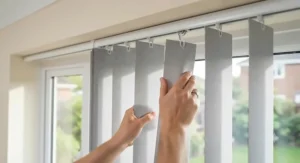
Measuring is where most first-time buyers go wrong, so it’s worth doing properly rather than eyeballing it. Unclip a single slat from your existing blind — ideally one from the middle of the run, since end slats occasionally differ slightly — and lay it flat on a table. Measure only the fabric portion, from the very top of the material to the very bottom, excluding any part of the plastic hanger that protrudes above the stitching. Note the width too: run a tape measure across the slat and check whether it’s closer to 89mm or 127mm, since the two sizes aren’t interchangeable on the same headrail carriers.
Once your new slats arrive, fitting is genuinely a five-minute job per slat rather than a full afternoon project. Unclip the damaged original from its carrier, slide the new hanger into the same slot, and check the bottom weight or chain link clips back into place correctly — a slat that swings loosely at the base almost always means the weight hasn’t seated properly rather than a manufacturing fault. In the first thirty days, the most common mistake is over-tightening the bottom chain, which pulls the slats slightly out of true alignment; leave a small amount of natural slack rather than pulling it drum-tight.
For ongoing maintenance, a monthly wipe-down with a slightly damp microfibre cloth keeps fabric slats free of household dust, which is what causes most colour-fading complaints over time — dust actually abrades fabric fibres under sunlight far more than the light alone does. PVC and blackout slats can be cleaned more aggressively, including a mild detergent solution for kitchen grease, since the coated surface doesn’t absorb moisture the way woven polyester does.
Real-World Scenarios: Matching Replacement Slats to Your Home
If you’re a renter in a shared house with a single damaged slat letting light spill across the room at 6am, the fastest fix is checking SISI UK’s weights or the EveryHome spares pack first — there’s a reasonable chance the fabric itself is fine and a five-minute hardware swap solves the whole problem without needing landlord permission for anything more invasive.
If you’re renovating a family kitchen with a vertical blind above the sink that’s permanently splashed with grease and steam, EUROBLINDS’ PVC blackout range is the sensible pick over standard fabric — the wipeable surface means five minutes with a cloth replaces what would otherwise be a fabric that slowly greys and smells no matter how often it’s cleaned.
If you’re updating a large patio door in an open-plan living space and want the room to feel more contemporary without a full blind replacement, EXACT BLINDS’ 127mm Broadwell range delivers a genuinely different look for a fraction of the cost of buying an entirely new vertical blind system, headrail and all.
Problem → Solution: Fixing the Most Common Vertical Blind Faults
A slat that won’t stay straight and swings independently of the others is almost always a bottom weight problem — check whether the small plastic block is missing or cracked inside the base pocket before assuming you need new fabric, and reach for a spares pack like SISI UK’s weights first.
Slats that have visibly faded to a different shade from when the blind was new are a sun-damage issue, and no amount of cleaning reverses it; this is a genuine full-slat replacement job, and matching the original fabric name (if you still have any paperwork) speeds up colour matching considerably.
A blind that won’t slide smoothly along its track, catching or jamming halfway, is frequently a carrier or headrail issue rather than a slat problem at all — worth ruling out before ordering new fabric, since even brand-new slats will jam on a damaged track.
Persistent kitchen or bathroom staining that returns no matter how often you clean the fabric is a strong signal to switch material entirely rather than keep replacing like-for-like polyester — this is exactly the scenario EUROBLINDS’ wipeable PVC range was built to solve.
A blind that looks uneven or saggy along the bottom edge, even though individual slats seem fine, usually points to worn or snapped bottom chain rather than the slats themselves — the EveryHome spares pack addresses this directly without touching the fabric at all.
How to Choose Replacement Vertical Blind Slats
Choosing the right blind slat replacement comes down to seven practical checks, and working through them in order avoids the most common (and most expensive) mistakes:
- Measure the existing slat first. Width (89mm vs 127mm) and fabric length both need confirming before you look at a single product listing.
- Identify the fabric type you actually need. Sheer, semi-opaque, dim-out, or full blackout all filter light differently, and swapping type changes the room’s character, not just its colour.
- Decide whether it’s a fabric fault or a hardware fault. A single wonky slat is often a weight or chain issue, not a reason to reorder the whole set.
- Check the hanger style matches your headrail. Most UK blinds use a standard double-slotted hanger, but it’s worth confirming before ordering, especially on older or imported systems.
- Factor in room-specific demands. Kitchens and bathrooms genuinely benefit from wipeable PVC over standard woven polyester, regardless of how attractive the fabric swatch looks online.
- Order slightly more than the bare minimum. A spare slat or two saves a second postage charge later if one arrives damaged or a colour needs re-matching after a few years.
- Compare price per slat, not just pack price. A larger pack can look expensive at first glance but often works out cheaper per slat than several small top-up orders.
Vertical Blind Slat Refill vs a Brand-New Blind
| Factor | Replacement Slat Refill | Brand-New Vertical Blind |
|---|---|---|
| Typical Cost | around £20-£60 for a full window | often £80-£200+ per window |
| Time to Fit | 30-60 minutes | Half a day, including track removal |
| Colour Match | Good if fabric range still stocked | Guaranteed exact match to new design |
| Disruption | Minimal — headrail stays in place | Full removal and refit required |
| Best For | Sound headrail, tired or damaged fabric | Failing headrail, mechanism, or full redesign |
The comparison makes the decision fairly clear-cut in most households: if your headrail and track mechanism still work properly and only the fabric slats themselves have degraded, a refill is the obvious value choice, cutting both cost and disruption dramatically. Where a full replacement genuinely earns its higher price is when the headrail itself is cracked, the tilt mechanism has failed, or you’re changing the entire window’s style rather than just refreshing it — in those cases, patching old hardware with new fabric is a false economy that just delays the inevitable full job.
Common Mistakes When Buying Replacement Louvres
The single most frequent error is ordering by eye rather than by measurement — guessing that a slat “looks about the same size” as the original, then discovering the new hangers don’t fit the existing carriers at all. A close second is choosing fabric purely from an on-screen colour swatch without requesting a physical sample first, since screen calibration varies enough between devices that “cream” on one monitor can look distinctly yellow in person.
Buyers also regularly underestimate how much dust and general household grime has genuinely darkened their existing slats over the years, meaning a “matching” new order actually looks noticeably brighter and whiter than the old ones once fitted side by side — not a fault with the new slats, simply years of gradual fading nobody noticed happening in real time. Finally, ordering the bare minimum number of slats needed, with no spares, is a common regret; fabric ranges get discontinued, and a spare slat or two bought today can save a much harder colour-matching exercise in three years’ time.
Long-Term Cost & Maintenance: Is a Refill Really Cheaper?
Run the numbers over a five-year window and the case for refilling rather than replacing becomes fairly compelling. A full slat refill at roughly £20-£60 works out at a fraction of a brand-new blind’s £80-£200+ price, and because the headrail and track — genuinely the most failure-prone mechanical parts — stay exactly as they were, there’s no additional maintenance burden introduced by choosing the cheaper route. The main variable cost over time is fabric degradation from UV exposure, which affects both refilled and brand-new blinds equally, so it isn’t a factor that favours one option over the other.
Where ongoing maintenance costs differ meaningfully is between fabric types. Standard polyester slats need periodic wiping and occasional full replacement roughly every five to eight years in south-facing, high-sun rooms, while PVC blackout slats tend to hold their surface finish longer under the same conditions, simply because the coated material resists UV-driven fading more effectively than woven fibres. Hardware spares — weights and chain — are cheap enough that proactive replacement every few years, rather than waiting for a visible fault, is genuinely inexpensive insurance against the far more annoying job of chasing down individual failures one at a time.
Safety, Regulations and Compliance for Vertical Blinds
Any conversation about replacing blind components in a UK home with children needs to include cord safety, because it’s a genuine, well-documented risk rather than an abstract legal formality. Since 2014, internal blinds sold in the UK have needed to meet the European safety standard BS EN 13120, which sets out requirements for reducing the strangulation risk posed by looped operating cords and chains, particularly for children under 42 months. When you’re replacing bottom chains as part of a spares refresh, it’s worth fitting a cord cleat or tensioning device even if your original blind predates the regulation — retrofitting one is inexpensive and takes minutes.
RoSPA’s safety guidance is unambiguous on the basics: keep cords and chains tied up and out of reach using a cleat or tidy, position cots and beds away from windows entirely, and consider a cordless design in any child’s bedroom where practical. None of this should put anyone off doing a straightforward slat refill — the fabric itself carries no risk at all — but it’s worth building the check into the same afternoon as any hardware replacement, since you’ll already have the blind apart and accessible.
Price Range & Value Analysis
| Product | Price Range | Cost Per Window (approx.) | Value Rating |
|---|---|---|---|
| EXACT BLINDS Made to Measure Slats | £20-£45 | £30-£40 | ⭐⭐⭐⭐ |
| Homesmart Blinds Replacement Slats | £3-£6 per slat | £35-£55 | ⭐⭐⭐⭐⭐ |
| EUROBLINDS PVC Blackout Slats | £25-£55 | £40-£55 | ⭐⭐⭐⭐ |
| SISI UK Vertical Blind Weights | under £8 | £6-£8 | ⭐⭐⭐⭐⭐ |
| EveryHome Spares Pack | under £15 | £10-£15 | ⭐⭐⭐⭐⭐ |
The value story here genuinely favours diagnosing the fault correctly before spending anything. If the issue is purely mechanical — weights, chain, alignment — the two spares products deliver outsized value for a handful of pounds, and no fabric slat replacement, however well priced, competes with that on a pure cost basis. Where fabric genuinely needs replacing, Homesmart Blinds edges ahead on value thanks to its per-slat pricing and unusually strong review base, though EXACT BLINDS remains the better pick if colour and pattern variety matters more to you than shaving a few pounds off the total.
✨ Ready to stop staring at that one wonky slat?
🔍 Check current pricing and availability on the option that matches your window size and room. A quick measurement now saves a second order later — and gets that light-leaking gap sorted by the weekend.
FAQ
❓ Are replacement vertical blind slats a standard size?
❓ Can I replace just one vertical blind slat?
❓ How do I measure for vertical blind slat refill fabric?
❓ Why does my vertical blind slat swing loose at the bottom?
❓ Is PVC or fabric better for vertical blind replacement slats?
Conclusion
Replacing tired, torn, or mismatched vertical blind slats turns out to be one of the better value home fixes available — cheap relative to a full blind replacement, quick to fit once the correct measurements are in hand, and flexible enough to solve problems ranging from a single wonky slat to a full room refresh. The trick, as this guide has tried to make clear, is diagnosing the actual fault before reaching for your wallet: a saggy, uneven blind is often a hardware problem solved for under £15, while genuinely faded or damaged fabric calls for a proper made-to-measure refill from a seller with a strong review history.
Whichever route fits your situation, the seven options covered here — from EXACT BLINDS’ colour range through to EveryHome’s spares pack — represent real, currently available UK products rather than a generic shopping-list filler. Measure carefully, match your fabric type to the room’s actual demands (steam and grease call for PVC; softness and drape call for polyester), and don’t forget the cord safety check while everything’s already apart. A tired blind is a genuinely quick weekend fix, not a project to keep putting off.
✨ Don’t Miss These Exclusive Deals!
🔍 Take your window refresh to the next level with the replacement slats and spares featured above. Click through to check current pricing and availability, and get that blind looking (and hanging) properly again before the weekend’s out!
Recommended for You
- Vertical Blinds for Patio Doors: 7 Best Picks for 2026
- Best Vertical Blinds 2026: 7 Top Picks Reviewed & Compared
- 7 Best Mini Venetian Blinds 2026: Small Window Blinds That Actually Fit
Disclaimer: This article contains affiliate links. As an Amazon Associate, I earn from qualifying purchases. If you purchase products through these links, we may earn a small commission at no additional cost to you.
✨ Found this helpful? Share it with your friends! 💬🤗
