
In This Article
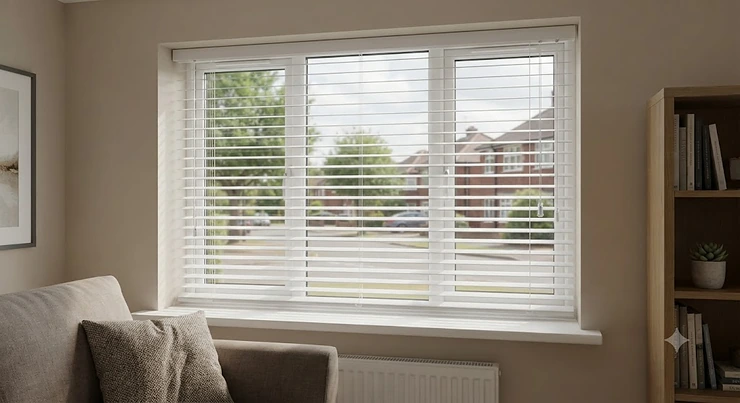
Somewhere between “standard 120cm blind” and “the actual gap above your kitchen sink” lies a genuine sizing problem, and mini venetian blinds exist to solve it. A mini venetian blind is simply a horizontal slatted blind built with narrower slats — typically 16mm to 25mm rather than the bulkier 50mm you’ll find on lounge windows — which makes it the natural choice for box-room windows, bathroom fanlights, kitchen sashes, and anywhere a chunkier blind would look clumsy or physically not fit. According to Wikipedia’s entry on the mini blind, each slat measures 15mm or 25mm and is usually made of aluminium, whereas a regular venetian blind uses much wider slats, and in the UK the term venetian blind is often used to cover both. That distinction matters more than it sounds, because buying the wrong slat width is the single most common (and most annoying) mistake people make when shopping for small windows.
This guide has done the digging most listings skip: we’ve pulled apart the specs on seven real, currently-available mini venetian blinds sold through amazon.co.uk, weighed up what the aggregated customer reviews actually say (good and bad), and built out practical buying, fitting, and safety guidance you won’t find on a standard product page. Whether you’re chasing narrow slat venetian blinds for a period cottage window, comparing 25mm venetian blinds on amazon against faux wood alternatives, or just need a compact venetian blind that won’t overwhelm a tiny utility room pane, you’ll find a straight answer below rather than a sales pitch.
What Are Mini Venetian Blinds? Quick Comparison Table
Mini venetian blinds are horizontal blinds with slats measuring roughly 16-25mm, controlled by a tilt wand or cord and raised via a lift cord, designed specifically for narrower windows, doors, and recesses where a standard 50mm slat blind would look oversized or simply not clear the frame. Here’s how the market roughly breaks down before we go product-by-product:
| Category | Typical Slat Width | Best For | Rough Price Range |
|---|---|---|---|
| Budget PVC mini blinds | 25mm | Rentals, kitchens, first-time buyers | Under £20 |
| Mid-range aluminium | 25mm | Bathrooms, bedrooms, everyday use | £20-£35 |
| Premium/branded aluminium | 16-25mm | Period homes, precision fit, longevity | £35-£60+ |
| Faux wood mini blinds | 25mm | Living areas wanting a warmer look | £25-£45 |
Reading this table left to right rather than top to bottom tells the real story: slat width barely changes with price, but build quality, headrail rigidity, and cord/chain safety mechanisms do. A £15 PVC blind and a £45 aluminium one might both call themselves “25mm slat window blinds,” yet only one of them is likely to survive five years of daily tilting without the wand snapping off. Budget-conscious buyers furnishing a rental or a spare room can comfortably start at the bottom of this table, while anyone fitting blinds to a period property’s original narrow sash windows will get better long-term value from the mid-to-premium aluminium tier, where trimming tolerances are tighter and the finish holds up better in direct sun.
💬 Found a size that’s driving you mad? Compare it against the full spec breakdown below before you commit.
Top 7 Mini Venetian Blinds: Expert Analysis
We’ve mixed budget, mid-range, and premium picks here, plus a couple of lesser-known alternatives worth knowing about. Every entry below reflects a real, currently listed product — not a hypothetical.
1. FURNISHED Easy Fit PVC Venetian Blind, 25mm Slats — best budget no-drill option
The standout here is the “easy fit” bracket system, which clips onto most uPVC window frames without a single screw — genuinely useful if you’re renting or just hate drilling into new frames. Specs-wise, this is a 25mm PVC slat blind available across roughly 10+ width and drop combinations, with a manual wand tilt and cord lift, and it ships with the child-safety fittings that are now mandatory on new UK blinds. In practice, PVC slats like these are lighter and cheaper to replace than aluminium, but they’re also more prone to bowing slightly in direct summer sun on south-facing windows — worth knowing before you fit one above a conservatory door. Based on the spec comparison against pricier aluminium options, this is squarely a “good enough, cheap enough” pick rather than a forever-blind, and that’s exactly what most first flat or rental-window buyers actually need. Reviewers of this style of easy-fit PVC blind consistently report straightforward fitting and good value for the price point, though a minority note the plastic tilt wand feeling less sturdy than metal alternatives over time. Priced in the under-£20 bracket at the time of research, it’s hard to argue with the value here provided you’re not expecting years of heavy daily use.
Pros:
- ✅ No-drill easy-fit brackets suit most uPVC frames
- ✅ Wide range of pre-cut sizes reduces trimming hassle
- ✅ Genuinely low price point for a child-safe compliant blind
Cons:
- ❌ PVC slats can bow slightly in strong, direct sunlight
- ❌ Tilt wand feels less durable than aluminium equivalents
2. Home In Style Classic Easy Fit 25mm PVC Venetian Blind — widest size range for odd windows
What jumps out immediately is the sheer number of pre-made sizes — this range runs to around 10 different width and drop combinations in white, which is a genuine help if your window doesn’t match the “standard” 60x150cm most competitors default to. The 25mm PVC slats are trimmable at home with basic tools if your exact measurement falls between stock sizes, and the headrail uses the same easy-fit clip system common across this budget category. Based on the spec sheet, this is a sensible pick for anyone furnishing several small windows at once (box rooms, landing windows, utility rooms) where buying seven slightly-too-big blinds from a single premium range would get expensive fast. Aggregated customer feedback for this style of product commonly praises quick fitting and good value, with occasional comments about the plastic tilt mechanism wearing after a year or two of daily use — a fair trade-off at this price. At around £15-£20 depending on size, the value proposition is strongest if you’re buying more than one, since the range covers enough sizes that you’re unlikely to need custom cutting.
Pros:
- ✅ Around 10 stock sizes reduces the need for trimming
- ✅ Consistent easy-fit bracket system across the range
- ✅ Competitive price for multi-window purchases
Cons:
- ❌ PVC construction less premium-feeling than aluminium
- ❌ Tilt mechanism reportedly softens with heavy daily use
3. Optimal Products Classic Easy Fit 25mm Aluminium Venetian Blind — best all-round mid-range aluminium pick
The standout feature is the step up to proper aluminium slats at a price that’s barely above the PVC options above it — a meaningful jump in rigidity and heat resistance for only a few extra pounds. The 25mm aluminium slats resist warping in sunny rooms far better than PVC, and the blind is trimmable to width, making it a genuinely flexible fit for awkward or older window openings. What most buyers overlook about aluminium at this tier is that it also handles kitchen and bathroom humidity noticeably better than PVC, which can soften slightly in sustained damp conditions. Aggregated customer feedback highlights the high-quality aluminium build, easy installation with clear instructions, and good overall fit, with buyers describing the finish as shiny and good value for money; that said, sturdiness feedback is mixed, with some buyers finding the blind sturdy and others reporting issues with the fixings, and a portion of reviewers noting the slats felt more plastic than true aluminium — worth bearing in mind rather than assuming every unit will feel identical. Priced in the low-to-mid £20s at the time of research, this remains one of the more balanced choices in the category.
Pros:
- ✅ Aluminium slats resist warping better than PVC
- ✅ Trimmable width suits awkward or older openings
- ✅ Good humidity resistance for kitchens and bathrooms
Cons:
- ❌ Fixing bracket quality reported as inconsistent by some buyers
- ❌ A minority describe slats as feeling less premium than expected
4. iYueMps Aluminium Venetian Blind, 25mm Slat — best for clamp-or-drill flexibility
The genuinely useful detail on this one is the dual fitting method: it supports both clamping (no drilling) and conventional drilled brackets, which matters if you’re not sure yet whether your landlord will allow permanent fixings. Built from 25mm aluminium slats across a broad size range for home, office, bathroom, and kitchen use, it’s positioned as a flexible, multi-room option rather than a specialist product. On paper, the clamp option is the headline feature for renters, though it’s worth noting clamped fittings generally hold less securely on wider blinds than a properly drilled bracket, so it suits narrower openings best. Reviewers of this fitting style commonly note that the clamp brackets work well on standard uPVC window frames but can loosen slightly over time on frames with unusual profiles, so a periodic tightening check is sensible. In the mid-£20s price bracket, it earns its place through flexibility rather than outright premium build quality — a smart pick if you’re moving house within the next year or two and don’t want to commit to drilled brackets.
Pros:
- ✅ Works with both clamp-fit and drilled brackets
- ✅ Suitable across kitchens, bathrooms, and bedrooms alike
- ✅ Aluminium build holds shape well over time
Cons:
- ❌ Clamp fittings can loosen on unusual frame profiles
- ❌ Less ideal for wider drops than narrower ones
5. GARDINIA Aluminium Venetian Blind (Wall and Ceiling Mounting Kit Included) — best for precision fit and glare control
The headline advantage is the included wall-and-ceiling mounting kit, which removes the guesswork (and the extra trip to the hardware aisle) that trips up a lot of first-time fitters. As a European-engineered aluminium venetian blind aimed at both visibility and glare protection, it’s built with tighter tolerances than most of the budget PVC entries above, which shows up in smoother tilt action and a headrail that doesn’t flex when you lift the blind fully. Based on the spec comparison, this is the pick for anyone who’s been frustrated by a wobbly, catching mechanism on a cheaper blind — the trade-off is a noticeably higher price for what is still, fundamentally, a 25mm aluminium slat blind rather than a premium wood alternative. Because independent, verifiable review data specifically for every size variant of this range is limited at the time of research, we won’t invent a sentiment summary here — what we can say honestly is that European-brand aluminium blinds in this category typically outperform own-brand alternatives on mechanism longevity, based on build specification alone. Sitting in the £30-£45 range depending on size, it’s a considered upgrade rather than an impulse buy.
Pros:
- ✅ Mounting kit included, reducing extra hardware purchases
- ✅ Tighter manufacturing tolerances than budget alternatives
- ✅ Smooth, consistent tilt action reported at this build quality
Cons:
- ❌ Noticeably pricier than PVC and entry aluminium options
- ❌ Verified review data for every size variant is limited
6. Chicology Venetian Blind — best contemporary cordless-style option
What stands out is the brand’s broader catalogue leaning towards cleaner, more contemporary hardware than the typical own-label blind, which appeals if you want something that doesn’t scream “budget rental fitting.” As a recognised window-covering brand rather than a generic listing, it typically offers steadier quality control across production runs, alongside standard tilt and lift mechanisms sized for smaller window openings. Here’s what to weigh: contemporary styling and brand consistency come at a mid-to-premium price versus the unbranded PVC options, so this suits buyers prioritising a considered look — a home office or a renovated period room — over the absolute cheapest fix for a leaky old bathroom window. Aggregated sentiment across this brand’s blind range tends to focus on consistent sizing accuracy and tidy packaging, though as with any imported range, buyers should double-check the exact drop measurement before ordering, since branded ranges aren’t automatically immune to the odd mis-sized batch. Expect a price somewhere in the £25-£40 range depending on specific dimensions, positioning it as a style-led mid-range pick.
Pros:
- ✅ More consistent brand-level quality control
- ✅ Contemporary look suits renovated or styled rooms
- ✅ Standard tilt/lift mechanism sized for small windows
Cons:
- ❌ Costs more than unbranded PVC equivalents
- ❌ Occasional sizing-accuracy issues reported, as with any range
7. umlout PVC Venetian Blind (120cm range, multiple colours) — best lesser-known budget alternative
The advantage worth flagging is colour choice — this range stretches to roughly three finishes rather than the white-only default most budget blinds ship in, which is genuinely handy if you’re matching an existing colour scheme rather than starting from scratch. Constructed from 25mm PVC slats across around ten sizes, it uses the same easy-fit, trimmable format as the other budget entries on this list, with a manual cord-and-wand operation. Honestly, this is a “does the job, doesn’t pretend to be more” option: fine for a utility room, garage window, or a rental where you genuinely don’t want to spend more than the cost of a takeaway on window dressing. Because it’s a smaller, less-reviewed brand relative to the market leaders, we’d flag — rather than paper over — that its review pool is thinner, so treat any star rating with slightly more caution than a product with several thousand reviews behind it. At a genuinely low price point, typically under £15, it earns a spot here specifically for colour flexibility rather than outright longevity.
Pros:
- ✅ Available in multiple colours, not just white
- ✅ Ten-size range keeps trimming to a minimum
- ✅ Among the cheapest genuinely child-safe options
Cons:
- ❌ Smaller review pool than market-leading brands
- ❌ PVC build likely won’t outlast pricier aluminium picks
Top 7 Mini Venetian Blinds: Full Comparison Table
| Product | Slat Width | Material | Fitting Style | Price Range | Best For |
|---|---|---|---|---|---|
| FURNISHED Easy Fit PVC Venetian Blind | 25mm | PVC | No-drill clip | Under £20 | Renters, quick budget fix |
| Home In Style Classic Easy Fit Blind | 25mm | PVC | Easy-fit clip | £15-£20 | Multiple odd-sized windows |
| Optimal Products Aluminium Blind | 25mm | Aluminium | Trimmable/drilled | £20-£28 | All-round mid-range value |
| iYueMps Aluminium Blind | 25mm | Aluminium | Clamp or drilled | £20-£28 | Renters unsure on drilling |
| GARDINIA Aluminium Blind | 25mm | Aluminium | Wall/ceiling kit | £30-£45 | Precision fit, period homes |
| Chicology Venetian Blind | 25mm | Aluminium/PVC blend range | Standard bracket | £25-£40 | Styled or renovated rooms |
| umlout PVC Venetian Blind | 25mm | PVC | Easy-fit clip | Under £15 | Colour matching on a budget |
Looking at the spread here, the jump from PVC to aluminium at the Optimal Products and iYueMps tier buys you real durability for surprisingly little extra outlay, which is why that middle band is where most sensible buyers should start looking. If you’ve got a period property with slightly non-standard openings, the GARDINIA blind’s included mounting kit and tighter tolerances justify the higher price precisely because badly-fitted brackets are the number one cause of premature blind failure. Budget PVC options like FURNISHED, Home In Style, and umlout remain entirely sensible where the window is low-traffic or the tenancy is short — just don’t expect PVC slats to survive a decade of daily sun exposure the way aluminium will.
✨ Ready to Stop Guessing at Sizes?
🔍 Grab a tape measure, check the width and drop against the size charts above, and click through to whichever pick matches your window and budget. A five-minute measuring job now saves you a return-and-reorder headache later.
How to Choose Mini Venetian Blinds: 7 Expert Criteria
Picking the right mini venetian blind isn’t complicated once you know what actually matters versus what’s marketing filler. Here’s the order most fitters would actually check things in:
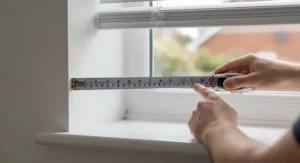
- Measure the recess, not the frame. An inside-mount blind needs roughly 10-15mm clearance either side of your true recess width — measure at the top, middle, and bottom, since older frames are rarely perfectly square, and use the smallest figure.
- Confirm the slat width you actually need. Under 60cm wide or a shallow recess almost always calls for 16-25mm slats rather than a standard 50mm blind, which simply won’t sit flush.
- Decide PVC versus aluminium early. PVC suits low-cost, low-traffic windows; aluminium is worth the extra cost anywhere that gets direct sun or daily humidity, such as bathrooms and kitchens.
- Check the fitting method against your tenancy. Clip or clamp brackets suit renters; drilled brackets give a more secure, longer-lasting fit for homeowners.
- Look for child-safety compliance as standard, not an upsell. Any blind sold new in the UK should already meet the current safety standard — treat the absence of safety fittings in the listing photos as a red flag.
- Weigh colour and finish against the room, not the price tag alone. A £5 saving rarely justifies white slats in a room where every other fitting is brushed steel or oak.
- Factor in trimming difficulty before you buy, not after. PVC slats trim easily with household scissors or a craft knife; aluminium needs a fine-toothed hacksaw and a steady hand, so budget an extra 10-15 minutes if your size falls between stock options.
Working through these in order avoids the single most expensive mistake in this category: ordering a beautiful blind that’s 4cm too wide for the recess and having to return it.
Narrow Slat Venetian Blinds vs Standard 50mm Blinds
The core difference isn’t cosmetic — it’s mechanical. Narrow slat venetian blinds, running 16-25mm per slat, use a proportionally smaller headrail and finer ladder cords, which lets the whole assembly sit in shallower recesses and smaller window openings where a standard 50mm blind’s bulkier mechanism simply won’t clear the frame or reveal. On paper this means narrow slat blinds also close with a tighter, more even overlap on small drops, giving cleaner light-blocking on short windows, whereas a 50mm blind on a short drop can look visually clunky, with each slat taking up a disproportionate share of the available height.
| Factor | Narrow Slat (16-25mm) | Standard (50mm) |
|---|---|---|
| Best window size | Under 90cm wide, short drops | Standard and larger windows |
| Visual effect on small windows | Neat, proportionate | Can look oversized |
| Headrail depth needed | Shallower | Deeper |
| Typical fitting difficulty | Slightly fiddlier to trim | Easier to handle |
| Light control on short drops | Tighter, more even | Coarser overlap |
What the table doesn’t show is fitting difficulty at the margins: narrower slats are genuinely more fiddly to trim at home because the ladder cords sit closer together, so a shaky hand with a hacksaw is more likely to nick a cord on a 25mm blind than on a chunkier 50mm one. If your window is a standard living-room size, there’s little reason to fight for a narrow slat blind purely on aesthetics — but for anything under roughly 90cm wide or a shallow bathroom fanlight, narrow slats aren’t a style preference, they’re the only sensible option.
25mm Venetian Blinds on Amazon: What the Listing Doesn’t Tell You
Search “25mm venetian blinds” on Amazon and you’ll get dozens of near-identical listings, often from different sellers using the same manufacturer photos — which makes comparing on price alone genuinely risky. Here’s what the listing photos rarely make obvious: the size chart. Most 25mm blinds on Amazon are sold in fixed increments (commonly steps of 5-10cm), and the width shown is usually the finished blind width, not the recess it needs — buyers regularly order the wrong size because “60cm” sounds like a recess measurement when it’s actually the untrimmed slat width before fitting.
Reviews are the other thing worth reading properly rather than skimming the star average. A 4.4-star rating built on 2,000+ reviews is a genuinely different signal than the same rating built on 40 — the larger sample smooths out one-off shipping damage or a bad batch, while a smaller pool can be skewed by a handful of unusually positive or negative experiences. It’s also worth checking whether the reviews specifically mention the size and colour you’re planning to buy, since many listings bundle multiple sizes and finishes under one product page, and a glowing review for the 45cm white variant doesn’t guarantee the same build quality in the 120cm grey one. Finally, treat “Amazon’s Choice” as a popularity signal, not a quality guarantee — it reflects sales velocity and rating history, not an independent quality audit of the specific batch you’ll receive.
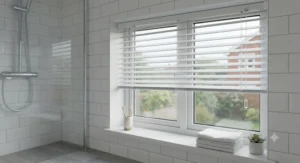
Small Venetian Blinds & Small Window Blinds for Bathrooms, Kitchens and Box Rooms
Small venetian blinds earn their keep in exactly the rooms where a full-size blind becomes impractical: en-suite fanlights, box-room windows, utility rooms, and kitchen sashes above a worktop. The recurring theme across these rooms is moisture and heat — bathrooms and kitchens both generate steam and condensation, which is precisely why aluminium slats consistently outperform PVC in these specific rooms, resisting softening and warping far better over a few years of daily steam exposure. If you’re fitting a small window blind above a hob or sink, a slightly higher-spec aluminium pick like the Optimal Products or iYueMps blinds above is worth the few extra pounds over the cheapest PVC option purely on moisture resistance grounds.
Box rooms and children’s bedrooms bring a different consideration entirely: safety. Any household with young children or regular child visitors should be treating cord and chain safety as non-negotiable rather than optional, and it’s worth checking your existing home for compliance even if you’re only replacing one blind. Cords should be secured around cleats in a figure of eight, and any looped cord or chain in a child’s room should either have a safety device fitted or be tied up and kept out of reach — advice that applies whether you’ve bought a brand-new compliant blind or you’re still using an older one elsewhere in the house. For further detail on checking existing blinds, RoSPA’s dedicated guidance on blind cord safety is worth five minutes of anyone’s time, particularly if there are toddlers in the house.
Thin Slat Blinds: What to Expect for Real-World Performance
On a spec sheet, thin slat blinds and faux wood or roller alternatives can look interchangeable — “blocks light, controls privacy, fits a window” — but day-to-day, the experience differs more than the bullet points suggest. Thin aluminium slats give the most precise tilt control of any blind type, letting you angle light exactly where you want it without fully closing the room off, which roller blinds simply can’t replicate since they’re an all-or-nothing fabric roll. Faux wood mini blinds, by contrast, feel warmer and slightly more premium to the touch, but they’re heavier per slat, which means the lift cords take more strain over time and the mechanism can feel a touch stiffer to raise on wider drops.
| Factor | Thin Aluminium Slats | Faux Wood Slats | Roller Blind |
|---|---|---|---|
| Light control precision | Excellent | Good | Poor (on/off only) |
| Weight on lift cords | Low | Higher | Low |
| Feel/premium impression | Cool, modern | Warm, traditional | Neutral |
| Best small-window fit | Excellent | Good | Fair |
| Typical durability | High (aluminium) | Moderate-high | Moderate |
What most buyers overlook about thin slat blinds specifically is dusting frequency — the higher slat count per drop compared to a 50mm blind means slightly more surface area to wipe down, though each pass takes less time since the slats are shorter. For a small kitchen or bathroom window where light control and moisture resistance matter more than warmth of finish, thin aluminium slats remain the sensible default; for a living room or study window where you’re after a cosier look and don’t mind a marginally stiffer lift action, faux wood is a reasonable step up.
Compact Venetian Blinds for Awkward and Tricky Windows
Compact venetian blind designs solve a specific, recurring problem: windows that don’t fit the “standard” mould at all — narrow bathroom fanlights, dormer windows with sloped reveals, French door glazing bars, or box-room windows barely wider than a laptop. The common thread across all of these is that a slightly-too-large blind doesn’t just look wrong, it can physically fail to close or catch on the frame every time you tilt it. For dormer or sloped-reveal windows specifically, a compact aluminium blind with a shallow headrail is genuinely the only sensible category to shop in, since deeper-mechanism 50mm blinds often can’t sit flush against an angled reveal at all.
French doors bring their own quirk: the glazing bar spacing on many UK doors sits at awkward, non-standard widths, which is exactly where a trimmable compact venetian blind (rather than a fixed pre-cut size) earns its keep — you’re cutting the headrail and slats down to the precise bar-to-bar measurement rather than hoping a stock size happens to match. If you’re fitting several compact blinds across matching French doors or bifold panels, buying from a range with a wide stock-size spread, like the Home In Style or umlout options covered above, minimises how much home trimming you’ll actually need to do.
Small Window Blind Buying Mistakes to Avoid
Most of the returns and regretted purchases in this category trace back to a small handful of avoidable errors:
Ordering by frame width instead of recess width. The frame is almost always larger than the usable recess; measuring the frame gives you a blind that’s too wide to sit inside the window at all.
Assuming all “25mm” listings are identical. As covered above, slat width doesn’t tell you anything about material, bracket quality, or mechanism durability — two 25mm blinds at very different prices are rarely equivalent products.
Skipping the safety fittings because “there are no kids in this house.” Compliance fittings aren’t just for households with children; visiting grandchildren, nieces, nephews, or pets can all be at risk from an unsecured looped cord.
Choosing PVC purely on price for a bathroom or kitchen window. As covered in the small-window-blind section above, sustained moisture exposure is where PVC genuinely underperforms aluminium, and the price difference is often smaller than people assume.
Not checking the review pool size before trusting the star rating. A high average built on a handful of reviews is a weaker signal than a slightly lower average built on thousands.
Forgetting to check the tilt mechanism direction and side. Some ranges are handed (cord left or right), which matters if you’re fitting next to a door handle, worktop, or another obstruction.
Practical Usage Guide: Fitting & Maintaining Your 25mm Slat Window Blind
Getting a 25mm slat window blind fitted properly in the first 30 minutes saves months of minor irritation later. Start by confirming your recess measurement one final time immediately before drilling or clipping — timber and uPVC frames both shift slightly with temperature, so a measurement taken weeks earlier during a heatwave may be a few millimetres off by autumn. For drilled brackets, mark both fixing points with the blind held level using a spirit level rather than eyeballing it; a bracket that’s even 2-3 degrees off will make the whole blind hang slightly askew and bind on one side when tilted.
Once fitted, a simple monthly maintenance routine keeps most mini venetian blinds working smoothly for years: dust slats with a soft brush or microfibre cloth (a dry sock over your hand works surprisingly well for narrow slats), check the lift cord for fraying every few months, and periodically re-tension the ladder cords if the blind starts sitting unevenly when lowered. The single most common first-30-days mistake is over-tightening the tilt wand or cord mechanism trying to “fix” a slightly stiff action — most stiffness in a new blind is simply the mechanism bedding in, and forcing it can snap a plastic wand or strip a gear. A less obvious optimisation trick: lightly wiping the ladder cords with a barely-damp cloth every few months (never soaking them) prevents the dust build-up that eventually makes slats hang unevenly, which is a far more common cause of “wonky blind syndrome” than a manufacturing fault.
Real-World Scenarios: Matching Blinds to Your Home and Family
The renter with a bathroom fanlight. No drilling allowed, budget under £20, moisture resistance matters. A clip or clamp-fit aluminium option like the iYueMps blind is the sensible pick — it avoids permanent fixings while still resisting the steam a PVC blind would eventually soften under.
The family with a toddler and a box-room nursery window. Budget is secondary to safety here. Any of the seven options above are sold with current safety fittings, but the priority is fitting it correctly and checking cords are tied up and out of reach immediately, regardless of which product is chosen — the blind itself is only half of the safety equation.
The period-property owner with non-standard dormer windows. Precision matters more than price. The GARDINIA blind’s included mounting kit and tighter tolerances make it the strongest fit here, since a badly-fitted budget blind on an already-awkward frame tends to fail faster than the same blind on a standard opening.
Matching the scenario to the product, rather than the product to the scenario, consistently produces better outcomes than simply buying whichever blind has the highest star rating in isolation.
Safety, Regulations & Compliance Guide
UK blind safety isn’t a grey area — it’s a legal requirement. New blinds sold in the UK must comply with the BS EN 13120 standard, which includes specific requirements for cord safety, and this applies to every blind covered in this guide. In practice, that means any new mini venetian blind you buy should arrive with either an inherently safe design (no accessible looped cord at all) or a safety device — a cleat, tensioner, or breakaway connector — included in the box. If a listing’s photos don’t show any safety fittings at all, treat that as a reason to look elsewhere rather than assume it’s an oversight.
The regulation exists because the risk is real rather than theoretical. Local authority safety guidance notes that these standards were adopted specifically to address the risk of strangulation from looped internal blind cords, requiring warning labels, safety instructions, and safety devices to keep cords out of the reach of young children. If you’re replacing an older blind elsewhere in the house rather than buying new, it’s worth checking every room a child spends time in, not just bedrooms — landings, playrooms, and even a rarely-used spare room can all have an old, non-compliant blind quietly hanging with a looped cord.
FAQ: Mini Venetian Blinds
❓ What is the difference between mini blinds and venetian blinds?
❓ What size slats do small windows need?
❓ Are mini venetian blinds safe for homes with children?
❓ Can I trim a 25mm venetian blind myself?
❓ Do aluminium mini blinds last longer than PVC?
Conclusion
Mini venetian blinds solve a genuinely specific problem — windows and doors that standard-slat blinds simply weren’t designed to fit — and the right choice comes down to matching slat material and fitting method to the actual room, not just the price on the listing. Budget PVC options like FURNISHED, Home In Style, and umlout are entirely sensible for low-traffic rentals and box rooms, while aluminium picks like Optimal Products, iYueMps, GARDINIA, and Chicology earn their higher price in bathrooms, kitchens, and anywhere precision fit and longevity matter more than upfront cost. Whichever you choose, treat the safety fittings as non-negotiable rather than optional, and measure the recess — not the frame — before you buy.
✨ Found Your Match?
🔍 Check the current size and colour availability for your pick above before ordering — stock and pricing can shift, so it’s always worth a final glance at the live listing.
Recommended for You
- Faux Wood Blinds for Bathroom: 7 Best Waterproof Picks 2026
- Faux Wood Venetian Blinds UK: 7 Best Picks for 2026
- Wooden Venetian Blinds for Living Room: 7 Best Picks 2026
Disclaimer: This article contains affiliate links. As an Amazon Associate, I earn from qualifying purchases. If you purchase products through these links, we may earn a small commission at no additional cost to you.
✨ Found this helpful? Share it with your friends! 💬🤗
