
In This Article
Curtains get the compliments. The pole does the heavy lifting. Yet most of us treat the hardware as an afterthought, grabbed at the last minute like a phone charger at a motorway service station.
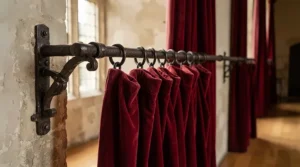
That’s a mistake, because the choice between metal curtain poles vs wooden curtain poles shapes almost everything that follows. It decides how much fabric your wall fixings must carry, how smoothly eyelets glide and how the room looks at dusk. It also decides whether the whole thing still hangs straight in five years. Curtain rods can be made of wood, metal and plastic, as Wikipedia’s curtain rod entry notes, but for British living rooms and bedrooms the real contest is between the first two.
Here’s the short version. Metal tends to win on slim profiles, smooth eyelet glide and headline weight ratings. Wood tends to win on warmth, paint-matching and traditional character. Neither is universally better; it depends on your curtains, your walls and your room.
This guide compares seven real poles from Swish, Rolls, Deco Window and Home Treats. It then works through curtain pole material comparison, weight limits, finishes and style matching. Weight limits quoted here are manufacturer or retailer figures, not lab tests. Where I couldn’t verify customer reviews, I say so rather than guess. Prices are indicative ranges only, so check current pricing before you buy.
Quick Comparison: Metal Curtain Poles vs Wooden Curtain Poles at a Glance
Skimming? Start here.
| Factor | Metal poles | Wooden poles |
|---|---|---|
| Stated weight ceiling in our picks | Up to 15kg (Swish Elements Stud 28mm, Swish Design Studio 35mm) | 8kg at 28mm, 12kg at 35mm (Rolls Woodline 28mm, Rolls Honister 35mm) |
| Look | Slim and sleek: chrome, satin steel, brass, graphite, black | Warmer and chunkier: oak, rosewood, white, painted tones |
| Eyelet glide | Smoothest option | Fine, but retailers steer eyelet fans towards metal |
| Length flexibility | Extendable kits are common (Home Treats Extendable Metal Curtain Pole Set) | Mostly fixed lengths, trimmed to fit |
| Best for | Heavy lined curtains, eyelets, contemporary rooms | Traditional, country and painted-woodwork rooms (Rolls Honister 35mm) |
Looking at the table, the gap that matters most is weight. At the same 28mm diameter, the metal option is rated for nearly double the load of the wooden one. If your curtains are light or medium, that gap shrinks to irrelevance, and style takes over. If you’re hanging lined, interlined or blackout fabric, the spec sheet should decide before your eye does.
💬 Just one click — help others make better buying decisions too!😊
What Are Metal Curtain Poles vs Wooden Curtain Poles?
Metal curtain poles are tubes finished in chrome, satin steel, antique brass or graphite, prized for slim lines and higher stated weight limits. Wooden curtain poles are turned timber, stained, lacquered or painted, offering warmth and traditional character but generally lower load ratings at the same diameter.
That definition hides a useful wrinkle: the two categories overlap. Deco Window Wooden Ball Black Curtain Pole is a metal tube wearing wooden ball finials. Wooden kits often use metal backplates behind their decorative cup brackets. So the real question isn’t purity. It’s which material does the structural work, and which does the styling.
Diameter matters just as much as material. Rolls rates its 28mm wooden pole for 8kg, its 35mm for 12kg and its 50mm for 16kg. Swish rates its 28mm and 35mm metal poles at 15kg apiece. In plain terms, wood buys strength with girth, while metal buys it with alloy and wall-bracket engineering.
Top 7 Metal and Wooden Curtain Poles: Expert Analysis
Seven real, currently listed options follow, spanning budget to premium. Weight figures are stated by manufacturers or retailers. Review commentary reflects only what I could genuinely verify.
1. Home Treats Extendable Metal Curtain Pole Set — best budget all-in-one kit
Adjustable length is the hook. The listing runs from 70cm to 300cm across three size ranges, which takes some of the gamble out of awkward windows. The set includes two finials, the extendable pole, rings, brackets, wall fixings, a finial grip and screws. That’s more complete than IKEA RÄCKA, whose UK listing states screws are not included and whose brackets are sold separately.
Extendable poles slide one tube inside another, so the overlap is the potential weak spot. Home Treats describes the range as suitable for light to heavy curtains. Read that as a brand claim and treat the top end with caution, using the centre bracket on longer spans. Based on the spec comparison, it’s best for renters, spare rooms and first-time fitters hanging light to medium fabric.
I couldn’t verify a consistent body of customer reviews for this specific set, so I’m making no sentiment claim. Scan recent listing reviews for comments on sagging and joint wobble.
Pros:
- ✅ Complete kit, fixings and finial grip included
- ✅ Wide 70-300cm range across three sizes
- ✅ Adjustable length suits awkward windows
Cons:
- ❌ Telescopic joint may flex under heavy fabric
- ❌ Review record couldn’t be verified
Expect a budget-band price, roughly under £30 depending on size (check current price). It’s strong value for light curtains and a gamble for lined velvet.

2. Swish Elements Stud 28mm — minimalist finial, 15kg rating
The end-cap finial is deliberately discreet, so the pole reads as a clean line rather than a jewellery counter. Swish is a British company founded in 1953 and now part of the Hunter Douglas group, and this 28mm pole is one of its most widely stocked designs.
The spec sheet is generous. Lengths run from 120cm to 360cm, with poles of 240cm and above supplied in two halves with a hidden internal joiner and an extra centre bracket. Rings are nylon-lined for a quiet glide. Swish’s bracket projection has been listed as 100-132mm from wall to pole centre, which helps you clear window handles.
Two cautions. One retailer calls the Elements range suitable for light to medium curtains, while Swish’s own figure is 15kg, so confirm on your listing. And at least one retailer says newer Elements sets ship with cylinder brackets rather than the older adjustable lateral ones, so check before buying if projection matters.
Reviewers on a retailer site praise the build and the smooth, quiet glide, with one saying it was worth paying a little extra.
Pros:
- ✅ Nylon-lined rings glide quietly
- ✅ Four finishes, including satin steel and graphite
- ✅ Trims at home with a junior hacksaw
Cons:
- ❌ Bracket style varies between batches and retailers
- ❌ Weight description differs between sources
Expect the mid-price band, roughly £30-£80 depending on length and colour. It’s a sturdy, quiet-running all-rounder.
3. Swish Design Studio 35mm — chunky pole with 11 finial styles
Customisation is the standout. The Design Studio range offers 11 finial styles in satin steel, chrome, antique brass and graphite, with poles available with or without rings and with wall or ceiling brackets. There’s also a 35mm bay window kit on Amazon UK, suited to medium to heavyweight curtains.
That 35mm tube matters. Straight poles come in one piece from 150cm to 240cm, so a typical window gets no visible joint. Longer runs join with a separately sold 35mm joiner, up to 480cm. Swish rates the range for 15kg total curtain weight. Extendable brackets project 100-132mm, and bay kits come in 300cm and 500cm.
This is the pole to consider for lined curtains on a wide window. The extra diameter resists bowing better than a slimmer tube, though I’d still add the centre bracket.
I couldn’t retrieve a consistent set of customer reviews for this line, so I won’t characterise buyer sentiment.
Pros:
- ✅ One-piece poles up to 240cm
- ✅ 11 finial styles to mix and match
- ✅ Bay window kits in 300cm and 500cm
Cons:
- ❌ Accessories can push the total cost up
- ❌ Chunky 35mm looks heavy on small windows
Expect a mid-to-upper band, roughly £60-£150 depending on finial and length. It’s a strong premium choice for heavy fabric.
4. Deco Window Wooden Ball Black Curtain Pole — metal tube with wooden ball finials
Hybrid thinking is the appeal. The listing describes a black metal extendable pole spanning 91cm to 168cm, with wooden ball finials and brackets, in 25/22mm sizing. Presumably those two figures refer to the outer and inner telescoping tubes.
That construction tells you what to expect. Weight behaviour follows metal-extendable logic, while the wooden ball finials give a traditional silhouette. Black is forgiving against most wall colours and hides dust better than pale finishes. The 168cm ceiling makes it a small-window and door specialist. Based on the spec comparison, it suits bathrooms, kitchens, box rooms and glazed doors, and it isn’t a bay window solution.
The retrieved listing didn’t state a load rating, and I couldn’t verify a review pattern. Check both on the live page before you commit.
Pros:
- ✅ Traditional wooden finials on a black metal tube
- ✅ Extendable from 91cm to 168cm
- ✅ Budget-friendly for small windows
Cons:
- ❌ 168cm maximum rules out wide windows
- ❌ Load rating not confirmed in the listing
Expect the budget band, likely under £30 (check current price). It’s good value for light curtains on narrow windows.
5. Rolls Woodline 28mm — classic ball-finial wood, value pick
The traditional ball finial is its whole personality. Retailer listings describe it as a simple, traditional design that suits modern or traditional homes.
The build is straightforward. Poles are Aspen, with finials, brackets and rings in Beech, and retailers describe the wood as FSC-managed. There are six finishes: light oak, dark oak, rosewood, white, cream and black. Lengths run from 120cm to 360cm, and one retailer notes single-piece poles up to 200cm. Kits include one ring per 10cm and two-part cup brackets that hide the fixings behind a turned wooden cover.
The stated ceiling is 8kg total curtain weight. That’s plenty for a pair of standard lined curtains on an ordinary window, but a stretch for heavy interlined drapes on a three-metre span.
One reviewer said the smooth finish made curtains easier to open and close than on their previous pole. Another couldn’t get light oak in their length and settled for white, and a retailer flags that some finishes and sizes are out of stock. Check availability first.
Pros:
- ✅ Six finishes, from light oak to black
- ✅ Complete kit, one ring per 10cm
- ✅ FSC-managed wood, per retailer listings
Cons:
- ❌ 8kg ceiling limits heavy curtain choices
- ❌ Some finishes and lengths run out of stock
Expect the budget band, roughly £25-£70 by length. It’s excellent value for light to medium curtains.
6. Rolls Honister 35mm — paint-matched tones, 12kg rating
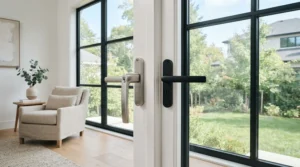
Tone-on-tone is the trend here. Colours are designed to echo popular Farrow & Ball paints: linen white, stone, French grey, pale slate and café latte. A pole in a wall-matched shade tends to melt into the room rather than shout.
Specs back up the styling. The 35mm pole is rated for medium to heavy curtains up to 12kg. It’s supplied complete with rings, wooden cup brackets and ball finials, in lengths up to 360cm. Lengths of 240cm and above ship in two halves with a joining screw and centre bracket. Rolls also makes the range in 28mm (8kg) and 50mm (16kg), so you can scale up if your curtains are heavy.
Reviewers describe good quality and finish, and one repeat buyer loved the price. One buyer even painted their pole ivory to match their curtains and found it easy.
Pros:
- ✅ Muted colours echo popular paint shades
- ✅ 12kg rating suits lined curtains
- ✅ Range scales to 28mm or 50mm
Cons:
- ❌ Below Swish’s 15kg metal rating at 35mm
- ❌ Muted palette offers little bold colour
Expect the mid band, roughly £45-£110 by length. It’s a high-value pick for painted-woodwork rooms.
7. Swish Naturals Ball 35mm — wood-grain lacquers to match your floors
Wood-grain realism is the draw. This 35mm pole has a ball finial, with a traditional urn finial available elsewhere in the range. It comes in five lacquered wood-grain finishes, from light wood tones to dark walnut, chosen to echo flooring, kitchen units or furniture.
Practical details: 10 rings per metre come as standard. Fixed cup brackets project 132mm with no adjustment. Poles over 180cm arrive in two pieces with three brackets and a joining screw. One retailer notes eyelet curtains draw more smoothly on a metal pole, so if eyelets are your heading of choice, factor that in.
I couldn’t find a weight rating in the sources I checked, so confirm it on the live listing. I also couldn’t verify customer review sentiment.
Pros:
- ✅ Grain finishes echo floors and furniture
- ✅ Chunky 35mm diameter looks substantial
- ✅ Complete kit with rings and brackets
Cons:
- ❌ Fixed 132mm bracket projection
- ❌ Weight rating unconfirmed in my research
Expect the mid band, roughly £50-£120 by length. It’s a strong choice for warm, coordinated interiors.
Top 7 at a Glance
| Pole | Material | Diameter | Stated curtain weight | Best For |
|---|---|---|---|---|
| Home Treats Extendable Metal Curtain Pole Set | Metal | Check listing | “Light to heavy” (brand claim) | Renters, first-time fitters |
| Swish Elements Stud 28mm | Metal | 28mm | 15kg (Swish) | Quiet, minimalist all-rounder |
| Swish Design Studio 35mm | Metal | 35mm | 15kg | Wide windows, heavy lined curtains |
| Deco Window Wooden Ball Black Curtain Pole | Metal with wooden finials | 25/22mm | Not stated | Small windows, doors |
| Rolls Woodline 28mm | Wood | 28mm | 8kg | Budget traditional look |
| Rolls Honister 35mm | Wood | 35mm | 12kg | Painted, tone-on-tone rooms |
| Swish Naturals Ball 35mm | Wood | 35mm | Not confirmed | Matching wooden floors and units |
The pattern is clear. Swish’s metal poles offer the highest stated capacity, but Rolls Honister 35mm narrows the gap to 3kg at the same diameter. Deco Window Wooden Ball Black Curtain Pole and Home Treats Extendable Metal Curtain Pole Set are the budget answers, with the trade-off that their load ratings are vaguer.
✨ Don’t Miss These Standout Picks!
🔍 Ready to find your match? Click any highlighted product name to check current pricing and availability on Amazon UK. Whether it’s a quiet-gliding metal classic or a paint-matched wooden beauty, a well-chosen pole will make your curtains look far more expensive than they are!
Curtain Pole Material Comparison: How Metal and Wood Actually Differ
A proper curtain pole material comparison starts with stiffness. Metal tubes generally resist bending better at a given diameter, which is why Swish rates a 28mm metal pole at 15kg while Rolls rates a 28mm wooden pole at 8kg. Wood compensates with girth, and sizes up to 35mm or 50mm bring its ratings closer.
Friction is the next difference. Metal rings with nylon linings glide quietly on metal. Wooden rings on wooden poles work fine but tend to feel more tactile, and on painted poles the rings may eventually wear the finish at their favourite parking spots. Eyelet curtains, which thread straight onto the pole with no rings, are generally kinder to metal.
Wood also responds to its environment, in general terms. Humid rooms and direct sun are harder on lacquer and paint than on plated metal, so kitchens and bathrooms lean metal. Bedrooms and living rooms are more forgiving.
| Feature | Metal pole | Wooden pole | Curtain track |
|---|---|---|---|
| Look | Sleek, contemporary | Warm, traditional | Discreet, flat |
| Eyelet curtains | Yes, smoothest glide | Yes, slightly more drag | No: poles only |
| Best for | Swish Elements Stud 28mm in modern rooms | Rolls Woodline 28mm in country or period rooms | Pencil-pleat curtains, hidden hardware |
The table makes one thing obvious: a track isn’t a rival to these poles so much as a different solution. If eyelets are the plan, you’re choosing between metal and wood. If you want hidden hardware, tracks win. For everyone else, poles are the decorative statement.
Weight Capacity by Material: What the Numbers Really Mean
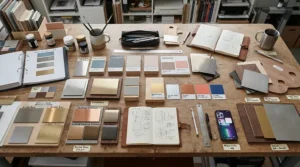
Weight capacity by material is the spec most buyers skim past and the one that causes sagging. The numbers we’ve verified, all stated by manufacturers or retailers and referring to total curtain weight:
- Swish Elements Stud 28mm and Swish Design Studio 35mm: 15kg
- Rolls Woodline 28mm: 8kg
- Rolls Honister 35mm: 12kg (the 50mm version is 16kg)
- IKEA RÄCKA: 5kg maximum load on its UK listing
The lesson is that “total curtain weight” means both panels together, not each one. The practical test is to weigh your curtains with bathroom scales before you buy, then leave at least 20-30% headroom. Lined, interlined and blackout fabrics add up quickly.
Length is the second variable. Retailers such as Dunelm advise a central bracket for poles over 180cm or for heavy curtains. Without one, even a well-rated pole can bow slowly over months.
Finally, the pole is rarely the weakest link. Brackets, plugs and the wall itself usually are. On plasterboard, use fixings suited to hollow walls, and if your pole is rated for 15kg but the wall isn’t, the rating is theoretical.
Curtain Pole Durability: What Lasts and What Doesn’t
Curtain pole durability comes down to three things: finish, joints and moving parts.
On metal, plated finishes such as chrome or satin steel tend to hold up well to daily handling, though scratches and fingerprints show more on polished surfaces. On wood, lacquer and paint are the front line. A knock from a vacuum head or a ring dragged the same way every morning will eventually leave marks. That’s cosmetic, and touch-up paint often fixes it, as one Rolls Honister 35mm reviewer effectively demonstrated by painting theirs.
Joints are where poles tend to fail structurally. Extendable poles such as Home Treats Extendable Metal Curtain Pole Set and Deco Window Wooden Ball Black Curtain Pole rely on telescoping tubes, which flex more at the overlap than a solid one-piece pole. Long fixed poles that ship in two halves, such as Swish Elements Stud 28mm at 240cm and above, use hidden joiners supported by a centre bracket. In both cases, use that bracket.
If you choose wood, check the sourcing. FSC UK explains how its certification verifies responsible forestry, and it’s worth remembering that trimmed-to-size items may not always carry the label. Retailer listings for Rolls Woodline 28mm describe FSC-managed wood, but confirm on the pack.
Pole Finish Options: Choosing Colours and Coatings
Pole finish options are wider than most people expect, and the finish matters as much as the material.
Metal finishes, drawn from the Swish range, include satin steel, chrome, antique brass and graphite, with matt black available on some newer sets. Satin steel is the crowd-pleaser: it hides fingerprints better than chrome and pairs happily with stainless kitchens and brushed door furniture. Antique brass warms up neutral rooms, and graphite is a softer alternative to black.
Wooden finishes lean towards nature or paint. Rolls Woodline 28mm offers light oak, dark oak, rosewood, white, cream and black. Rolls Honister 35mm goes for muted paint-friendly tones, while Swish Naturals Ball 35mm goes for lacquered wood grain from light to dark walnut.
A simple rule keeps rooms coherent: match the pole to one nearby fixture rather than everything. Brushed metal handles suggest satin steel. Oak flooring suggests a wood-grain pole. A painted wall suggests a tone-on-tone finial. Chasing every finish in the room leads to a hardware-shop showroom, so pick one anchor and let everything else vary.
Modern vs Traditional Curtain Pole: Style Isn’t Tied to Material
The modern vs traditional curtain pole debate is really about proportions and details, not just metal or wood.
Modern poles tend to be slimmer, with plain end caps, matt or satin finishes and eyelet curtains threaded directly onto the tube. Swish Elements Stud 28mm is a good example: minimalist finials, quiet rings, nothing fussy. Traditional poles favour turned finials, visible cup brackets and pencil-pleat or pinch-pleat curtains on rings. Rolls Woodline 28mm and Swish Naturals Ball 35mm speak this language fluently.
But the categories blur. A black metal pole with wooden ball finials, like Deco Window Wooden Ball Black Curtain Pole, lands somewhere between industrial and farmhouse. A chunky Rolls Honister 35mm in linen white looks contemporary because of its colour, despite its traditional finial shape.
The real advice is to let the finial and diameter set the era. Thin tube, small finial: modern. Thick tube, decorative finial: traditional. Then choose metal or wood to suit the room’s warmth.

Room Style Matching: Where Each Pole Belongs
Room style matching is easier when you work room by room.
Living room: this is where heavy lined curtains live, so weight capacity leads. Swish Design Studio 35mm suits wide windows and bays, while Rolls Honister 35mm suits a softer, painted scheme.
Bedroom: blackout linings add weight, so lean towards the 15kg metal options or a 35mm-plus wooden pole. A calm painted tone helps rooms feel restful.
Kitchen and dining: moisture and grease favour metal. Swish Naturals Ball 35mm is the exception if you want to echo wooden units, but check its rating.
Small windows, doors, porches: Deco Window Wooden Ball Black Curtain Pole or Home Treats Extendable Metal Curtain Pole Set are budget-friendly and easy to fit.
Period homes: wood with traditional finials, like Rolls Woodline 28mm, respects original detail. Painted woodwork suits tone-on-tone.
One trick that transcends materials: Dunelm’s curtain-hanging guide suggests placing the pole halfway or two-thirds of the way up towards the ceiling to give the illusion of taller ceilings. Use your own judgement, especially if you have coving or mouldings.
How to Choose Between Metal and Wooden Curtain Poles
The quickest way to decide between metal curtain poles vs wooden curtain poles is to work through these steps in order:
- Weigh your curtains. Bathroom scales work, and total weight decides material and diameter before style does.
- Match your heading style. Eyelet curtains glide best on metal, while hooked pencil-pleat curtains work on either.
- Measure the window and add width. One retailer advises adding 30-50cm to the window width and ordering the next size up, so a 142cm window needs a 180cm pole.
- Check your walls. Solid brick, plaster and plasterboard need different fixings, which are often not included.
- Pick a diameter. 28mm suits light to medium fabric, 35mm suits heavier curtains, and 50mm is for heavy drapes where offered.
- Choose the finish last. Match one nearby fixture, not the whole room.
- Check what’s in the box. Confirm rings, centre bracket and fixings, since kits differ on screws and wall plugs.
Installing a Curtain Pole: Setup, Pitfalls and First-30-Days Fixes
The best pole in the world looks poor if it’s fitted badly. Follow this sequence:
Mark and check. Mark your bracket positions, then check for hidden pipes and wires with a cable detector before you drill. Vanessa Arbuthnott’s hanging guide recommends this and suggests placing brackets about 10cm in from each end, with one in the centre for longer spans.
Level, don’t eyeball. A spirit level across your marks beats measuring from the window frame, which may not be level.
Fit brackets, then finials. Drill, plug and screw, then slide on rings and add the finials. Leave one ring between the bracket and the finial at each end to keep edges neat.
Let curtains settle. Give them a few days to drop creases before judging the look.
Common first-30-days mistakes include skipping the centre bracket (bowing), over-tightening grub screws (marking the pole), and cutting to size without measuring twice. If you trim Rolls Woodline 28mm or Swish Elements Stud 28mm, remove the finials first and use a fine-tooth saw or junior hacksaw.
Maintenance is minimal: dust regularly, wipe metal with a soft dry cloth, and keep harsh cleaners away from wooden lacquer.
Real-World Scenarios: Matching Poles to Real Homes
Scenario 1: The renter. A first-time renter with a 150cm window, light lined curtains and a tight budget needs flexibility and no fuss. Home Treats Extendable Metal Curtain Pole Set or Deco Window Wooden Ball Black Curtain Pole fits: both extend, both include fittings, and both suit light fabric. Use daily, keep the fixings modest.
Scenario 2: The family living room. A wide bay, heavy lined curtains and daily opening call for the strongest hardware. Swish Design Studio 35mm offers 15kg ratings and bay kits in 300cm and 500cm. Budget: mid-to-upper. Fit the centre bracket without exception.
Scenario 3: The period terrace. Painted woodwork, muted colours, curtains opened daily but not heavily lined. Rolls Honister 35mm in stone or French grey suits, with its 12kg rating for medium-heavy fabric.
Scenario 4: The oak-kitchen dining room. Wooden units and floors need a coordinated pole, and curtains are light. Swish Naturals Ball 35mm matches the timber, though verify its weight rating and remember the retailer advice on eyelets.

Frequently Asked Questions
❓ Are wooden curtain poles strong enough for heavy curtains?
❓ Do eyelet curtains work on wooden curtain poles?
❓ Can I cut a curtain pole to size at home?
❓ Which curtain pole is best for a bay window?
❓ What size curtain pole do I need for a 150cm window?
Conclusion: Which Should You Choose?
The verdict on metal curtain poles vs wooden curtain poles isn’t a knockout. It’s a matching exercise.
Choose metal when weight, eyelets or quiet glide lead. Swish Elements Stud 28mm is the versatile all-rounder, Swish Design Studio 35mm is the heavy-duty option for wide windows, and Home Treats Extendable Metal Curtain Pole Set is the budget-friendly starter. Choose wood when warmth and character lead: Rolls Woodline 28mm for value, Rolls Honister 35mm for paint-matched calm, and Swish Naturals Ball 35mm for wood-grain harmony. Deco Window Wooden Ball Black Curtain Pole sits happily in between for small windows.
Whichever you pick, three habits protect your investment: weigh your curtains, use the centre bracket, and check that the wall can carry the load. Do those, and either material will serve you well for years.
Recommended for You
- Wooden Curtain Pole with Finials: 7 Best UK Picks (2026)
- Curtain Rings for Curtain Pole: 7 Best Picks for UK Homes (2026)
- Heavy Duty Curtain Pole For Thick Curtains: 7 Best Picks (2026)
Disclaimer: This article contains affiliate links. As an Amazon Associate, I earn from qualifying purchases. If you purchase products through these links, we may earn a small commission at no additional cost to you.
✨ Found this helpful? Share it with your friends! 💬🤗
