
In This Article
A bare window is a sentence without a full stop. It works, but it never quite lands. That is the job of a wooden curtain pole with finials: it ends the sentence with a flourish, and it turns fabric on a wall into something that looks meant.
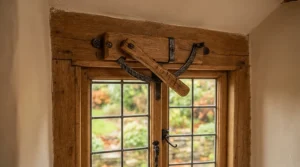
Finials are older than the curtain. The word comes from the Latin finis, meaning “end”, and finials have topped spires, gables and bedposts for centuries. Small wooden ones later migrated to the ends of curtain poles, where they still stop the rings escaping and give a room a bit of character.
This guide compares seven real, widely stocked UK ranges, from budget ball finials to hand-finished ash. Each is judged on specifications, aggregated reviewer sentiment and honest value analysis, not on marketing copy. Several of the best-known ranges are sold mainly through specialist UK curtain-pole retailers, and stock and colours change often. Check availability on the current Amazon UK listing or the retailer’s own page before you fall for a colour.
You will also find advice on finial shapes and styles, oak, painted and stained finishes, and fitting the thing without tears.
Quick Comparison Table: Which Pole Wins Where?
| Priority | Pick | Diameter | Best For |
|---|---|---|---|
| Lowest cost | Rolls Woodline 28mm | 28mm | Rentals, spare rooms, first-time buyers |
| Painted look | Rolls Honister 28mm | 28mm | Colour-matched, paint-led schemes |
| Real oak | Jones Lunar Oak Sphere 28mm | 28mm | Oak floors, doors and furniture |
| Statement finials | Jones Strand Cone 35mm | 35mm | Contemporary rooms wanting bold ends |
| Heavy curtains | Jones Oakham 50mm | 50mm | Tall, wide windows with interlined drapes |
Looking at the table, the split is really about diameter and finish. The Rolls Woodline 28mm is the sensible entry ticket, while the Jones Oakham 50mm is the one to consider if your curtains are heavy enough to double as a draught excluder. If you want visible oak grain without going to a 50mm pole, the Jones Lunar Oak Sphere 28mm sits neatly in the middle.
💬 Just one click — help others make better buying decisions too!😊
Top 7 Wooden Curtain Poles with Finials: Expert Analysis
Every entry below covers what the specification means in practice, who it suits, and what reviewers say where genuine feedback could be verified. Prices are indicative bands for a typical 180–240cm kit and shift with length, finish and retailer, so check the current price.
1. Rolls Woodline 28mm — best budget classic ball finial
The Rolls Woodline 28mm does one job without theatrics: a plain ball finial on a slim pole, in six finishes (light oak, dark oak, rosewood, white, cream and black).
The 28mm diameter is rated for medium-weight curtains up to 8kg. That means a lined pair on rings, not floor-length velvet with interlining. The kit includes rings, cup brackets and fixings. Lengths from 240cm arrive in two halves with a joining screw and an extra bracket, so the centre bracket has to do proper work.
The ball finial is the most forgiving shape you can buy, and it suits period and modern rooms alike. Based on the spec comparison, this is the low-risk starting point for rentals or anyone testing wooden poles. Thicker 35mm and 50mm versions exist if your curtains outgrow it.
Reviewers on retailer pages mention careful packaging and a finish that matched expectations. One buyer reported missing screws, so count your fixings before you start drilling. Review volume varies by retailer, so treat the sentiment as indicative.
Pros:
- ✅ Six finishes from light oak to black
- ✅ Complete kit with rings and brackets
- ✅ Thicker 35mm and 50mm siblings available
Cons:
- ❌ Limited to medium-weight curtains
- ❌ Basic ball finial only
Indicative range: under £70. Value verdict: strong value if you like the finish choice.

2. Rolls Honister 28mm — best paint-inspired colour range
The Rolls Honister 28mm is the paint-fan’s pole. Its colours (linen white, French grey, stone, pale slate and café latte) are designed to correspond to popular Farrow & Ball shades, and it comes with ball finials.
The pole carries up to 8kg across lengths as long as 360cm. A 35mm version handles 12kg and a 50mm version 16kg. That ladder of sizes lets you keep the same look if you upgrade curtains later.
What most buyers overlook is that a painted finish hides the grain completely. That is the point, not a flaw: the pole becomes a quiet extension of the wall or woodwork. Brand-to-brand paint matching is never exact, so order a sample and hold it against your skirting.
One reviewer who bought a second pole praised the quality and price. Another, after shopping around because of poor reviews elsewhere, reported a 300cm span in linen white with no bowing. Reviews for painted poles do vary, so read recent ones for your chosen length.
Pros:
- ✅ Muted colours suit modern interiors
- ✅ Three diameters for different weights
- ✅ Comes as a complete kit
Cons:
- ❌ Paint matching is approximate, not exact
- ❌ Painted finish can chip if knocked
Indicative range: roughly £60–£120. Value verdict: good value for paint-led schemes.
3. Rolls Neo Oak Stud — best oak-and-metal mix
The Rolls Neo Oak Stud pairs an oak pole with compact oak stud finials wrapped in a metal collar, available in stainless steel, black nickel, chrome or spun brass.
The extendable brackets let you increase or reduce the projection from the wall. That is handy when a window handle would otherwise foul the curtain. Rolls quotes 8kg for its 28mm poles, while one UK retailer quotes up to 11kg per pair for the oak version. Plan around the lower figure. The stud finial is only about 30mm long, so it barely intrudes on stackback space.
The metal collars work best with brass or nickel lamps and door furniture. Oak poles cannot be bent by hand, so bay windows need a purpose-made option. They can be trimmed with a fine-tooth saw after you remove the finials.
I could not verify enough consistent independent reviews for this exact set, so no sentiment is claimed. Ask the retailer for recent feedback on your chosen length.
Pros:
- ✅ Real oak with metal collar contrast
- ✅ Adjustable bracket projection
- ✅ Compact finial saves stackback space
Cons:
- ❌ Weight guidance differs between retailers
- ❌ Oak cannot be bent for bays
Indicative range: roughly £80–£150. Value verdict: a smart mid-market oak option.
4. Jones Lunar Oak Sphere 28mm — best solid oak grain
The Jones Lunar Oak Sphere 28mm goes all in on natural timber. It has a solid oak pole, matching oak sphere finials and matt nickel brackets and rings.
The nylon-lined rings glide quietly, which matters more than it sounds when you open curtains daily. The 28mm pole is rated to 8kg, with the 420cm length limited to lightweight curtains up to 5kg. Poles from 240cm arrive in two halves with a joining screw and centre bracket.
On paper, that makes it a natural fit for wide windows and bifold doors with light-to-medium fabrics. The oak finials remove with an Allen key and grub screw, which makes trimming easier. Spheres are slightly more contemporary than classic ball finials, and the brushed nickel keeps the look crisp.
A comparable 180cm oak Lunar set appeared at just over £110 at one UK retailer. One retailer-page review calls the poles “great”, which is positive but thin. Broader sentiment is unverified.
Pros:
- ✅ Solid oak with visible natural grain
- ✅ Quiet, nylon-lined rings
- ✅ Lengths up to 420cm
Cons:
- ❌ Long spans only suit lighter curtains
- ❌ Mixing with other ranges is discouraged
Indicative range: around £100–£150. Value verdict: premium-feeling oak for the money.
5. Jones Shore 35mm — best matt neutral painted pole
The Jones Shore 35mm wears soft, super-matt neutrals such as Ghost, Mushroom, Clay and Charcoal. It is finished with plain ball finials.
At 35mm it is chunkier than the 28mm crowd, so it looks more considered at the window. It is rated for light-to-medium curtains and comes in lengths up to 360cm. The two-part wooden brackets are a small joy: a metal backplate goes on the wall and the turned wooden cup screws over it, hiding the fixings.
Jones’s advice is to measure the window, add 30–50cm and order the next size up. That habit avoids the classic error of a pole that ends flush with the frame. Ghost suits Scandinavian and modern country rooms; Charcoal works with darker schemes.
I found no clear aggregated review data for this range, so none is claimed. The colour names refer to the applied finish, and small grain variations between pole, finials and brackets are normal.
Pros:
- ✅ Understated matt palette
- ✅ Concealed-fixing wooden brackets
- ✅ Chunkier 35mm presence
Cons:
- ❌ Not aimed at heavy curtains
- ❌ Some colours have been discontinued
Indicative range: roughly £50–£100. Value verdict: fair value for a designer-leaning finish.
6. Jones Strand Cone 35mm — best bold trumpet finials
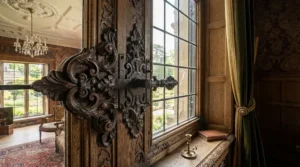
The Jones Strand Cone 35mm has trumpet-shaped finials with a ribbed collar, and they are large and unapologetic.
That size is the selling point in contemporary rooms with tall windows. Small finials get lost against big glass; these do not. The Strand range is described as engineered with careful component detail, and kits include a pair of finials with rings and brackets. A pole joiner supplies lengths of 360cm and above.
Standard 7cm brackets keep the curtain nearer the wall, which reduces light spill and heat loss. The trade-off is less stackback clearance. If your curtains are bulky, choose the larger-projection option.
Because the finials project sharply, they demand wall space either side. In a narrow alcove they would feel cramped. Stock has been patchy for some variants, so check availability before planning around this one. I could not verify meaningful review data for this exact set.
Pros:
- ✅ Statement finials suit tall windows
- ✅ Wide range of lengths up to 600cm
- ✅ Light oak finish suits modern schemes
Cons:
- ❌ Large finials need clear wall space
- ❌ Some variants often unavailable
Indicative range: around £90–£160. Value verdict: worthwhile when the finial is the hero.
7. Jones Oakham 50mm — best hand-finished heavyweight
The Jones Oakham 50mm is the grand one: handcrafted from ash, hand-finished in the UK, and stained to show the grain. The seven shades are Dove, Honey, Light Oak, Medium Oak, Truffle, Tusk and Wenge.
Retailers describe it as suitable for heavy and very heavy curtains, in lengths up to 600cm. You choose between a ball and a cone finial (the cone measures about 165mm long) and between wooden or metal brackets. Bracket projection is about 106mm to the pole centre, which gives thick pleats room to breathe.
That combination suits floor-length, interlined curtains on high ceilings. Pair it with double or triple pinch pleats and it looks properly expensive. Some sizes carry made-to-measure terms, so read the returns policy.
The listing I reviewed had no customer reviews yet, so I cannot report sentiment. The specification is strong, but the value case rests on your curtains being genuinely heavy.
Pros:
- ✅ 50mm ash suits heavy fabrics
- ✅ Seven stained shades showing grain
- ✅ Choice of ball or cone finials
Cons:
- ❌ Overkill for light curtains
- ❌ Made-to-measure terms may apply
Indicative range: roughly £150–£300+. Value verdict: worth it only for heavy drapes.
Top 7 Comparison at a Glance
| Product | Diameter | Material and finish | Finial | Weight guide | Indicative price | Best For |
|---|---|---|---|---|---|---|
| Rolls Woodline 28mm | 28mm | Stained or painted wood | Ball | Up to 8kg | Under £70 | Budget first buys |
| Rolls Honister 28mm | 28mm | Painted wood | Ball | Up to 8kg | £60–£120 | Colour-led schemes |
| Rolls Neo Oak Stud | 28mm | Oak, metal collar | Stud | 8–11kg (check) | £80–£150 | Oak with metal accents |
| Jones Lunar Oak Sphere 28mm | 28mm | Solid oak | Sphere | Up to 8kg | £100–£150 | Visible oak grain |
| Jones Shore 35mm | 35mm | Matt painted wood | Ball | Light to medium | £50–£100 | Muted modern rooms |
| Jones Strand Cone 35mm | 35mm | Light oak finish | Trumpet | Medium | £90–£160 | Bold finial statements |
| Jones Oakham 50mm | 50mm | Stained ash | Ball or cone | Heavy | £150–£300+ | Interlined drapes |
Read across the rows and price tracks diameter more than anything else. Moving from 28mm to 50mm adds cost but also genuine load capacity, which is what you are buying. For most homes with lined curtains, the mid-priced 28mm and 35mm options give the best return, and the Jones Oakham 50mm only pays back on heavy fabric.
What Is a Wooden Curtain Pole with Finials?
A wooden curtain pole with finials is a timber rod, usually 28mm to 50mm across, that carries curtains on rings, eyelets or tabs and is capped at each end by a shaped ornament called a finial. The finials stop rings sliding off and give the window its personality, while the pole does the heavy lifting.
Pole diameter and finial style are the two decisions that shape everything else. Diameter governs how much weight the pole can carry between brackets. The finial decides whether the result reads as country cottage, Georgian townhouse or Scandinavian minimalism.
Wood also behaves differently from metal. It is warmer to look at, easy to trim with a saw and available in stained, painted and natural finishes. The trade-off is that wood is more prone to visible wear, and it will not bend for bay windows the way a shaped metal pole can.
How to Choose a Wooden Curtain Pole with Finials
- Weigh your curtains first. 28mm poles typically cover curtains up to around 8kg, 35mm suits heavier ones, and 50mm handles heavy or very heavy fabrics. Fabric weight, lining and length all add up quickly.
- Measure the window and add overhang. Guidance varies: one major retailer suggests the pole sits about 15cm above the window and extends 15–20cm either side, while Jones suggests adding 30–50cm to the width. The John Lewis buying guide is a handy second opinion.
- Match the heading style. Rings suit pencil pleat and pinch pleat, while eyelets need a pole without rings scratching the wood. Some wood poles supplied without rings are not suited to eyelet curtains.
- Pick a finial shape for the room. Balls suit nearly everything, cones and trumpets shout a little louder, and studs whisper.
- Check brackets. Poles from 240cm usually need a centre bracket, and longer spans need more support.
- Choose the finish deliberately. Stained oak, painted neutrals and natural grain all look different against your floors and furniture.
- Ask about the timber. Look for reputable sourcing claims. Several Rolls poles cite responsibly managed forestry sources.
Finial Shapes and Styles
The choice of finial shapes and styles is where personality creeps in. The simplest way to sort them is by silhouette.
Balls and spheres are the all-rounders, and they are the shape used on the Rolls Woodline 28mm, Rolls Honister 28mm, Jones Shore 35mm, and the sphere version of the Jones Lunar Oak Sphere 28mm. Cones and trumpets, as on the Jones Strand Cone 35mm and cone-tipped Jones Oakham 50mm, taper towards a point and sit more formally.
Studs and end caps, such as the Rolls Neo Oak Stud, are short and blunt, and they suit minimalist rooms. At the other end of the scale sit ornate designs. Jones has offered finials named after cathedral cities, such as Ely, Wells, Bath and Exeter, plus Minaret and Plain Ball styles.
Historically, Victorian designs favoured spikes, balls and fleurs-de-lis. Natural-motif finials such as acorns or lotus buds add organic detail.
As a rule, the more ornate the finial, the plainer everything else should be. A busy finial with pattern-heavy curtains fights for attention. A simple ball lets the fabric perform.
Decorative Curtain Pole Finials: What Actually Matters
Decorative curtain pole finials look like the whole story, but the fixing and fit matter more than the silhouette. Most 28mm finials push onto the pole and lock with a small grub screw, and you can remove them with an Allen key if you need to trim the pole.
Compatibility is the catch. Jones warns against mixing components from different ranges, as brackets, poles and finials are usually designed together. So if you plan to swap finials to refresh the look, buy from the same range and diameter.
Scale matters too. A finial 25mm long, like the oak end cap on the Lunar range, leaves plenty of stackback. A 165mm cone, like the Jones Oakham 50mm cone, does not. Measure the wall space each side before you commit.
Finally, look at the collar. Metal collars on oak finials, as on the Rolls Neo Oak Stud, quietly tie the pole to other metalwork in the room, from lamp bases to door handles.
Oak Curtain Pole UK: What to Look For
Searching for an oak curtain pole UK means choosing between solid oak, oak-effect finishes and stained alternatives. Solid oak, as in the Jones Lunar Oak Sphere 28mm, shows its natural grain and darkens gracefully. Stained ash, as in the Jones Oakham 50mm, imitates oak tones at a lighter weight and often a lower cost.
Oak poles look right against oak floors, doors and furniture. One UK retailer describes the Lunar oak as a mid-oak tone that complements wooden floors and contemporary oak doors. However, oak poles typically come in limited one-piece lengths and cannot be bent by hand.
Sourcing is worth a glance. The FSC UK guide to choosing certified products explains that some cut-to-size products may not carry a label, and suggests checking the supplier’s certificate code. Ask before you buy if provenance matters.
Practically, oak looks best when a room already contains oak. In a house of white gloss and grey carpet, painted poles blend more happily than a wooden statement that has no relatives nearby.
Painted Wood Curtain Pole: Colour Without the Fuss
A painted wood curtain pole trades grain for colour control. The Rolls Honister 28mm and Jones Shore 35mm show how far that can go: muted greys, creams and clays that sit quietly against walls and woodwork.
Painted finishes hide imperfections in the timber, which is why they can be cheaper than premium stained wood. They also pair well with painted shutters, skirting and window frames.
There are practical points. Colour names refer to the applied finish, not the material, and you may see small grain differences between pole, finials, brackets and rings. Painted edges chip if you knock them during fitting or when trimming. A small pot of matching touch-up paint, or a spare finial, helps.
If you want an exact colour, the Jones Oakham 50mm range comes with a bespoke paint option on 50mm poles, where you send a paint reference from any supplier and the craftspeople match it. That is a premium route, but it is the only way to get a truly tailored finish.
For most homes, order a sample. Screens flatter or flatten colour, and a sample against your wall tells you more than a swatch ever will.
Wood Stain Matching Furniture: Getting the Tone Right
Wood stain matching furniture is where good intentions go to die. Woods age, stains differ and even two “oak” pieces can look wildly different beside each other.
The trick is undertone. Some oaks lean yellow, others red, others grey. Rather than chasing a perfect match, aim for either a close echo or a deliberate contrast. Near-misses look like mistakes.
Practical tips:
- Compare in daylight, not under warm bulbs.
- Hold a sample against the furniture you want to echo, such as a sideboard or floor.
- Choose one anchor wood in the room and match to that.
- For a deliberate contrast, go clearly darker or lighter.
The seven stains on the Jones Oakham 50mm (Dove to Wenge) give wide scope, while the Rolls Woodline 28mm offers light oak, dark oak and rosewood for a value alternative.
Retailers often supply samples, so request one. A few pounds on a sample can save you from returning a full-length pole that turned out the wrong shade.

Traditional Window Dressing: Where the Wooden Pole Belongs
Traditional window dressing has always been about layering: pole, rings, fabric, holdbacks. The British Antique Dealers’ Association note on finials traces the finial back to the Ancient Greeks and Romans, so a wooden pole is hardly a passing trend.
Poles also allow a wide range of heading styles. Curtains hang beautifully on rings with pencil, pinch or tab tops, and eyelet and wave styles work too. Wood suits the crafted end of the spectrum, while metal suits modern rooms.
For a fuller look, choose curtains two to 2.5 times the width of the window. Lining or interlining adds structure and insulation. On tall ceilings, a chunkier pole such as the Jones Oakham 50mm balances proportions.
Holdbacks or tiebacks in the same range complete the picture. Rolls, for example, sells matching holdbacks and extra rings.
The mistake to avoid is fussiness. A traditional look does not require ornate finials on every surface. One well-chosen wooden pole with a simple ball finial, hung high and wide, does more than a busy set of accessories.
Wooden Curtain Pole with Finials vs Metal Poles and Tracks
| Feature | Wooden pole with finials | Metal pole | Curtain track |
|---|---|---|---|
| Look | Warm, traditional or country | Sleek, modern | Discreet |
| Trimming | Easy with a saw | Often easy | Varies |
| Bay windows | Limited unless purpose-made | Bendable options exist | Flexible track available |
| Heavy curtains | Depends on diameter | Strong, especially 35mm | Strong |
| Best For | Character and warmth | Modern minimalism | Clean, hidden hardware |
Wooden poles win on warmth and personality, and they are usually gentle on the eye. Metal poles win for slim profiles and finishes like chrome or brass. Tracks are the discreet option when you want the fabric, not the hardware, to steal the show.
If your room already has wood in it, the Jones Lunar Oak Sphere 28mm or Rolls Neo Oak Stud integrate naturally. In a white minimalist box, a painted Rolls Honister 28mm feels calmer than raw oak.
How to Fit a Wooden Curtain Pole: Setup and Your First 30 Days
Step 1: Mark the height. With no curtains yet, a bracket height of 5–10cm above the window recess is a sensible default. For existing curtains, use the drop measurement and add the ring-to-hem allowance.
Step 2: Position the brackets. Aim for 15–20cm beyond the frame each side. Mark carefully and use a spirit level.
Step 3: Drill properly. Use the right masonry bit for the wall plug. The screws supplied may not suit your wall type, so check.
Step 4: Thread the rings before the finials. This is the classic first-timer mistake. Slide the rings on, then attach the finials and tighten the grub screws.
Step 5: Trim if needed. Remove the finials first, cut with a fine-tooth saw or junior hacksaw and sand the edge. Painted poles may need a touch-up.
Step 6: Hang and adjust. Check that the pole sits level and the curtains clear the window.
First 30 days: recheck bracket screws after a week, watch for sagging mid-span, and dust the pole with a soft cloth. If you have painted finials, avoid harsh cleaning products.
Common Problems and Solutions
The pole sags in the middle. Add a centre bracket, upgrade to a thicker pole, or lighten the curtains. Poles from 240cm usually need a centre bracket.
Eyelet rings scratch the wood. Wood poles supplied without rings are not suited to eyelet curtains, as metal eyelets can scratch the surface. Choose a pole designed for eyelets or use rings.
Finials wobble. Tighten the grub screw with the supplied Allen key. If it still slips, check the diameter matches.
Curtains rub the window handle. Choose extendable brackets, as on the Rolls Neo Oak Stud, or larger projection brackets.
Paint chips at the ends. Keep a small pot of touch-up paint, especially for painted poles like the Rolls Honister 28mm.
Curtains stack over the glass. Extend the pole further beyond the window, or pick a shorter finial such as an end cap or stud.
Real-World Scenarios: Which Pole for Which Home?
The renter on a budget. A modest lounge window, lined curtains and a landlord who dislikes drilling. The Rolls Woodline 28mm in cream or white is easy, inexpensive and forgiving. If the lease ends, the kit goes with you.
The oak-floored terrace. A period house with oak boards and a wooden sideboard. The Jones Lunar Oak Sphere 28mm echoes the timber, while the nickel fittings tie in with door handles. Keep spans moderate and curtains lighter.
The painted-shutter cottage. Soft greys, cream walls, linen curtains. The Rolls Honister 28mm or Jones Shore 35mm melts into the scheme.
The tall Victorian bay. Floor-length interlined drapes, high ceilings, a big window. The Jones Oakham 50mm is built for this weight, and cone finials add height.
The modern extension. Large glass, contemporary furniture. The Jones Strand Cone 35mm brings bold ends that suit the scale.
FAQ
❓ Can I swap the finials on my existing wooden curtain pole?
❓ Are oak curtain poles stronger than painted wooden poles?
❓ What length pole do I need for a 150cm window?
❓ Do wooden curtain poles suit modern homes?
❓ Can I fit a wooden pole to a plasterboard wall?
Conclusion
The best wooden curtain pole with finials is the one that matches your curtains, your walls and your patience. For most homes, the choice comes down to weight first and finish second.
If you want the lowest-risk start, the Rolls Woodline 28mm is hard to fault. For paint-led schemes, the Rolls Honister 28mm and Jones Shore 35mm offer calm colour, while the Rolls Neo Oak Stud and Jones Lunar Oak Sphere 28mm bring real oak character. When bold ends matter, look to the Jones Strand Cone 35mm, and when your curtains are properly heavy, the Jones Oakham 50mm is the sturdy answer.
Whichever you pick, measure twice, order a sample, count your fixings, and thread the rings on before the finials. Then step back and enjoy the full stop your window has been missing.
Recommended for You
- Curtain Rings for Curtain Pole: 7 Best Picks for UK Homes (2026)
- Heavy Duty Curtain Pole For Thick Curtains: 7 Best Picks (2026)
- Bendable Curtain Pole For Bay Window: 7 Best Flexible Picks (2026)
Disclaimer: This article contains affiliate links. As an Amazon Associate, I earn from qualifying purchases. If you purchase products through these links, we may earn a small commission at no additional cost to you.
✨ Found this helpful? Share it with your friends! 💬🤗
